
Trasforma le intuizioni dell’IA in azioni concrete

Tendenze
Categories
Safe skies and smart systems: The DIALOG vision for human-AI teaming
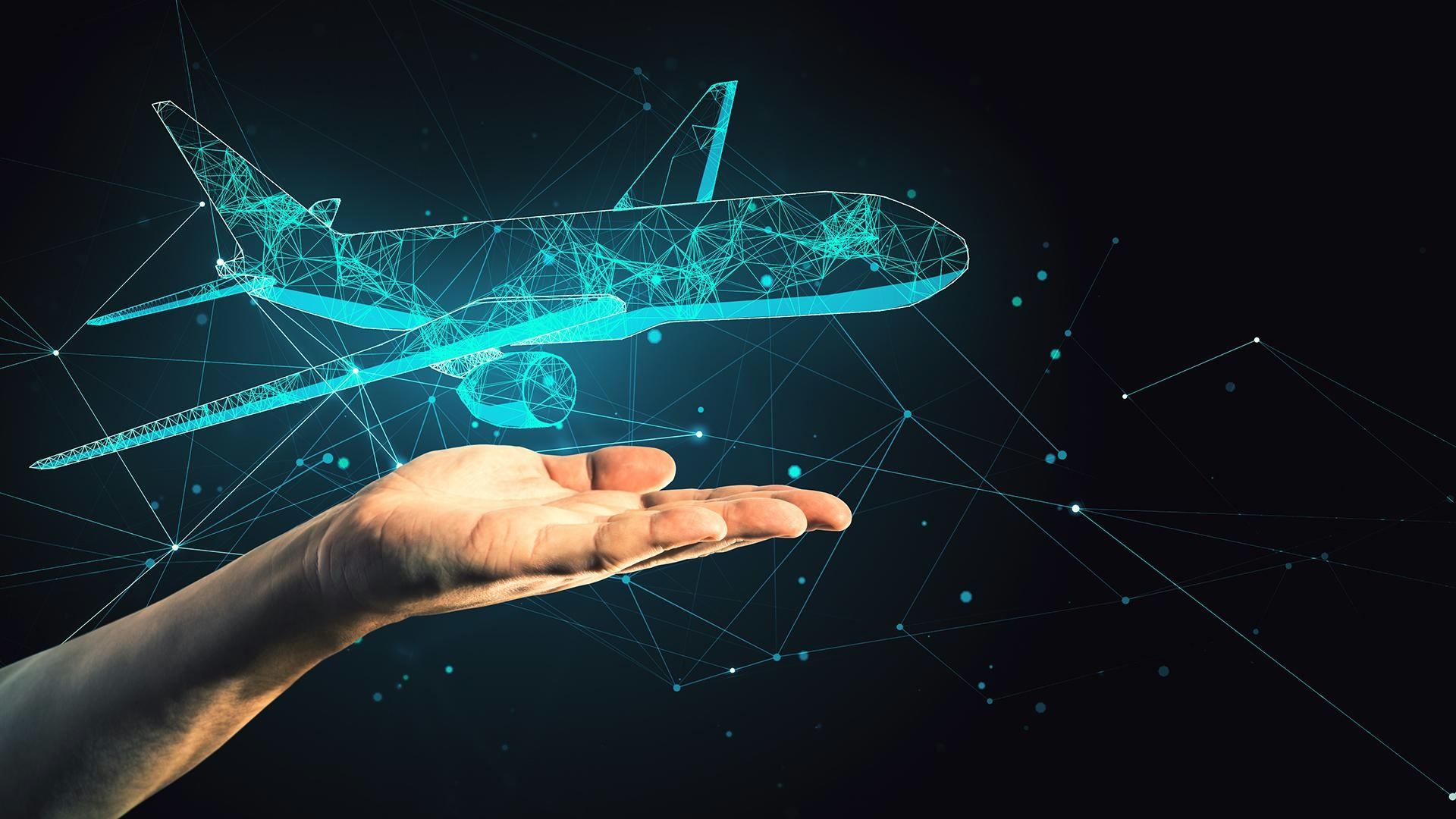
Safe Skies and Smart Systems: The DIALOG Vision for Human-AI Teaming
As global air traffic continues to increase and the aviation industry faces growing sustainability challenges, technological innovation has become indispensable. Artificial intelligence (AI) and automation offer the potential to optimize flight routes, reduce fuel consumption, and enhance airspace capacity. However, in the safety-critical domain of Air Traffic Management (ATM), the integration of AI extends beyond technical considerations; it fundamentally involves fostering human trust, ensuring safety, and enabling effective collaboration between humans and machines.
The EU-funded DIALOG project addresses these challenges by uniting leading research institutions, academic partners, and Air Navigation Service Providers, including SINTEF, Deep Blue, DSNA, ONERA, Radboud University, and DFS. Together, they are developing the Teamwork Assistant, an AI-driven support system designed to augment rather than replace human air traffic controllers.
Human-AI Teaming: A Human-Centered Approach
Unlike traditional automation systems that often require humans to conform to inflexible algorithms—potentially diminishing situational awareness and increasing cognitive load—DIALOG adopts a human-centered, operationally grounded methodology. The project aims to tailor AI capabilities to complement human strengths and limitations, thereby preserving the critical decision-making skills of air traffic controllers.
Central to this approach are principles of transparency and reliability, ensuring that controllers can comprehend the AI’s actions, reasoning, and objectives. This clarity fosters trust and facilitates efficient teamwork. Human agency and accountability remain paramount; operators retain ultimate control and the ability to override or adjust AI recommendations, maintaining responsibility for final decisions. Furthermore, the AI system is designed to develop shared mental models with controllers, adapting to their understanding of the airspace and providing contextually relevant support rather than imposing machine-centric workflows.
Validation and Early Outcomes
In March 2026, the DIALOG Teamwork Assistant underwent rigorous validation involving licensed air traffic controllers operating within realistic simulation environments. Led by Deep Blue’s human factors specialists, these trials evaluated the system’s technical performance, its impact on cognitive workload, and collected direct feedback from end-users.
Preliminary findings have been encouraging. Controllers reported that the Teamwork Assistant helped sustain their focus, alleviated mental fatigue during repetitive tasks, and enhanced their confidence when managing complex decision-making scenarios.
Addressing Broader Challenges in AI Integration
Despite these promising developments, the integration of AI into ATM raises broader concerns. Balancing human involvement with increasingly autonomous AI systems presents complex questions regarding accountability and safety. The sector must also confront risks such as cyber threats, economic disruption, and the concentration of power within technological infrastructures.
Market dynamics are evolving rapidly in response. Investment in AI-driven aviation technologies is accelerating, prompting the creation of new economic and social frameworks to manage this transition. Concurrently, competitors are advancing smart systems and augmented reality (AR) technologies. Companies such as Apple, Snap, Warby Parker, and Google are pioneering AI-powered smart glasses and AR features, reflecting a wider trend toward intelligent, context-aware support tools across multiple industries.
Looking Ahead
The DIALOG project embodies a balanced vision for the future of aviation, one that harnesses AI’s transformative potential while maintaining human expertise and oversight at its core. As the aviation sector continues to evolve, ensuring safe, accountable, and collaborative human-AI teaming will be essential—not only for the industry itself but also for the broader adoption of smart systems throughout society.
BBN Airlines Becomes IATA Member
FAA Orders Breeze Airways and Delta to Inspect Airbus A220 Fuel Hoses
Philippine Aviation Navigates Expansion and Costs Amid Fuel Price Volatility
On April 26, 1971, an SR-71 Blackbird Flew Over 15,000 Miles in 10.5 Hours, Limited by Liquid Nitrogen Supply
Boeing 747 Airframe Valued Less Than One Landing Gear Component
The Rear-Fan Engine Behind the Crash of the World's Fastest Airliner
Morphing Aircraft Skin Improves Safety and Fuel Efficiency
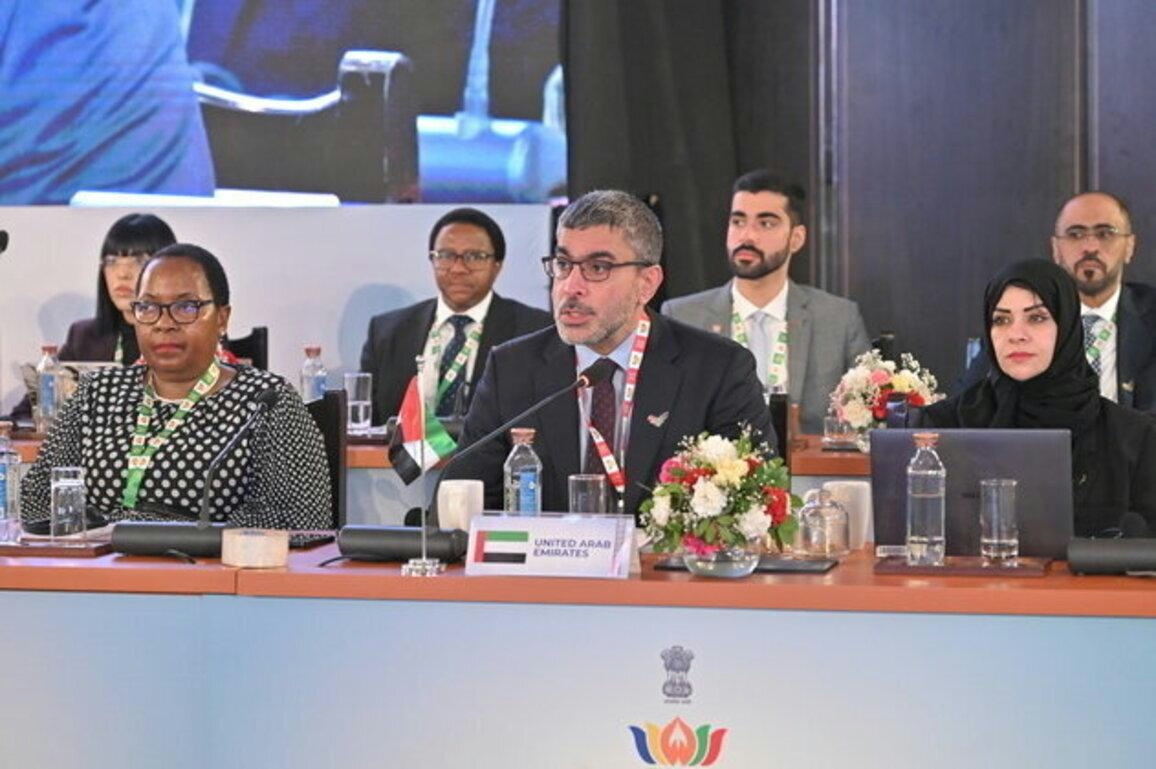
BRICS Nations Commit to Enhanced Cooperation on Sustainable Transport and Green Aviation
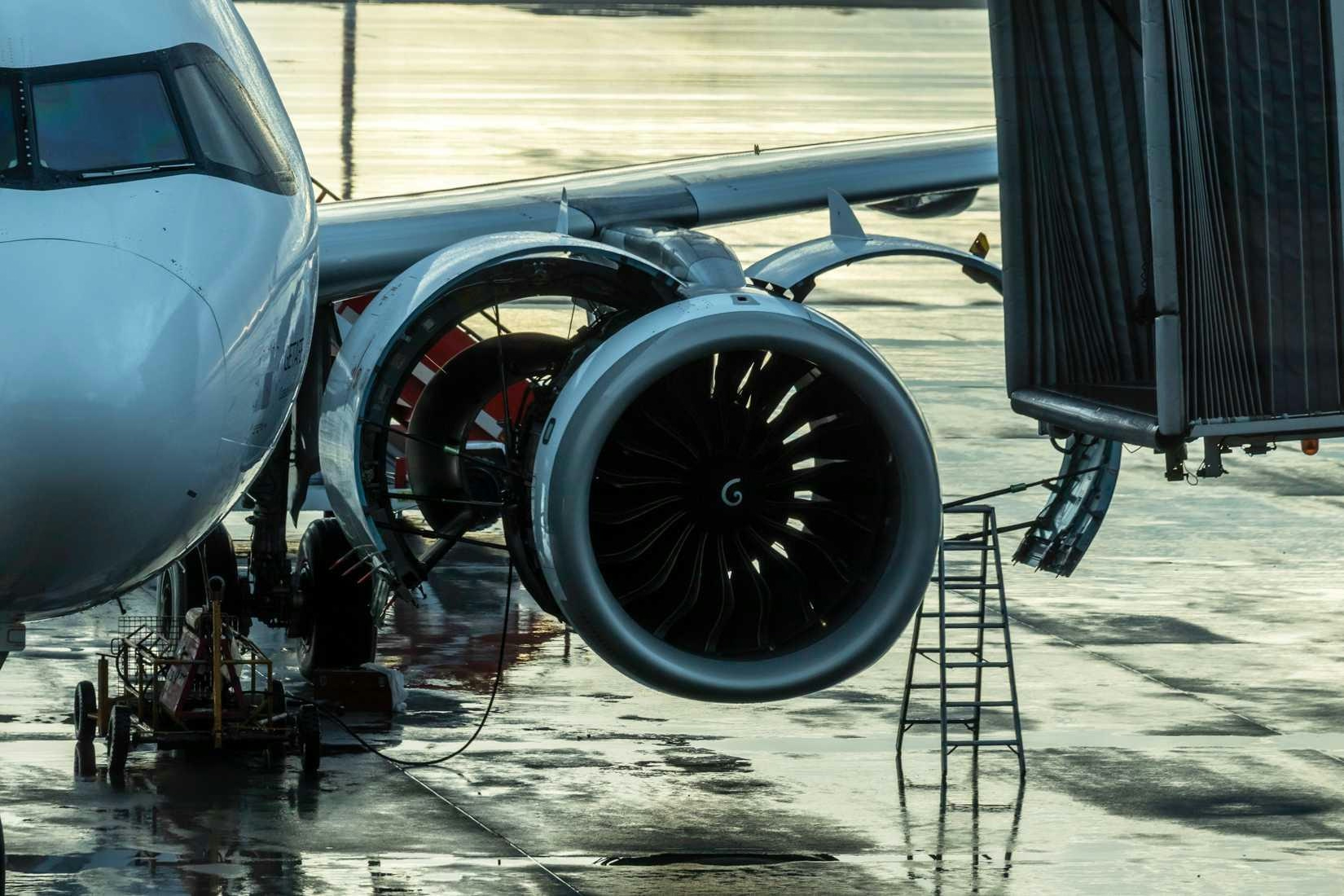
CFM Turbine Upgrade Doubles LEAP Engine Service Life in Harsh Conditions
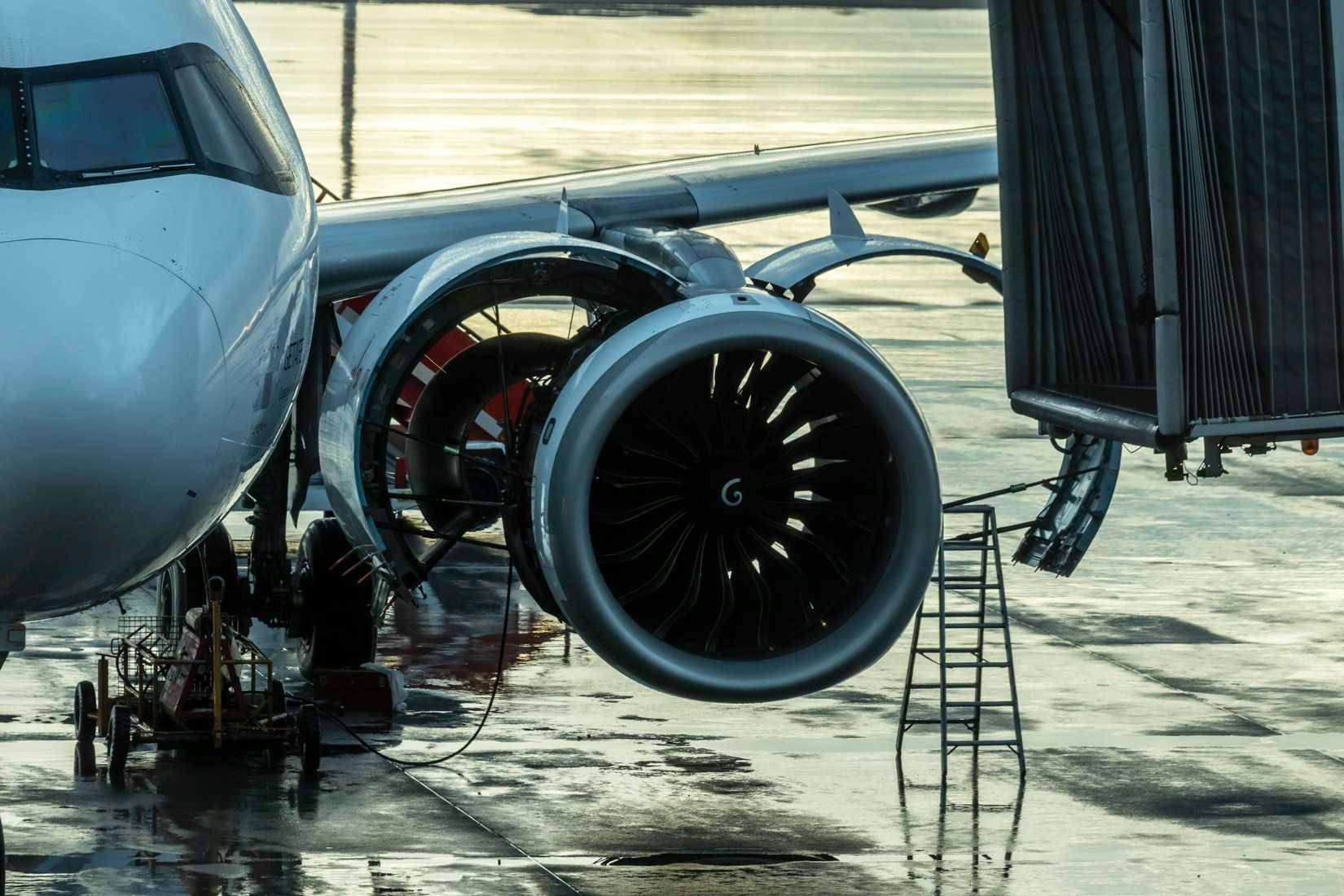
CFM Upgrade Doubles LEAP Engine Lifespan in Harsh Climates
