
Trasforma le intuizioni dell’IA in azioni concrete

Tendenze
Categories
Safran to Support LEAP Engine Production Increase in Morocco
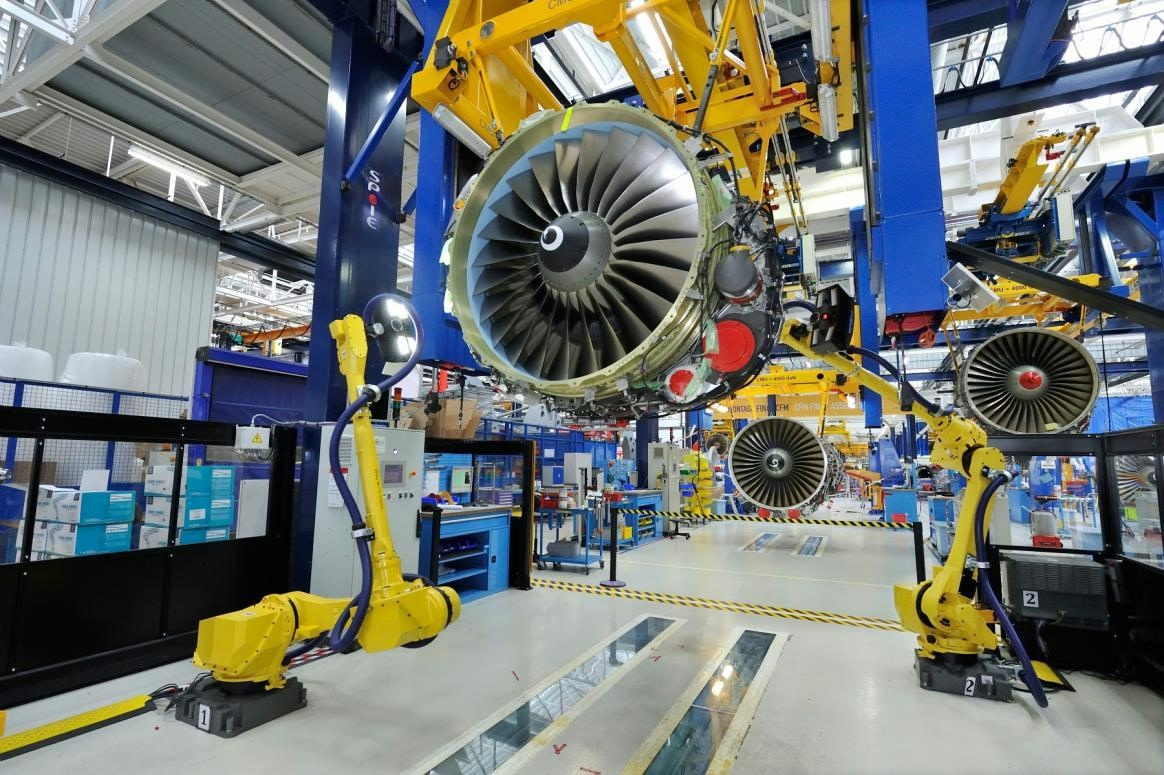
Safran to Expand LEAP Engine Production with New Facility in Morocco
French aerospace conglomerate Safran has unveiled plans to establish a new production facility for CFM International’s LEAP engines in Casablanca, Morocco. This strategic move aims to increase output capacity for the widely used LEAP engine family, which powers leading single-aisle aircraft globally. The Moroccan plant will serve as a complement to Safran’s primary manufacturing site in Villaroche, France, and is designed to produce up to 350 LEAP engines annually.
Meeting Growing Demand for LEAP Engines
The LEAP engine series is integral to the latest generation of single-aisle jets. The LEAP-1A variant is an option for the Airbus A320neo family, the LEAP-1B exclusively powers the Boeing 737 Max, and the LEAP-1C is utilized on China’s Comac C919. With Airbus and Boeing both planning to increase production of their single-aisle aircraft, Safran aims to raise its total annual LEAP engine output to 2,500 units by 2028. This expansion reflects the sustained global demand for fuel-efficient engines in the commercial aviation sector.
The new Moroccan facility, representing an investment of €200 million ($233 million), will cover 13,000 square meters and is scheduled to commence operations by the end of 2027. The announcement coincided with the launch of a new LEAP engine maintenance center in Casablanca, a €120 million project capable of servicing 150 engines annually once operational in 2027.
Strategic Commitment to Morocco’s Aerospace Industry
Safran’s CEO Olivier Andries highlighted the company’s dedication to strengthening its footprint in Morocco’s aerospace sector. He stated that the expansion underscores Safran’s commitment to fostering the local aerospace industry and stimulating economic growth in the region. In addition to the new production and maintenance facilities, Safran is also expanding three other industrial sites in Morocco, including its Aerosystems operation in Tiflet.
Challenges and Market Implications
Despite the promising outlook, Safran faces significant challenges in scaling up LEAP engine production. Coordinating the ramp-up to 2,500 engines annually will require meticulous management, especially as the company balances production between the newer LEAP engines and the legacy CFM56 models. Ensuring that the new Moroccan facilities adhere to rigorous quality and operational standards will be essential to maintaining Safran’s reputation and meeting customer expectations.
Industry analysts suggest that Safran’s expansion could enhance investor confidence in its growth strategy amid robust demand for fuel-efficient narrowbody aircraft. However, this move may prompt competitors to accelerate their own production plans or explore new markets to safeguard their positions in the narrowbody engine segment.
Through these investments, Safran is positioning itself at the forefront of the next phase of commercial aviation growth while contributing significantly to the development of Morocco’s emerging aerospace industry.

Etihad Airways Suspends Airbus A380 Flights on Key Route

Aditya Birla Group Seeks Approval for Aircraft Leasing in GIFT City

Qatar Airways Highlights Innovation and Connectivity at Arabian Travel Market 2026

Hong Kong's Five-Year Plan Includes Andrew Fan's Aircraft Parts Processing Hub Proposal

ACIA Aero Leasing Delivers ATR72-600 to Air Nostrum

RTX Appoints Jill Albertelli as Head of Pratt & Whitney

TAT Technologies Joins Beyond Aero Hydrogen Aircraft Program

AURAK Study Highlights Barriers to Air Taxi Adoption in Emerging Economies

Xiamen Air Selects Altitude for 787 Maintenance at Heathrow

Etihad and Swissport Extend Global Partnership
