
Trasforma le intuizioni dell’IA in azioni concrete

Tendenze
Categories
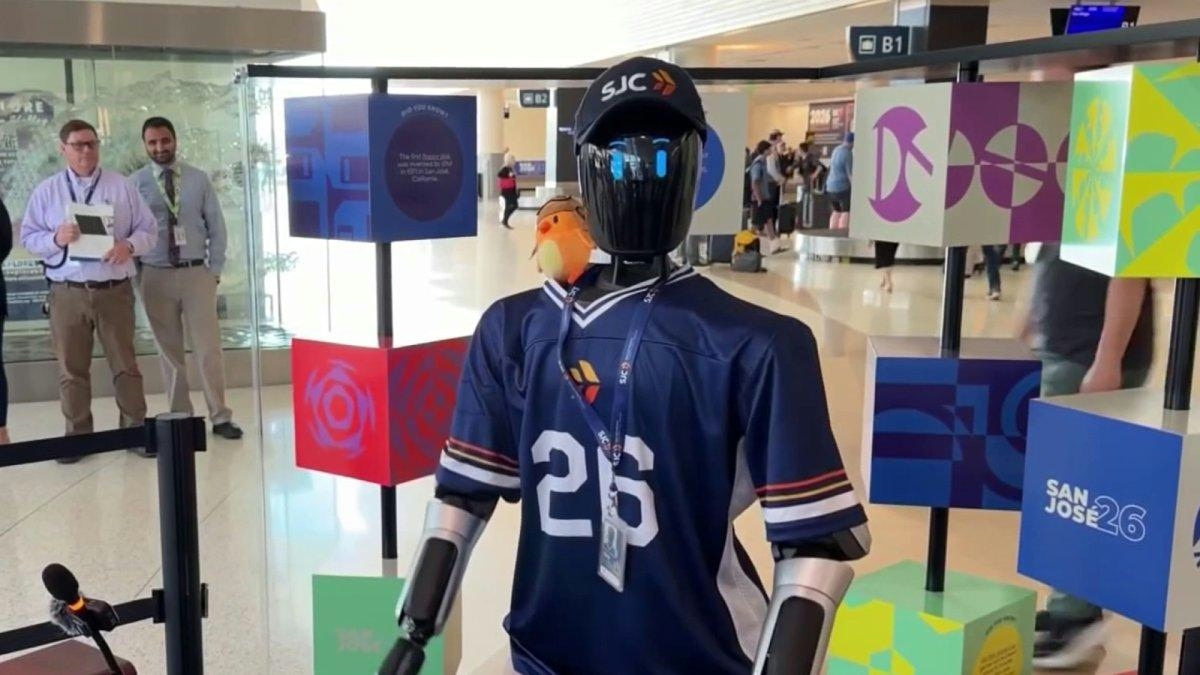
San José Airport Introduces AI Passenger Service Robot
San José Airport Introduces AI Passenger Service Robot
San José Mineta International Airport (SJC) has embarked on a groundbreaking initiative by partnering with IntBot to deploy an AI-powered passenger service robot across its terminals. This development represents a significant advancement in the delivery of traveler support and real-time information, positioning SJC among the first major U.S. airports to fully integrate sophisticated artificial intelligence into its customer service framework.
Enhancing the Passenger Experience Through AI
The AI assistant developed by IntBot now manages a broad spectrum of passenger inquiries at SJC, including flight status updates, gate changes, baggage information, and terminal navigation. Operating continuously, the system offers instant, multilingual support in English, Spanish, and Mandarin, eliminating the need for human intermediaries. Passengers have reported quicker response times and greater accessibility, particularly during peak travel periods, compared to conventional customer service methods.
Integration and Operational Advancements
The collaboration between SJC and IntBot is founded on a cooperative model wherein IntBot provides its adaptive conversational AI platform, while the airport contributes infrastructure access, passenger data, and feedback to enhance system accuracy. The AI has been seamlessly integrated with existing airport systems such as flight information displays, baggage claim networks, and security protocols. This integration enables direct communication with airline partners and ground operators, facilitating real-time updates and operational coordination.
The system features interactive kiosks and mobile app integration, voice-activated assistance powered by natural language processing, personalized responses for returning travelers, real-time baggage tracking, and the ability to handle special assistance requests. It also connects directly with FlightAware and airline data feeds, ensuring passengers receive immediate notifications regarding gate changes, delays, and weather conditions.
All major airlines operating at SJC—including Southwest, United, Alaska, and Delta—now share real-time operational data with the IntBot system. This connectivity enhances passenger communication and improves coordination among ground service teams, contributing to more efficient congestion management. Additionally, TSA agents benefit from automated summaries for travelers requiring extra assistance, streamlining security procedures for families and elderly passengers.
Industry Implications and Market Response
While the deployment of AI at SJC is widely regarded as a significant step forward in passenger service, it also underscores broader challenges within the aviation industry. The introduction of AI-driven automation has raised concerns about potential job displacement, prompting resistance from certain employee groups and legislators. These concerns reflect wider debates across various sectors regarding the impact of AI on the workforce and the need for regulatory oversight.
Market reactions to SJC’s announcement have been mixed. Investors acknowledge the operational efficiencies and improved traveler experience brought by the technology but remain cautious about the long-term effects on traditional service roles. The modest market response reflects a balance between optimism for innovation and uncertainty about its broader economic consequences.
Competitive and Regulatory Outlook
SJC’s adoption of AI technology is expected to accelerate similar initiatives at other major airports as competitors strive to maintain service standards. Concurrently, some industry stakeholders are calling for regulatory frameworks to safeguard employment and ensure responsible AI implementation.
San José’s AI-powered passenger service robot establishes a new benchmark for airport operations, combining technological innovation with enhanced efficiency. The evolving interplay between automation, workforce considerations, and regulatory policies will be pivotal in shaping the future of customer service in air travel.

Etihad Airways Suspends Airbus A380 Flights on Key Route

Aditya Birla Group Seeks Approval for Aircraft Leasing in GIFT City

Qatar Airways Highlights Innovation and Connectivity at Arabian Travel Market 2026

Hong Kong's Five-Year Plan Includes Andrew Fan's Aircraft Parts Processing Hub Proposal

ACIA Aero Leasing Delivers ATR72-600 to Air Nostrum

RTX Appoints Jill Albertelli as Head of Pratt & Whitney

TAT Technologies Joins Beyond Aero Hydrogen Aircraft Program

AURAK Study Highlights Barriers to Air Taxi Adoption in Emerging Economies

Xiamen Air Selects Altitude for 787 Maintenance at Heathrow

Etihad and Swissport Extend Global Partnership
