
Trasforma le intuizioni dell’IA in azioni concrete

Tendenze
Categories
SAS Plans Major Expansion of Long-Haul Fleet with Airbus and Boeing Orders
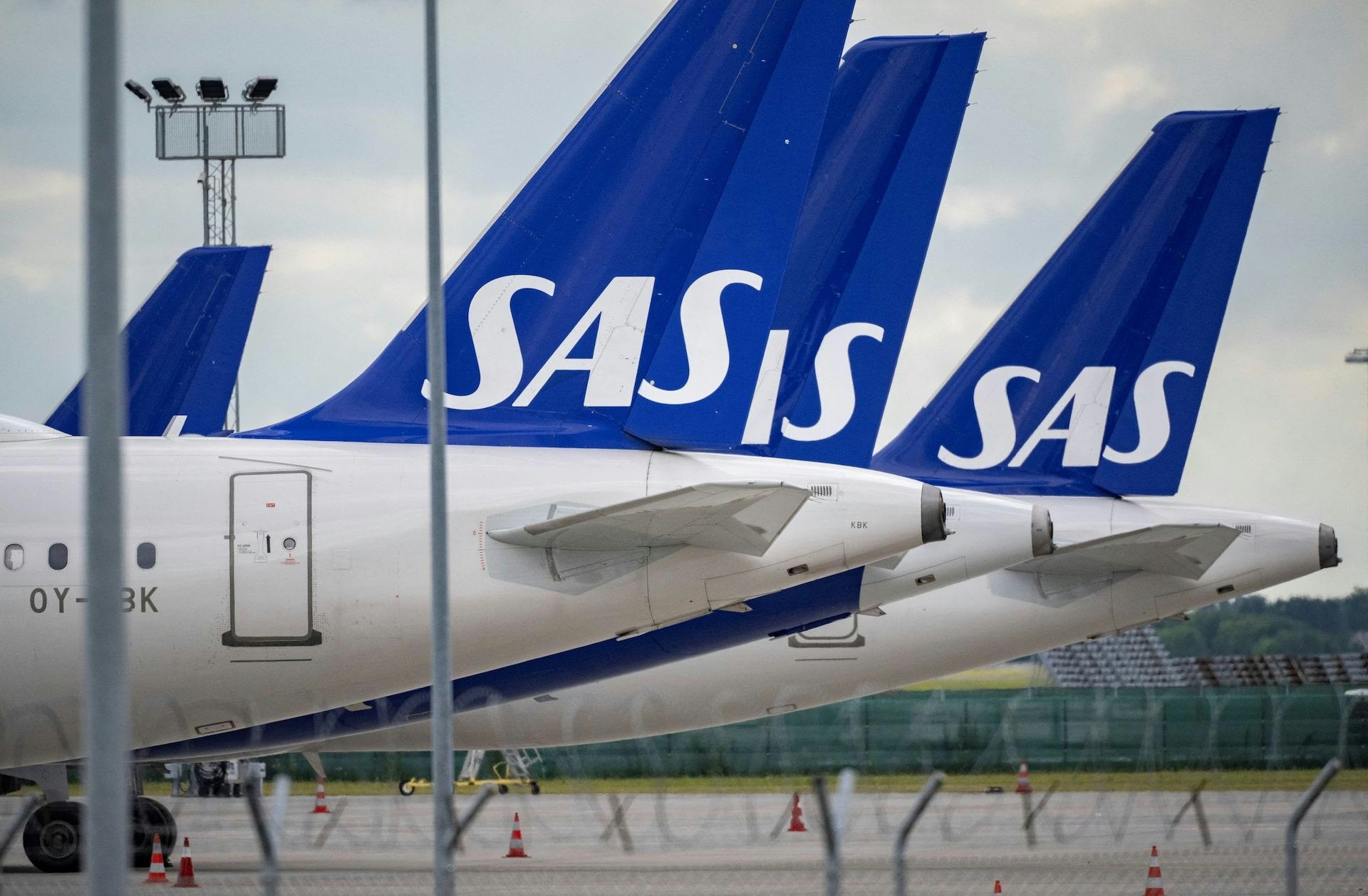
SAS Plans Major Expansion of Long-Haul Fleet with Airbus and Boeing Orders
Strategic Fleet Renewal and Growth
SAS Scandinavian Airlines is poised to undertake a significant expansion of its long-haul fleet, engaging in advanced negotiations with both Boeing and Airbus for a substantial order of widebody aircraft. The airline is reportedly considering models including the Boeing 787 and 777X, alongside the Airbus A350 and A330neo, as part of its broader strategy to renew and grow its fleet. Although the exact number of aircraft to be purchased remains undisclosed, CEO Anko van der Werff characterized the prospective order as large enough to generate considerable interest from both engine and aircraft manufacturers.
This fleet expansion aligns with SAS’s ongoing efforts to rebuild and extend its international network. Recently, the airline announced the launch of a new daily route from Copenhagen to Dubai, marking its first service to the city in 15 years. Currently, SAS operates an all-Airbus widebody fleet, consisting of A350s and older A330 jets, and has been actively modernizing its overall fleet. Last June, the airline placed an order for 45 Embraer aircraft, reflecting its commitment to enhancing regional connectivity. Since emerging from Chapter 11 bankruptcy proceedings in the United States and joining the SkyTeam alliance in 2024, SAS has steadily increased its international presence. Furthermore, the airline may soon become a subsidiary of Air France-KLM, as the Franco-Dutch group seeks to acquire a 60.6 percent stake in the Scandinavian carrier.
Industry Context and Competitive Dynamics
The planned widebody order arrives at a critical juncture for both Airbus and Boeing, who face mounting pressure to boost production rates and secure future aircraft sales amid evolving market conditions. Boeing, in particular, is striving to regain competitiveness in the narrowbody segment, where Airbus currently holds a dominant position in single-aisle aircraft sales. Recent industry trends illustrate this shift, with carriers such as Air Europa transitioning from Boeing to Airbus, while major airlines like Delta have opted for Airbus A330 and A350 widebody jets, signaling a strategic preference away from Boeing products.
SAS’s forthcoming decision will not only determine the future composition of its long-haul fleet but also reflect broader transformations within the global aviation market. Airlines are increasingly prioritizing factors such as reliability, fuel efficiency, and manufacturer stability when planning their fleets. As such, the outcome of SAS’s negotiations with Airbus and Boeing will be closely monitored by industry observers, potentially influencing the competitive balance between the world’s two largest aircraft manufacturers.

Etihad Airways Suspends Airbus A380 Flights on Key Route

Aditya Birla Group Seeks Approval for Aircraft Leasing in GIFT City

Qatar Airways Highlights Innovation and Connectivity at Arabian Travel Market 2026

Hong Kong's Five-Year Plan Includes Andrew Fan's Aircraft Parts Processing Hub Proposal

ACIA Aero Leasing Delivers ATR72-600 to Air Nostrum

RTX Appoints Jill Albertelli as Head of Pratt & Whitney

TAT Technologies Joins Beyond Aero Hydrogen Aircraft Program

AURAK Study Highlights Barriers to Air Taxi Adoption in Emerging Economies

Xiamen Air Selects Altitude for 787 Maintenance at Heathrow

Etihad and Swissport Extend Global Partnership
