
Trasforma le intuizioni dell’IA in azioni concrete

Tendenze
Categories
Second AI-Related Flight Hydraulic Fault Reported in 10 Days
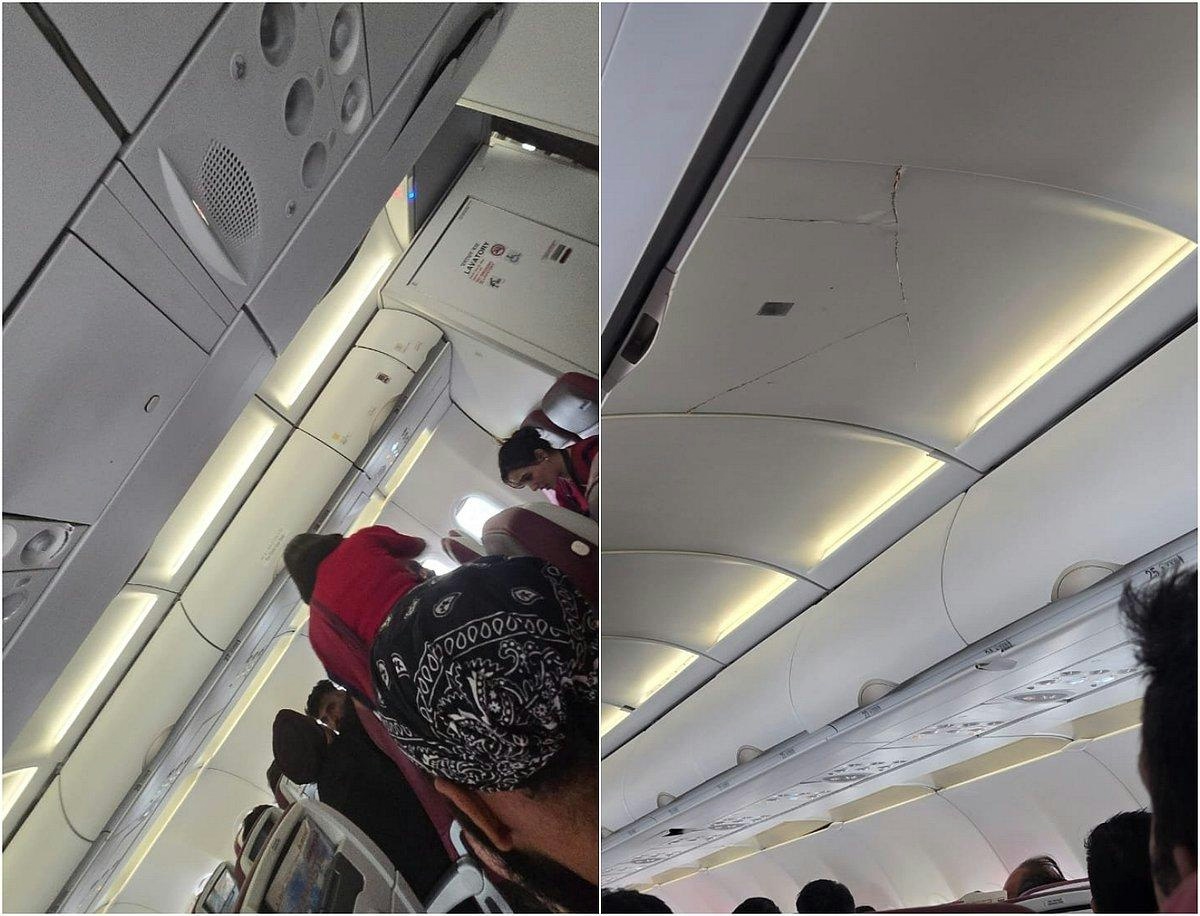
Second AI-Related Flight Hydraulic Fault Reported in 10 Days
Incident Overview
In a troubling development for Air India, a second significant technical malfunction involving hydraulic failure has occurred within a span of ten days, intensifying concerns over the airline’s operational safety. On the evening of August 13, an Air India Airbus A320 flying from Bangkok to New Delhi was compelled to abort its landing approach after pilots detected a hydraulic system fault as the aircraft neared the runway at Bangkok airport.
A business class passenger recounted that the pilot announced the hydraulic failure over the public address system, a disclosure later confirmed by an airline source who noted that such announcements were not standard protocol. The flight, carrying over 250 passengers, was originally scheduled to depart Bangkok at 6:25 pm local time but was delayed by nearly 24 hours, eventually taking off at 7 pm the following day.
Technical and Passenger Impact
Hydraulic malfunctions in aircraft involve failures within the fluid systems that control critical components, potentially leading to sluggish or complete loss of control over essential equipment. Rajiv Gambhir, a Delhi-based businessman and aircraft owner seated in 1C, described the unsettling experience: “The flight was moving for take-off when we heard a loud screeching halt. It was forceful, as if the brakes were being applied suddenly. The plane came to a complete stop. The pilot then announced there had been a hydraulic failure and that checks were underway. This filled me and many others with fear, especially after recent reports of a similar failure on the Air India Phuket flight.”
The recurrence of such faults within a short timeframe has raised alarm across the aviation industry, prompting intensified scrutiny from regulators and casting a shadow over Air India’s safety record.
Industry and Market Repercussions
The back-to-back hydraulic failures have not only jeopardized passenger confidence but also triggered ripples in financial markets. Stocks related to Air India, particularly those of semiconductor manufacturers supplying critical components, have experienced declines amid investor apprehension about increased safety expenditures and mounting competitive pressures.
In response, rival airlines are expected to bolster their safety protocols and enhance transparency to reassure both passengers and stakeholders. Analysts have cautioned that the broader artificial intelligence (AI) market, closely linked to aviation technology advancements, may face a market correction. Leading credit agencies have flagged the sector as a potential credit risk, underscoring the financial implications of these technical setbacks.
As investigations into the incidents proceed, Air India and the wider aviation sector face mounting pressure to resolve these technical challenges promptly to restore trust and stabilize market confidence.

Etihad Airways Suspends Airbus A380 Flights on Key Route

Aditya Birla Group Seeks Approval for Aircraft Leasing in GIFT City

Qatar Airways Highlights Innovation and Connectivity at Arabian Travel Market 2026

Hong Kong's Five-Year Plan Includes Andrew Fan's Aircraft Parts Processing Hub Proposal

ACIA Aero Leasing Delivers ATR72-600 to Air Nostrum

RTX Appoints Jill Albertelli as Head of Pratt & Whitney

TAT Technologies Joins Beyond Aero Hydrogen Aircraft Program

AURAK Study Highlights Barriers to Air Taxi Adoption in Emerging Economies

Xiamen Air Selects Altitude for 787 Maintenance at Heathrow

Etihad and Swissport Extend Global Partnership
