
Trasforma le intuizioni dell’IA in azioni concrete

Tendenze
Categories
Singapore Airlines’ Scoot Updates Flight Disruption Management
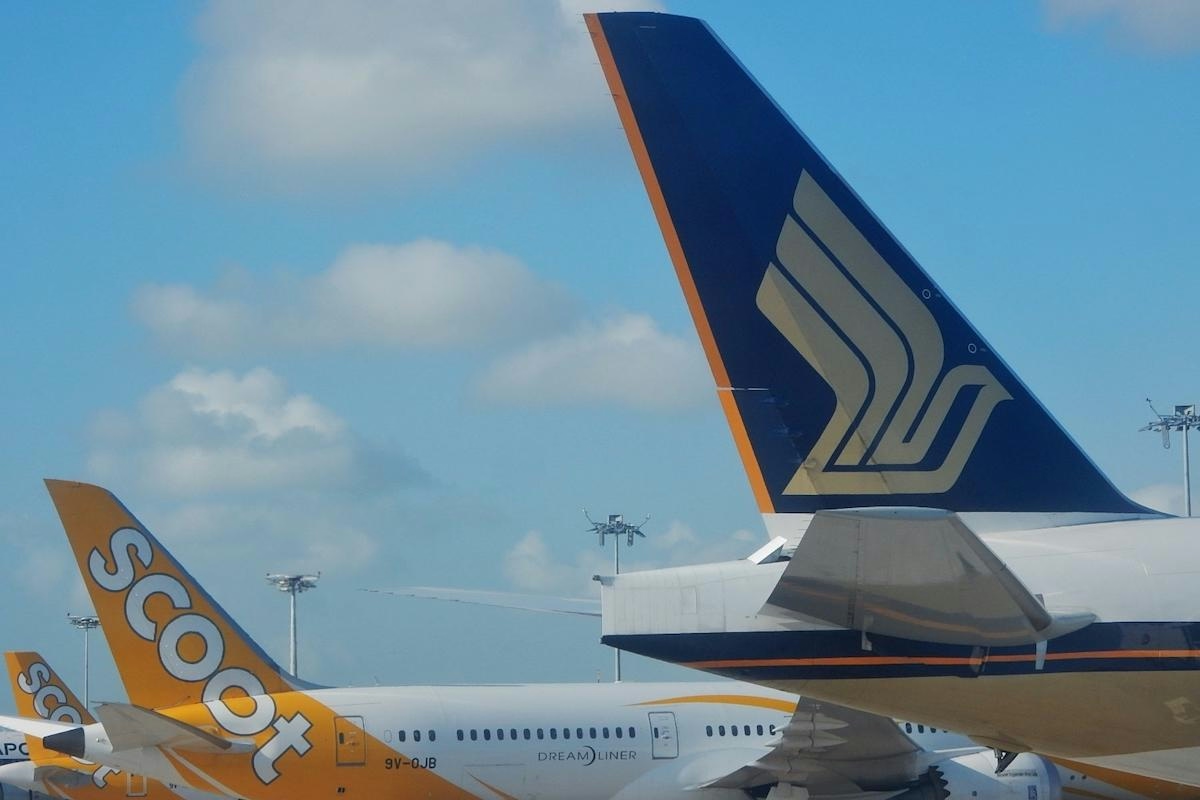
Singapore Airlines’ Scoot Modernises Flight Disruption Management Amid Rising Operational Challenges
Scoot, the low-cost subsidiary of Singapore Airlines (SIA), has introduced a significant upgrade to its flight operations management with the launch of a Virtual Operations Command Centre (vOCC) application. This initiative addresses the growing operational difficulties faced by airlines worldwide, including an increase in turbulence attributed to climate change, which has resulted in more frequent and severe disruptions affecting flight schedules and passenger experience.
Centralising Communication and Enhancing Efficiency
Developed in collaboration with OutSystems, an AI-powered low-code development platform, the vOCC app consolidates Scoot’s previously fragmented communication channels. The airline had relied on multiple text-based group chats that generated over 600 manual notifications daily, creating inefficiencies and delays in response. By unifying cross-departmental coordination, the new platform aims to accelerate response times and improve communication with passengers during delays or cancellations.
Scoot reports that the vOCC app has increased data visibility for stakeholders by 90 percent while reducing manual processing time by more than 60 percent. The system enables teams to monitor critical disruption metrics such as flight retiming and the number of connecting passengers, facilitating more informed, data-driven decisions to optimise operational performance.
Remarkably, the app was developed in just two and a half months, a significant reduction from the typical eight-month timeline for traditional software development. It integrates directly with Scoot’s Operations Command Centre, delivering real-time updates on flight disruptions. These updates are automatically disseminated across departments including operations, public relations, and customer service, and are linked with commercial applications to ensure timely notifications reach affected passengers via email and text messages.
Navigating Increasing Operational Pressures
Jaya Balaji, Scoot’s Vice President of Information Technology, emphasised the transformative impact of the vOCC app on the airline’s operations control centre. He highlighted the critical need for agility and adaptability in commercial aviation, where rapid response to unexpected events is essential to maintaining service continuity and customer trust.
The airline’s modernisation efforts come at a pivotal moment, as recent episodes of severe turbulence have posed significant operational challenges, including sudden altitude drops. Such disruptions threaten passenger confidence and risk a decline in bookings if not managed effectively. Additionally, competitive pressures are mounting, with rival carriers potentially offering alternative routes or compensation to retain market share, intensifying the imperative for Scoot to maintain consistent and reliable service.
Looking forward, Scoot intends to further enhance the vOCC app by incorporating advanced AI capabilities through OutSystems Mentor. This development will enable automated, personalised communication with passengers, supporting the airline’s commitment to delivering dependable, high-quality services and improving the overall travel experience amid escalating operational complexities.

Etihad Airways Suspends Airbus A380 Flights on Key Route

Aditya Birla Group Seeks Approval for Aircraft Leasing in GIFT City

Qatar Airways Highlights Innovation and Connectivity at Arabian Travel Market 2026

Hong Kong's Five-Year Plan Includes Andrew Fan's Aircraft Parts Processing Hub Proposal

ACIA Aero Leasing Delivers ATR72-600 to Air Nostrum

RTX Appoints Jill Albertelli as Head of Pratt & Whitney

TAT Technologies Joins Beyond Aero Hydrogen Aircraft Program

AURAK Study Highlights Barriers to Air Taxi Adoption in Emerging Economies

Xiamen Air Selects Altitude for 787 Maintenance at Heathrow

Etihad and Swissport Extend Global Partnership
