
Trasforma le intuizioni dell’IA in azioni concrete

Tendenze
Categories
SkyNook Turns the Last Row of Economy Into a Semi-Private Pod
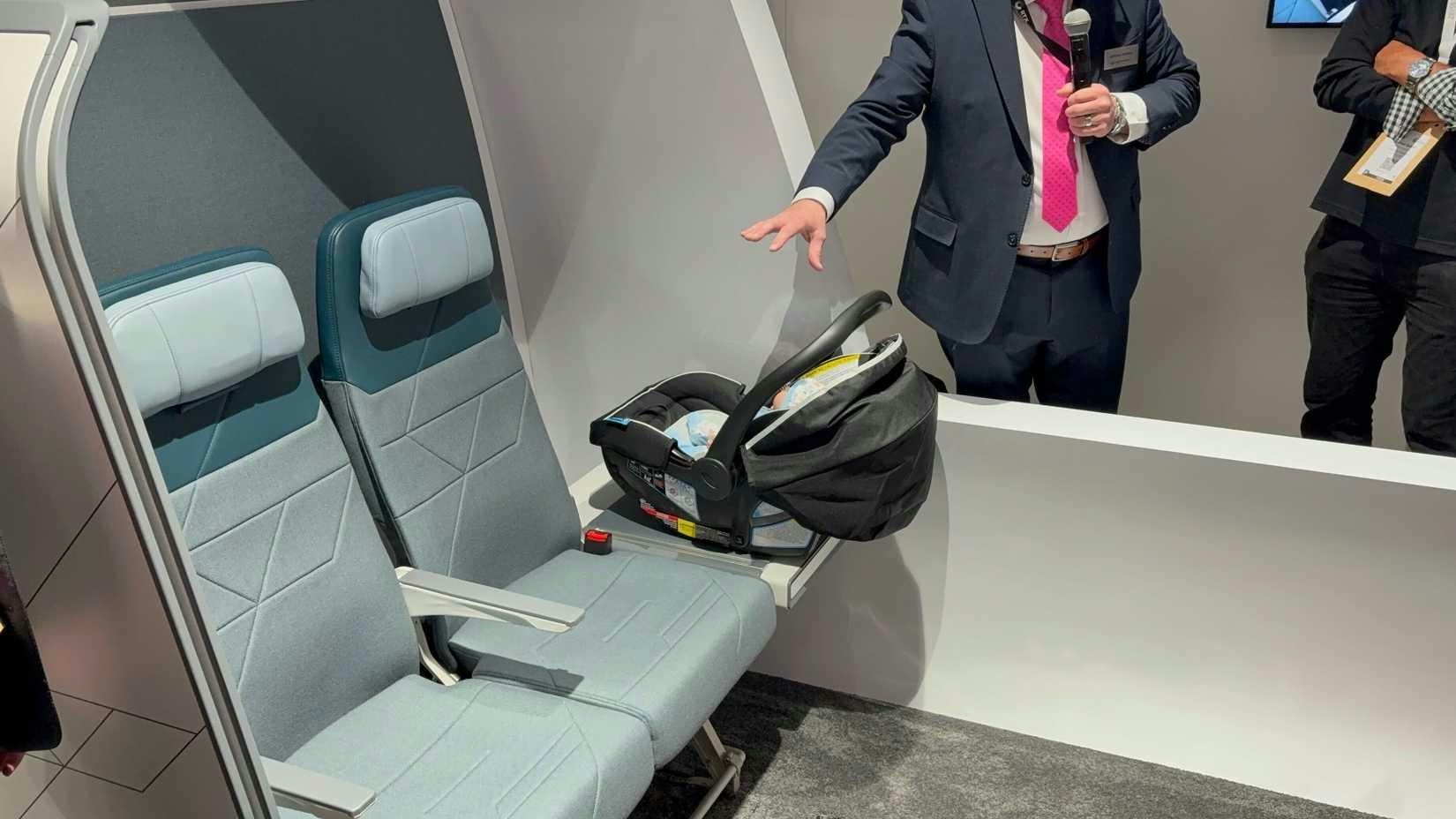
SkyNook Transforms the Last Row of Economy Into a Semi-Private Pod
The last row of economy class has long been regarded as the least desirable seating on an aircraft. Positioned adjacent to the lavatory wall, these seats offer no reclining option, while passengers contend with the constant presence of bathroom queues and the noise of galley activity. The proximity to the lavatory often brings unwelcome odors, compounding the discomfort. For years, travelers assigned to this section have accepted their fate with a resigned demeanor—neither openly frustrated nor content, but quietly enduring an unpleasant experience.
Innovation in Economy Seating
Collins Aerospace, a division of RTX and a leading name in aircraft interior design, identified an opportunity to address this persistent issue. After extensive research and development, the company introduced SkyNook, a semi-private pod concept tailored specifically for the last row of economy. Unveiled at the Aircraft Interiors Expo in Hamburg, Germany, in April 2026, SkyNook quickly garnered industry acclaim, receiving a Crystal Cabin Award for passenger comfort—a rare accolade in an industry more accustomed to recognizing ancillary fees than enhancements to passenger experience.
SkyNook redefines the last row by creating a semi-enclosed space that offers increased privacy and comfort. The design effectively shields passengers from the noise and activity of the galley and lavatory, elevating the standard of economy seating and transforming what was once a dreaded spot into a potential refuge for travelers seeking a quieter, more secluded environment.
Industry and Market Response
Reactions to SkyNook’s introduction have been varied. Many passengers have welcomed the improved comfort and privacy, viewing the innovation as a much-needed upgrade to economy class. Conversely, some critics question the necessity and appropriateness of such enhancements in a cabin section traditionally characterized by its basic, no-frills nature. The concept has also prompted competitors to take notice, with some airlines and manufacturers exploring similar innovations to maintain competitiveness, while others emphasize their own distinct offerings to differentiate themselves from the SkyNook model.
The emergence of SkyNook may signal a broader industry trend toward investing in economy-class improvements. Beyond enhancing passenger satisfaction, such innovations could create new revenue streams as airlines seek to monetize upgraded seating experiences. Whether SkyNook will become a widespread standard or remain a niche option, its debut represents a significant effort to transform the least favored seats into spaces that passengers might genuinely anticipate occupying. For now, the last row is no longer merely a place to endure but a space inviting reconsideration.

Etihad Airways Suspends Airbus A380 Flights on Key Route

Aditya Birla Group Seeks Approval for Aircraft Leasing in GIFT City

Qatar Airways Highlights Innovation and Connectivity at Arabian Travel Market 2026

Hong Kong's Five-Year Plan Includes Andrew Fan's Aircraft Parts Processing Hub Proposal

ACIA Aero Leasing Delivers ATR72-600 to Air Nostrum

RTX Appoints Jill Albertelli as Head of Pratt & Whitney

TAT Technologies Joins Beyond Aero Hydrogen Aircraft Program

AURAK Study Highlights Barriers to Air Taxi Adoption in Emerging Economies

Xiamen Air Selects Altitude for 787 Maintenance at Heathrow

Etihad and Swissport Extend Global Partnership
