Immagine

Trasforma le intuizioni dell’IA in azioni concrete

Unisciti oggi alla lista d’attesa di AeroGenie!

Tendenze

Categories

SmartKargo and Sun Phu Quoc Airways Partner to Digitize Cargo Operations

July 21, 2026By ePlane AI
SmartKargo and Sun Phu Quoc Airways Partner to Digitize Cargo Operations
0
0
SmartKargo
Sun Phu Quoc Airways
Cargo Digitization

SmartKargo and Sun Phu Quoc Airways Partner to Digitize Cargo Operations

CAMBRIDGE, Mass., July 21, 2026 — SmartKargo, a leading provider of cloud-native air cargo management solutions, has entered into a strategic partnership with Sun Phu Quoc Airways, Vietnam’s premium full-service airline developed by Sun Group. This collaboration will see Sun Phu Quoc Airways implement the SmartKargo platform to establish a modern, scalable, and fully digitized cargo business, marking a significant milestone in the airline’s commercial growth strategy.

Advancing Cargo Operations Through Digital Innovation

Sun Phu Quoc Airways aims to position cargo as a central pillar of its expansion by leveraging SmartKargo’s unified cloud architecture. The airline intends to enhance operational efficiency and competitiveness as it broadens its international network and reinforces Phu Quoc’s role as a regional aviation gateway. The planned introduction of Airbus A330 wide-body aircraft in September 2026 will substantially increase the airline’s belly cargo capacity, underscoring the timely need for a robust cargo management system.

Vietnam’s air cargo sector is experiencing rapid growth, driven by a booming export economy, surging e-commerce, and the country’s emergence as a manufacturing and logistics hub in Southeast Asia. By adopting SmartKargo’s platform from the outset, Sun Phu Quoc Airways is strategically positioned to capitalize on these trends with agility and operational precision.

Challenges and Industry Implications

Despite the promising outlook, the partnership faces notable challenges. Integrating digital cargo operations within a fragmented global logistics ecosystem will require meticulous coordination and data alignment. Overcoming issues related to data distrust and managing the complexities of specialized cargo, such as chemicals, will be critical to the initiative’s success. Market analysts observe that initial reactions may be cautious due to volatility in the air cargo sector; however, successful implementation and stabilization could stimulate broader industry interest in digitalized cargo solutions. Competitors are expected to accelerate enhancements to their own digital platforms and logistics capabilities in response, aiming to maintain their market positions.

Truong Ngo Quoc, Chief Information Officer at Sun Phu Quoc Airways, emphasized the airline’s commitment to technology-led growth, stating, “We are building our cargo business to be technology-led, commercially agile, and ready to scale. After a rigorous evaluation, SmartKargo emerged as the partner best suited to support our growth ambitions. Their platform provides the digital infrastructure we need to compete regionally and globally, and we look forward to setting a new standard for cargo excellence in Vietnam’s aviation market.”

Olivier Houri, Chief Revenue Officer at SmartKargo, highlighted the strategic importance of the partnership, saying, “Southeast Asia is one of the world’s most dynamic air cargo markets, with Vietnam at its core. We are proud to support Sun Phu Quoc Airways as they pursue an ambitious vision for their cargo operations. This partnership reflects our shared commitment to digital transformation and operational excellence in air freight.”

As Sun Phu Quoc Airways embarks on this digital transformation journey, its collaboration with SmartKargo is poised to play a pivotal role in shaping the airline’s cargo operations and advancing Vietnam’s position within the global air cargo industry.

More news
Hong Kong's Five-Year Plan Includes Andrew Fan's Aircraft Parts Processing Hub Proposal

Hong Kong's Five-Year Plan Includes Andrew Fan's Aircraft Parts Processing Hub Proposal

Hong Kong’s Five-Year Plan Endorses Aircraft Parts Processing Hub Proposal by Andrew Fan Lawmaker Andrew Fan Chun-wah’s proposal to establish a comprehensive aircraft parts industry chain has been officially incorporated into Hong Kong’s inaugural Five-Year Plan. This initiative aims to position the city as Asia’s first dedicated aircraft parts trading center, leveraging its strategic advantages as a global aviation and financial hub. Developing an Aircraft Parts Industry Chain Fan’s recommendations, unveiled ahead of the Policy Address and the Five-Year Plan announcement, encompass sectors including aviation, the marine economy, education, and sports. He underscored the rapid evolution of the global aviation industry, particularly the expansion of Asia-Pacific fleets and the growing demand for used serviceable material (USM) in the trading market. Given Hong Kong’s established status in passenger and cargo traffic, as well as investment flows, Fan argued that the city is well placed to develop a localized aircraft parts supply chain, which currently remains absent. Highlighting Hong Kong’s unique advantages—such as its free port status, unrestricted capital flows, and the common law system under the “one country, two systems” framework—Fan emphasized that these factors would facilitate international transactions and certification processes. He noted that airlines could benefit from reduced maintenance costs by servicing aircraft locally upon landing, thereby enhancing operational efficiency. To realize this vision, Fan called for enhanced cooperation on certification and standards alignment. He advocated for top-level policy design and closer collaboration with key regulatory bodies, including the US Federal Aviation Administration (FAA), the European Union Aviation Safety Agency (EASA), and the Civil Aviation Administration of China (CAAC), to achieve mutual recognition of standards. Supporting the industry’s development, Fan proposed establishing a cross-departmental mechanism, with the Commerce and Economic Development Bureau tasked with attracting parts companies and the Development Bureau responsible for identifying suitable sites. Despite the plan’s ambition, it faces significant challenges. Regulatory compliance, competition from established aerospace hubs, and the need for substantial infrastructure investment present considerable obstacles. Market analysts have expressed skepticism regarding the feasibility of transforming Hong Kong into a major aircraft parts hub, questioning the potential impact on the city’s existing financial and technology sectors. Additionally, regional competitors may intensify efforts to bolster their own aerospace capabilities, increasing pressure on Hong Kong to sustain its global standing. Broader Economic and Social Proposals Beyond aviation, Fan outlined a sustainable development blueprint for the marine economy. This includes clear maritime zoning, strategic industry layout, and conservation standards for outlying islands. He recommended the formation of a cross-departmental marine economy task force led by a senior official, supported by data monitoring and performance evaluation systems. Fan also emphasized fostering emerging marine industry clusters, upgrading high-end shipping services, and advancing blue finance initiatives. Earlier this year in the Legislative Council, Fan introduced motions addressing marine economy policy, shipping upgrades, marine technology—including biomedicine—and improving transport and tourism links for outlying islands. In the education sector, Fan advocated for strengthening teacher professional development and management, raising professional standards, and harnessing education technology (EdTech) to alleviate teacher workloads. Regarding sports, he urged expedited progress on the Pak Shek Sports Park project to support the popularization, elite development, urbanization, professionalization, and industrialization of sports in Hong Kong.
ACIA Aero Leasing Delivers ATR72-600 to Air Nostrum

ACIA Aero Leasing Delivers ATR72-600 to Air Nostrum

ACIA Aero Leasing Delivers ATR72-600 to Air Nostrum Amid Industry Delivery Challenges Dublin-based ACIA Aero Leasing, a prominent global provider of regional aircraft leasing and lease management services, has completed the delivery of an ATR 72-600 passenger aircraft (MSN1099) to Spanish regional carrier Air Nostrum. Configured with 72 seats, the aircraft was delivered on lease, marking ACIA’s inaugural transaction with the airline and further expanding the lessor’s presence in the European market. Strengthening Regional Partnerships Mick Mooney, Chief Executive Officer of ACIA, expressed enthusiasm about the new partnership, highlighting Air Nostrum’s status as one of Europe’s leading regional operators and a trusted partner of the Iberia regional network for over three decades. He emphasized the strategic importance of diversifying ACIA’s lessee portfolio through this collaboration. Carlos Bertomeu, President of Air Nostrum, welcomed the agreement as a significant step in reinforcing the airline’s regional fleet. He noted that the addition of the ATR 72-600 would enhance operational capabilities and support the carrier’s commitment to maintaining high standards of service, reliability, and efficiency. The aircraft is slated to enter service immediately, bolstering Air Nostrum’s capacity in the competitive regional aviation sector. Navigating Industry-Wide Challenges The delivery occurs amid ongoing challenges within the regional aviation industry, particularly delays affecting ATR aircraft deliveries. These delays have been exacerbated by pilot shortages impacting major ATR customers such as IndiGo, which in turn have complicated production schedules and aircraft handovers across the sector. The resulting supply chain and staffing constraints are influencing market dynamics, prompting lessors and operators to closely monitor demand and pricing trends. In response to these challenges, competitors are adapting their strategies. For instance, Swiftair recently wet leased additional ATR72-200F aircraft to strengthen its fleet, reflecting a broader industry trend of regional carriers adjusting to uncertainties in aircraft delivery and pilot availability. Despite these headwinds, ACIA’s successful delivery to Air Nostrum highlights both companies’ dedication to fleet renewal and operational resilience in a rapidly evolving market environment.
RTX Appoints Jill Albertelli as Head of Pratt & Whitney

RTX Appoints Jill Albertelli as Head of Pratt & Whitney

RTX Appoints Jill Albertelli as President of Pratt & Whitney RTX has announced that Jill Albertelli will assume the role of President of Pratt & Whitney, effective January 1, 2027. She will succeed Shane Eddy, who is set to retire after more than 40 years with the company. In her new position, Albertelli will report directly to RTX Chairman and CEO Chris Calio. Extensive Experience and Leadership Albertelli brings over three decades of experience within Pratt & Whitney, having held diverse roles across engineering, manufacturing, quality assurance, supply chain management, commercial programs, sales, maintenance and repair operations, transformation, and strategic planning. Currently, she leads the company’s Military Engines business, where she has been instrumental in securing Pratt & Whitney’s exclusive propulsion contract for the F-35 fighter program. Her leadership has also contributed to improvements in the delivery and quality of the F135 engine, as well as the expansion of sustainment capacity. Shane Eddy, who began his career as a flight-line mechanic and became President of Pratt & Whitney in 2022, will remain with RTX until March 2027. During this period, he will serve as a special adviser to facilitate a smooth leadership transition. Eddy’s tenure was marked by a significant multi-year transformation of the company, including increased production and sustainment efforts for the Geared Turbofan and F135 engine programs. Strategic Implications and Industry Outlook Albertelli’s appointment arrives at a critical juncture for RTX, which must balance integrating her leadership approach with Pratt & Whitney’s established corporate culture. Ensuring alignment with RTX’s broader strategic goals will be essential as she takes on her new responsibilities. Industry analysts anticipate a range of market reactions, from cautious skepticism to optimism, reflecting Albertelli’s strong reputation and proven track record. Competitors are expected to closely observe RTX’s strategic direction under her leadership, potentially accelerating their own innovation and leadership initiatives in response. This leadership transition highlights RTX’s commitment to continuity and strategic growth as it navigates the challenges of a rapidly evolving aerospace sector.
TAT Technologies Joins Beyond Aero Hydrogen Aircraft Program

TAT Technologies Joins Beyond Aero Hydrogen Aircraft Program

TAT Technologies Collaborates with Beyond Aero on Hydrogen-Electric Aircraft Development TAT Technologies has entered into a strategic partnership with French aerospace company Beyond Aero to contribute to the thermal management system design for Beyond Aero’s pioneering hydrogen-electric business aircraft program. The collaboration focuses on the development of the ONE, an innovative aircraft engineered from the ground up for hydrogen-electric propulsion. This aircraft aims to transport six passengers over distances of up to 800 nautical miles (approximately 1,500 kilometers), offering a range roughly five times greater than that of comparable battery-powered models. Advancing Sustainable Aviation Technologies Beyond Aero, established in 2020 and operating from Toulouse, Paris, and Los Angeles, specializes in fuel-cell propulsion, gaseous hydrogen storage, and advanced thermal management systems. The company employs over 80 aerospace engineers dedicated to pushing the boundaries of sustainable aviation. Central to the partnership is the integration of TAT Technologies’ Universal Cooling System (UCS) into the ONE’s design. The UCS is a scalable thermal management solution designed to deliver efficient cooling across a variety of operating conditions, while adhering to the stringent size, weight, and performance criteria essential for electric and hydrogen-electric aircraft. Technical Challenges and Market Implications The incorporation of advanced thermal management into hydrogen-electric propulsion systems presents considerable engineering challenges. TAT Technologies is tasked with ensuring the UCS operates reliably and efficiently under diverse scenarios, adapting the system to fit the ONE’s clean-sheet architecture. This demands rigorous engineering efforts and close collaboration between the two firms. Following the announcement, Beyond Aero’s stock price experienced a modest increase of 0.42%, reflecting positive market sentiment. Industry analysts suggest that this partnership could accelerate competitive developments in thermal management solutions for hydrogen-electric aircraft, as the demand for sustainable aviation technologies intensifies. Both TAT Technologies and Beyond Aero regard their collaboration as a significant advancement toward making hydrogen-powered flight commercially viable, with the potential to establish new benchmarks for efficiency and environmental performance within the business aviation sector.
AURAK Study Highlights Barriers to Air Taxi Adoption in Emerging Economies

AURAK Study Highlights Barriers to Air Taxi Adoption in Emerging Economies

AURAK Study Highlights Barriers to Air Taxi Adoption in Emerging Economies A recent study conducted by the American University of Ras Al Khaimah (AURAK) has shed light on the principal obstacles impeding the adoption of air taxis in emerging economies. This research offers a strategic framework for policymakers and industry leaders as the United Arab Emirates intensifies its efforts to advance urban air mobility initiatives. Research Context and Methodology Published in the *International Journal of Mathematical, Engineering and Management Sciences*, the study titled *Analyzing the Barriers of Adopting Air Taxis in Emerging Economy Context: A Decision-Making Framework* was spearheaded by Professor Tahseen Arshi, Dean of AURAK’s School of Business, in collaboration with researchers from India. The timing of this research is particularly significant, coinciding with ambitious plans by cities such as Dubai to introduce commercial air taxi services alongside substantial investments in regulatory and infrastructural support systems. Air taxis, predominantly electric vertical take-off and landing (eVTOL) aircraft, are widely regarded as a promising solution to urban congestion, offering faster and more environmentally friendly transportation options. However, despite rapid technological advancements, their broad adoption remains constrained by challenges that extend beyond engineering. The study employs the Technology-Organization-Environment-Human (TOEH) framework, complemented by Interpretive Structural Modelling (ISM) and MICMAC analysis, to identify and categorize seventeen major barriers into technological, organizational, environmental, and human factors. This approach enabled the researchers to map the interrelationships among these barriers and determine which require immediate attention. Key Barriers to Adoption Among the most critical challenges identified are regulatory and legal uncertainty, effective airspace management, technological readiness, infrastructure development, investment requirements, public trust and safety concerns, and awareness and acceptance of the technology. The research highlights regulatory ambiguity as the most influential barrier, underscoring the necessity for clear policy frameworks and standards as a prerequisite for addressing other challenges effectively. Professor Khalid Hussain, Provost of AURAK, emphasized the importance of a holistic approach, stating, “The future of transportation extends far beyond developing new aircraft. It requires building an ecosystem where technology, regulation, infrastructure, and public confidence evolve together.” This perspective reflects AURAK’s commitment to tackling practical challenges while supporting the UAE’s ambition to lead in innovation and smart mobility. Global Market Trends and Industry Perspectives The findings align with broader global trends in the air taxi market. While companies such as Skyhop have made strides with electric seaplanes, others like EHang have encountered setbacks due to regulatory delays, particularly in China. Market responses remain varied, with consumer acceptance and regulatory clarity emerging as pivotal hurdles. Industry strategies also differ, with established manufacturers like Airbus and Embraer focusing on traditional aircraft advancements, whereas innovators such as Virgin and Joby are advancing eVTOL air taxi technologies. Professor Arshi remarked, “Air taxis have the potential to transform urban transportation, but successful adoption depends on much more than technological innovation. Our study shows that policymakers, regulators, and industry must address regulatory clarity, infrastructure readiness, stakeholder collaboration, and public trust simultaneously.” He expressed hope that the proposed framework would facilitate informed decision-making and accelerate the responsible adoption of urban air mobility in emerging economies. As the UAE positions itself at the forefront of advanced air mobility, the AURAK study offers a practical decision-making tool to guide governments and industry stakeholders in scaling urban air mobility solutions safely, efficiently, and with broad public acceptance.
Xiamen Air Selects Altitude for 787 Maintenance at Heathrow

Xiamen Air Selects Altitude for 787 Maintenance at Heathrow

Xiamen Air Selects Altitude for 787 Maintenance at Heathrow Dublin-based Altitude Engineering has secured a long-term contract with Xiamen Air to provide scheduled line maintenance services for the airline’s Boeing 787 Dreamliner fleet at London Heathrow Airport. The agreement will commence with the launch of Xiamen Air’s new London-Xiamen route in September 2026. Under the terms of the contract, Altitude will be responsible for routine line maintenance checks and defect rectification on the carrier’s 787 operations at the UK’s busiest airport. Expansion of Altitude Engineering’s Presence at Heathrow Altitude Engineering has steadily expanded its role as an independent line maintenance provider across Europe, offering technical support to both passenger and cargo airlines operating wide-body and narrow-body aircraft. Its growing operations at Heathrow reflect increasing demand from international carriers seeking dependable maintenance services at this major global aviation hub. The partnership with Xiamen Air marks a significant milestone in Altitude’s continued growth within the European maintenance sector. Navigating Geopolitical and Operational Challenges The collaboration arrives amid a complex geopolitical landscape affecting airlines operating between Europe and Asia. Xiamen Air, like many carriers, faces potential challenges related to geopolitical tensions, including safety concerns over Russian airspace due to increased drone activity. These developments have drawn market scrutiny and may result in higher operational costs if rerouting becomes necessary. In response, some competitors are reportedly adopting "China plus one" strategies, diversifying their routes to mitigate geopolitical and regulatory risks. Altitude’s expanded responsibilities at Heathrow may also encounter logistical and regulatory challenges as evolving international regulations impact Europe-Asia aviation links. Both Altitude and Xiamen Air will need to adapt to these changes to ensure seamless maintenance services as the new transcontinental route is established. Despite these complexities, the agreement highlights Altitude’s growing influence in the European maintenance market and underscores Xiamen Air’s commitment to expanding its international network, with London Heathrow positioned as a critical gateway for its long-haul ambitions.
Etihad and Swissport Extend Global Partnership
Etihad and Swissport Extend Global Partnership

Etihad and Swissport Expand Global Partnership Etihad Airways and Swissport have formalized an agreement to extend their global partnership, increasing the number of airports where Swissport provides services to the UAE carrier from 30 to 40. This expansion will see Swissport deliver ground handling and cargo services at ten additional airports across Africa, Europe, North America, the Middle East, and Asia, broadening its operational footprint for Etihad. Enhancing Services and Innovation The partnership also includes plans to explore airport hospitality through Swissport’s Aspire lounge brand, which currently operates 110 lounges worldwide. Both companies have emphasized that technology and innovation will be central to their collaboration. They intend to focus on automation, artificial intelligence, and data-driven solutions, including the deployment of autonomous ground vehicles, to improve operational efficiency, service delivery, and the overall passenger experience. Challenges and Market Dynamics Despite the promising expansion, the partnership faces potential challenges related to aircraft availability. Etihad’s CEO, Antonoaldo Neves, recently identified limited aircraft as a significant medium-term constraint for the airline’s growth, particularly in key markets such as Africa and China. This limitation could slow the pace at which Etihad expands its network and, consequently, the rollout of Swissport’s services at new destinations. Market dynamics are also evolving as Swissport strengthens its position in the ground handling sector, notably in Saudi Arabia, following Flynas’s recent acquisition of an equity stake in the company. This development is expected to intensify competition among ground handling providers, especially in regions where Etihad and Swissport are expanding their cooperation. Industry analysts anticipate that rival firms may respond by enhancing their own partnerships and seeking to increase their market share in these strategic markets. The new agreement establishes a framework for Etihad and Swissport to add further airports and services as the airline’s network grows. It also emphasizes the development of workforce capabilities to support the partnership. Both companies have described the collaboration as flexible, designed to accommodate future expansion and adapt to evolving industry challenges and opportunities.
Sepehran Airlines B737 Returns to Mashhad After Tyre and Engine Issues

Sepehran Airlines B737 Returns to Mashhad After Tyre and Engine Issues

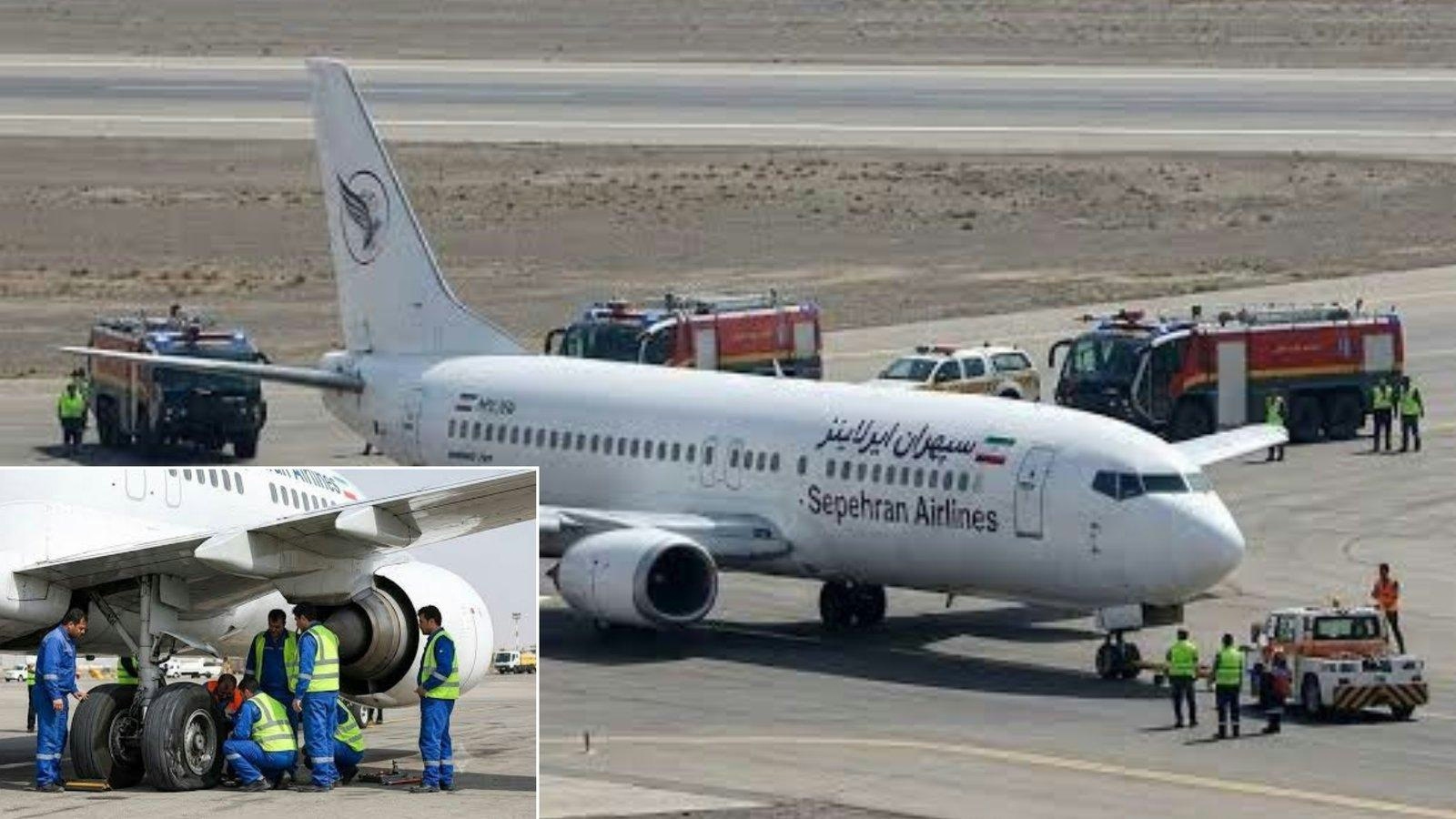
Sepehran Airlines Boeing 737 Returns to Mashhad Following Tyre and Engine Emergencies A Sepehran Airlines Boeing 737 operating a domestic flight from Mashhad to Kermanshah was compelled to return to Mashhad for an emergency landing on 15 September 2026, shortly after takeoff, due to a series of technical malfunctions. Incident Details and Aircraft Response The aircraft departed Shahid Hasheminejad International Airport in Mashhad at approximately 17:30 local time, following two prior delays. According to Hassan Jafari, public relations director for the Razavi Khorasan provincial airports authority, the incident began when the outer rubber layer of one of the landing gear tyres separated as the plane left the runway. Jafari emphasized that the tyre itself did not burst. Shortly after becoming airborne, the flight crew reported an engine emergency to air traffic control and requested an immediate return to Mashhad. The aircraft safely landed back at Shahid Hasheminejad International Airport around 17:39. All passengers disembarked without injury and were subsequently transferred to Kermanshah on a replacement flight. Passenger Experience and Cabin Conditions Footage recorded inside the cabin and circulated by Iranian media captured the tense moments during the return flight. The video depicts violent shaking of the cabin, with sections of the overhead ceiling lining detaching and falling into the passenger area, exposing parts of the internal structure. Passengers are seen bracing themselves and attempting to shield against falling panels, while audible panic and distress are evident. Despite the dramatic scene, no injuries were reported among passengers or crew. Investigation and Broader Context The exact relationship between the tyre issue, the reported engine emergency, the severe vibrations, and the resulting cabin interior damage remains unclear. Initial reports described the incident as a tyre burst followed by engine damage; however, airport authorities have clarified that only the tyre’s outer tread separated. The Civil Aviation Organisation of Iran has launched an investigation to determine the precise cause of the technical failures and subsequent damage. This incident occurs amid ongoing challenges faced by Iranian airlines, including Sepehran, due to US sanctions that restrict access to spare parts and maintenance services. These constraints complicate efforts to maintain fleet safety and operational efficiency. In response to the emergency, aviation regulators are expected to intensify scrutiny of Sepehran’s operations, while passenger concerns regarding safety may increase. Competitors may seek to capitalize on the situation by offering additional flights or enhanced services, potentially affecting Sepehran’s market position. Following the emergency landing, the airport runway was temporarily closed for inspection before reopening, with both runways resuming normal operations. The exact number of passengers and crew aboard the affected flight has not been officially disclosed. The investigation into the incident remains ongoing.
Etihad Deploys Widebody Fleet to Meet Strong Demand
Etihad Deploys Widebody Fleet to Meet Strong Demand

Etihad Deploys Widebody Fleet to Meet Strong Demand Strategic Focus on High-Demand Routes Etihad Airways is intensifying its focus on deploying widebody aircraft to routes exhibiting the strongest passenger demand, moving away from an even distribution of capacity across its network. This demand-driven approach is particularly evident in the airline’s summer 2026 schedule, where flagship Airbus A380s and Boeing 777s are concentrated on key markets such as Paris, Tokyo, and Dhaka. By aligning aircraft deployment with market demand, Etihad aims to optimize capacity utilization and enhance its competitive positioning on premium long-haul routes. Capacity Expansion in Paris, Tokyo, and Dhaka Paris Charles De Gaulle Airport (CDG) exemplifies Etihad’s strategic widebody deployment. Beginning July 1, 2026, the airline will operate three daily flights between Abu Dhabi and Paris, including two Airbus A380 services and one Boeing 787-9 flight. The A380, Etihad’s flagship aircraft featuring four distinct cabins—The Residence, First Apartments, Business Class, and Economy—reflects the carrier’s commitment to premium travel experiences. Chief Revenue and Commercial Officer Arik De described the double-daily A380 operation as a “statement of confidence” in the Paris market. The flight schedule, with departures at 02:35, 08:50, and 14:20 from Abu Dhabi, is designed to serve diverse passenger segments and strengthen Etihad’s share of premium and long-haul traffic between the UAE and France. Similarly, Etihad has expanded its Tokyo Narita Airport (NRT) service with the introduction of daily A380 flights starting June 18, 2026. This deployment, which reactivates the airline’s eighth A380, responds to robust demand for premium travel on the Abu Dhabi–Tokyo route. The A380’s configuration—comprising 70 Business Class seats, 415 Economy seats, nine First suites, and The Residence—significantly enhances both overall and premium capacity. In Dhaka, the airline has established year-round Boeing 777 operations following a sold-out launch, further demonstrating its commitment to matching aircraft size with market demand. Meanwhile, routes with lower demand are served by narrowbody aircraft such as the A321LR and A320, ensuring efficient fleet utilization. Opportunities and Challenges Ahead Etihad’s targeted widebody deployment is driving growth in established markets, yet the airline faces several challenges. Aircraft availability remains the primary medium-term constraint, limiting the pace at which Etihad can expand its widebody operations. The carrier is also focusing on Africa and China as key growth markets for 2025, with strong bookings reported for new capacity in these regions. External factors continue to complicate network planning. The ongoing Middle East conflict has contributed to elevated fuel costs and potential route disruptions. Additionally, competitive pressures are intensifying as rival airlines pursue fleet modernization initiatives. For instance, KLM has completed test flights of its new A350 aircraft ahead of deliveries, while BermudAir plans to replace its Embraer E-Jet fleet with Airbus A220s. Etihad’s evolving strategy reflects a shift toward a more agile and market-responsive deployment of its widebody fleet. By concentrating capacity on routes with the strongest demand and adapting to changing market conditions, the airline seeks to maximize profitability and enhance customer satisfaction amid a challenging industry landscape.
Korean Air Finalizes $36.2 Billion Deal with Boeing

Korean Air Finalizes $36.2 Billion Deal with Boeing

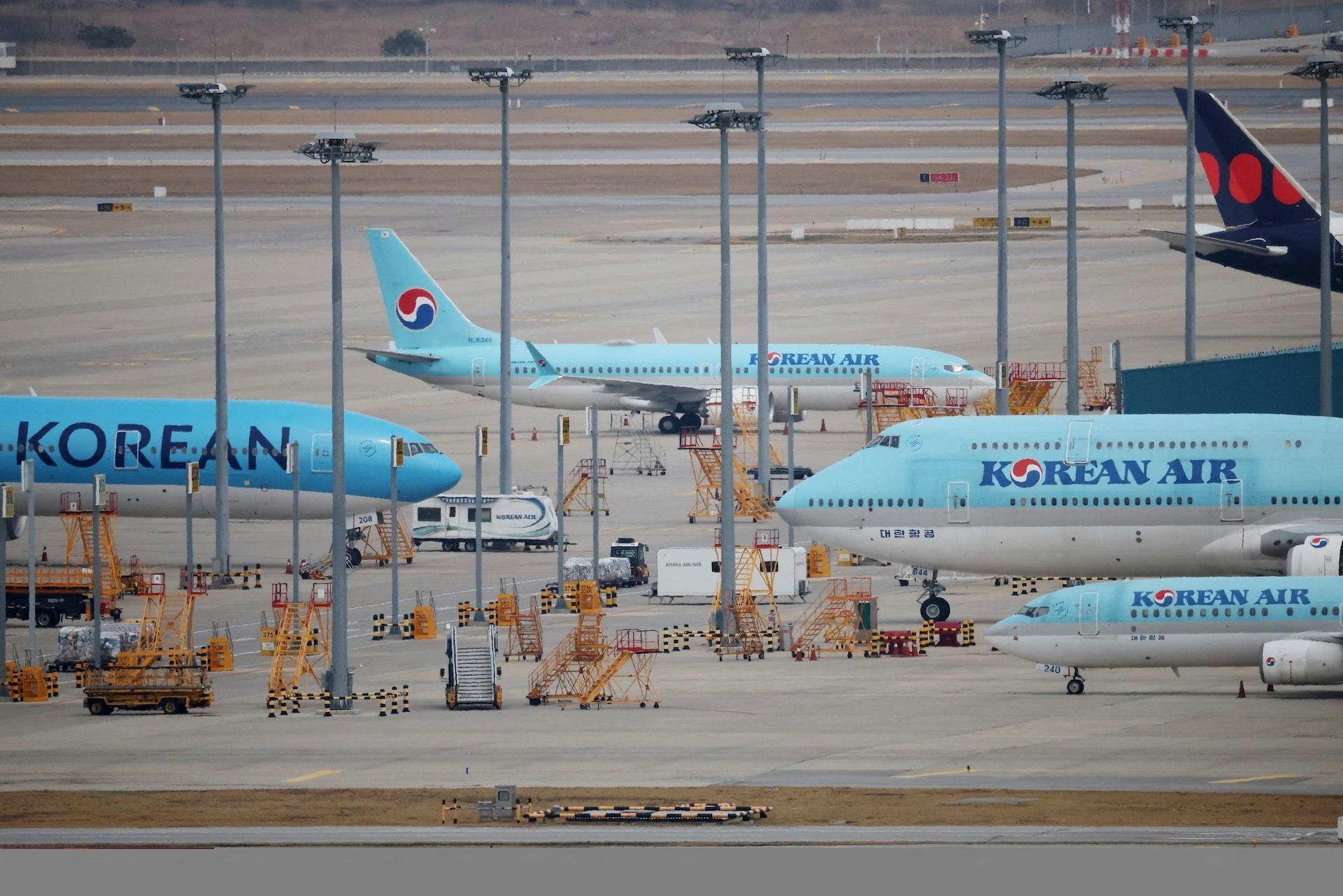
Korean Air Finalizes $36.2 Billion Aircraft Order with Boeing Korean Air has confirmed a landmark agreement to acquire 103 aircraft from Boeing, representing a $36.2 billion deal at list prices. The order encompasses a diverse mix of wide-body passenger jets, freighters, and single-aisle planes, reflecting the airline’s strategic intent to expand and modernize its fleet amid intensifying competition within the global aviation sector. Strengthening a Longstanding Partnership Amid Industry Challenges Originally announced in 2025, this transaction further solidifies the enduring relationship between Korean Air and Boeing. However, the airline faces significant challenges as it proceeds with this major investment. Rising fuel prices and ongoing disruptions to flight routes—particularly those linked to conflicts in the Middle East—pose risks to operational costs and scheduling. These factors may constrain Korean Air’s ability to fully leverage its expanded fleet in the short term. Market analysts and investors are closely scrutinizing the financial ramifications of such a substantial order. Some have voiced concerns regarding the timing and scale of the commitment, especially given the current headwinds facing the aviation industry. Korean Air’s move is also expected to influence competitive dynamics in the region. Rivals such as Vietnam Airlines may consider placing similar large-scale orders to preserve their market share, while other carriers might explore partnerships with alternative manufacturers like Airbus or Embraer, potentially reshaping the competitive landscape. Implications for Sustainability and Industry Evolution The agreement arrives at a critical juncture as the aviation industry faces mounting pressure to meet sustainability and decarbonization targets. With global efforts aimed at reducing carbon emissions by 2050, large-scale fleet renewals such as Korean Air’s are likely to intensify discussions around the adoption of new technologies and the future trajectory of commercial aviation. Despite the prevailing challenges, Korean Air’s significant investment underscores its confidence in long-term growth prospects and its commitment to maintaining a competitive position in the international market.
line