
Trasforma le intuizioni dell’IA in azioni concrete

Tendenze
Categories
STARLUX Airlines to Lease 8 Additional Airbus A321neos
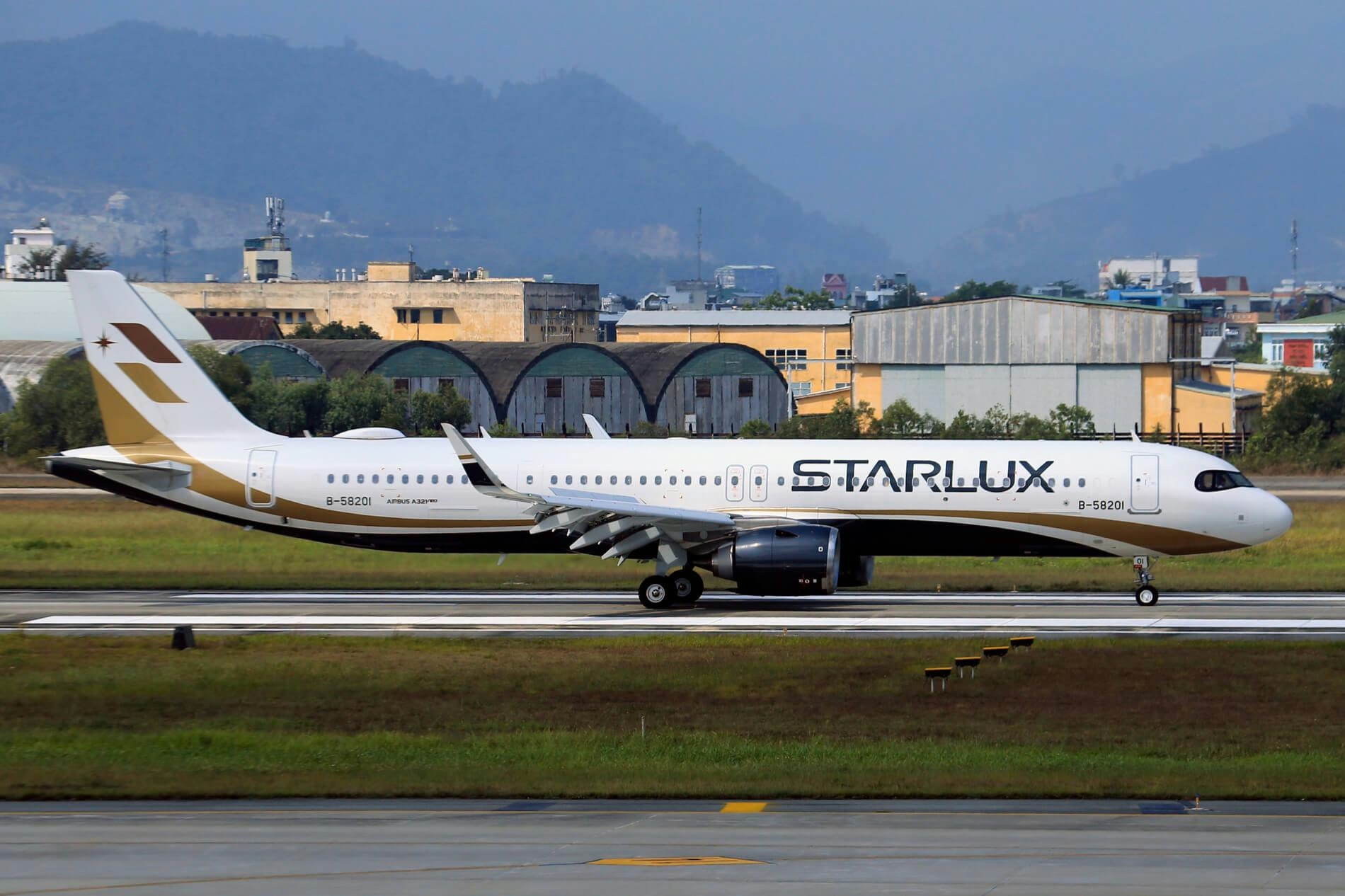
STARLUX Airlines to Lease Eight Additional Airbus A321neos
Taiwanese premium carrier STARLUX Airlines has announced plans to expand its narrowbody fleet by leasing eight additional Airbus A321neo aircraft. This decision, approved by the airline’s board and disclosed in a regulatory filing to the Taiwan Stock Exchange on March 10, 2026, reflects STARLUX’s ongoing strategy to enhance its presence in the competitive Asia-Pacific aviation market.
Details of the Lease Agreement and Fleet Strategy
According to the filing, STARLUX will lease the aircraft from BOC Aviation, with an estimated lease value of approximately $81.25 million per aircraft. The final transaction amount may be subject to adjustment based on the actual leasing terms. The airline clarified that the agreement is not a related-party transaction and is intended to support the expansion of its route network.
The addition of these A321neos will reinforce STARLUX’s narrowbody operations, which currently form the backbone of its short- and medium-haul routes. The Airbus A321neo is widely recognized for its fuel efficiency and extended range, making it a preferred choice for regional services across Asia-Pacific and beyond. STARLUX operates an all-Airbus fleet, including the A321neo, A330neo, and A350 family, aligning with its strategy of deploying narrowbody aircraft for regional routes while utilizing widebody jets for long-haul expansion.
Founded in 2018 and headquartered in Taiwan, STARLUX has positioned itself as a premium full-service carrier focused on delivering a high-quality passenger experience alongside rapid network growth. Since commencing operations in 2020, the airline has steadily expanded both its fleet and route network, targeting markets across Asia as well as long-haul destinations. The planned lease of eight additional A321neos is expected to increase capacity on high-demand routes, particularly within Northeast and Southeast Asia.
Challenges and Market Implications
Despite the growth prospects, STARLUX faces several challenges in executing this expansion. Securing favorable lease terms in a competitive market where demand for the Airbus A321neo remains strong will be critical. Integrating the new aircraft into existing operations will require meticulous planning to maintain service quality and operational efficiency. Furthermore, the airline must ensure that market demand justifies the increased capacity.
The broader aviation market may also be affected by STARLUX’s fleet expansion. Heightened competition for A321neo aircraft could lead to increased prices or lease rates, as other carriers pursue similar growth strategies. For instance, Delta Air Lines recently exercised options for 34 Airbus A321neos, underscoring the robust industry demand for this aircraft type. Competitors may respond by accelerating their own fleet renewals or expansions to preserve market share.
While STARLUX’s filing confirms the leasing plan, additional details such as delivery schedules and aircraft configurations have yet to be disclosed. Nevertheless, this move signals the airline’s commitment to strengthening its regional position and proactively adapting to evolving market dynamics.

Bangladesh Launches Initiative to Become Regional Aviation Hub
Russia Transports PD-8 Engine to India for International Certification

Kyrgyzstan to Adopt EMPIC GmbH Software for Flight Safety Oversight

Why Hawaiian Airlines Is Waiting Until 2028 To Add A Premium Economy Cabin To Its Airbus A330 Fleet

Engine Fault Causes Royal Navy Helicopter Crash Fatality

Joby Aviation Begins Texas Air Taxi Test Flights Amid Stock Decline

Iberia Receives Full Approval for Airbus A350 Heavy Maintenance

NetJets to Construct Terminal and Hangar at Dallas Love Field

Using AI in Aircraft Purchases

CIAM Unveils RPD-150T Engine to Replace Rotax 150 hp Model
