
Trasforma le intuizioni dell’IA in azioni concrete

Tendenze
Categories
Study Finds Equipment Failures Remain Leading Cause of General Aviation Fatalities

Study Finds Equipment Failures Remain Leading Cause of General Aviation Fatalities
For decades, efforts to improve safety in general aviation (GA) have primarily focused on enhancing pilot training, decision-making, and proficiency. However, a recent study reveals that equipment failures continue to pose a significant and persistent threat, remaining the leading cause of fatal accidents in GA over the past 30 years.
Persistent Risks Despite Advances in Safety
Researchers Douglas D. Boyd of Embry-Riddle Aeronautical University and Linfeng Jin of Eastern Michigan University conducted a comprehensive analysis of National Transportation Safety Board (NTSB) accident data alongside Federal Aviation Administration (FAA) fleet-hour records spanning from 1989 to 2023. Their findings indicate that while fatal accidents from other causes have declined, the rate of fatal accidents attributed to mechanical failures has remained largely unchanged.
Although equipment failures represent a relatively small proportion of overall GA accidents, their consistency is notable. The study differentiates between type-certificated aircraft and experimental-amateur-built (EAB) aircraft, highlighting distinct patterns in failure modes. In type-certificated aircraft, 67 percent of fatal equipment-related accidents were linked to propulsion system failures. Conversely, in EAB aircraft, 36 percent of fatal accidents resulted from airframe failures, frequently associated with builder or manufacturer errors.
A particularly concerning discovery was that most engine failures in type-certificated aircraft occurred well before reaching the manufacturer’s recommended time between overhaul (TBO). Over 90 percent of these failures involved internal components such as crankshafts, pistons, and camshafts—parts that are not accessible during standard annual inspections. Fatigue and corrosion accounted for 60 percent of propulsion failures, while inadequate maintenance was responsible for 23 percent. In EAB aircraft, manufacturing or builder errors contributed to 55 percent of airframe failures, with fatigue and corrosion causing an additional 20 percent.
Implications for Pilots and the Aviation Industry
The study highlights a sobering reality: adherence to current annual inspection protocols and low engine hours do not guarantee immunity from catastrophic mechanical failure. Pilots are therefore advised to consistently prepare for the possibility of engine failure, regardless of maintenance history.
Risk mitigation strategies recommended by the researchers emphasize maintaining a glide option by staying within gliding distance of suitable landing areas whenever possible. This is particularly important given that most internal failures are undetectable and can occur well inside the TBO limits. Pilots are also encouraged to avoid hazardous routes, such as night flights over terrain unsuitable for emergency landings, crossings over large bodies of water without sufficient altitude, and routes that could result in being “terrain-trapped.” Additionally, awareness of environmental factors that accelerate fatigue and corrosion—such as coastal regions, high humidity, and prolonged periods of inactivity—is critical.
Broader Industry Impact and Regulatory Response
The persistence of equipment-related fatalities is prompting heightened regulatory scrutiny and calls for enhanced safety measures within the GA sector. Operators may face increased insurance premiums and potential operational delays due to mandatory equipment upgrades. The market is responding accordingly, with investors showing a preference for companies that demonstrate strong safety records and employ advanced technologies.
In response, industry competitors are accelerating the development of safer equipment, engaging in collaborative safety initiatives, and, in some cases, consolidating as smaller operators struggle to meet evolving safety standards. The study’s findings underscore the necessity for continued vigilance across all stakeholders—including pilots, mechanics, manufacturers, regulators, and investors—to address the enduring risks posed by equipment failures in general aviation.

Kenya Airways Aims to Resume Operations of Grounded Fleet by Early 2027
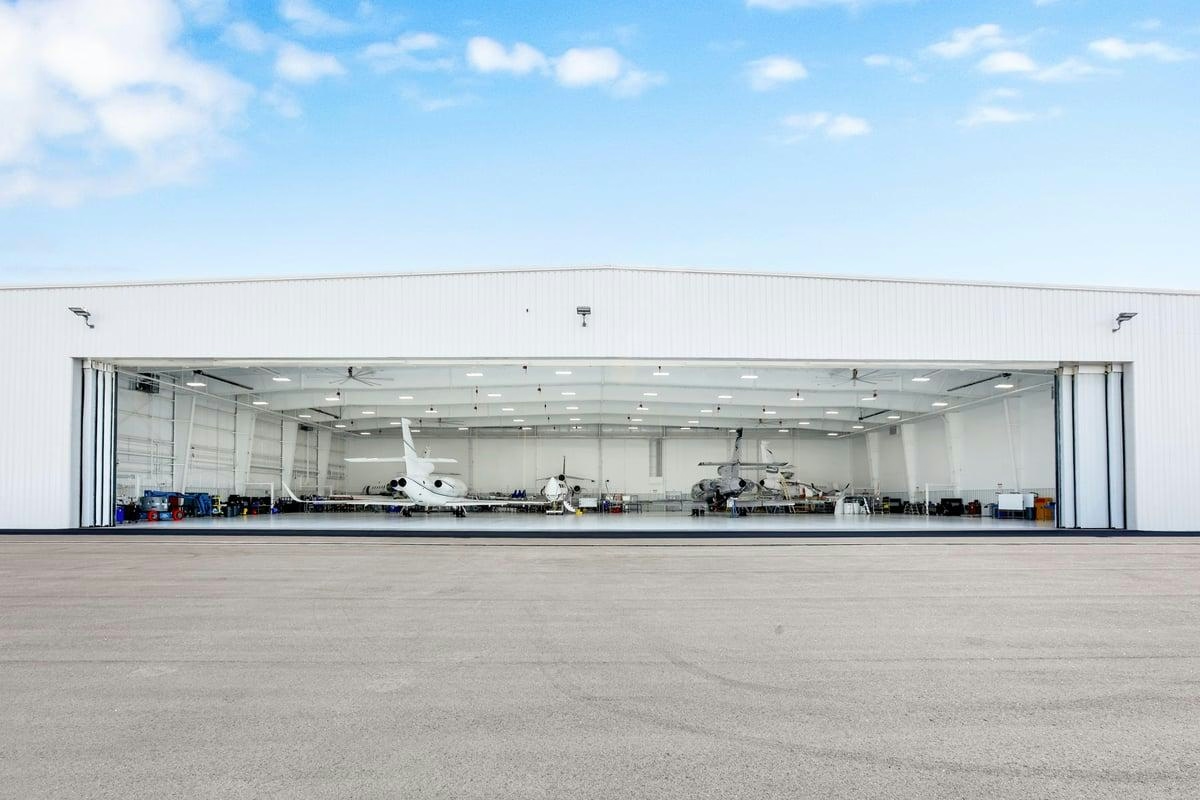
StandardAero Expands Bombardier Global MRO Services at Van Nuys Facility

Operating Costs of a Boeing 787-9 Dreamliner Per Hour in 2026
Cabinet Urged to Form Interagency Group on Aircraft Leasing Taxation

IndiGo CEO Plans 60 Airbus A350s to Boost International Capacity by 40% by 2030
Airbus Shares Stable Amid Rising H1 2026 Deliveries and Revenue

Eight Aboard Twin-Engine Cessna Crash in Remote Alaska
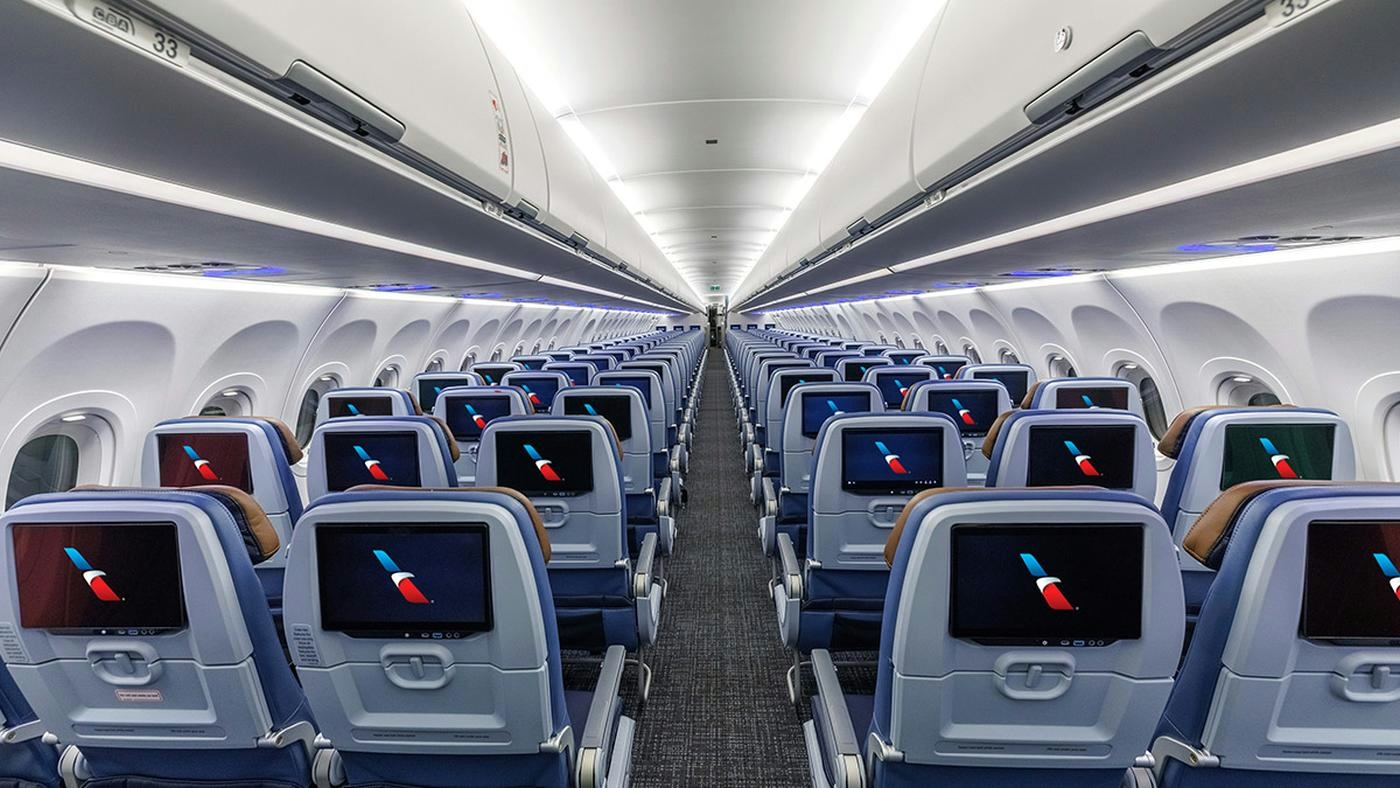
American Airlines Plans to Receive New Aircraft Deliveries in 2026

Delta Flight Returns to Atlanta Airport Due to Engine Trouble

Samoa Airways Recovers Damaged DHC-6-300 Aircraft
