
Trasforma le intuizioni dell’IA in azioni concrete

Tendenze
Categories
Supreme Court Rejects Plea for AI Safety Audit of All Airlines
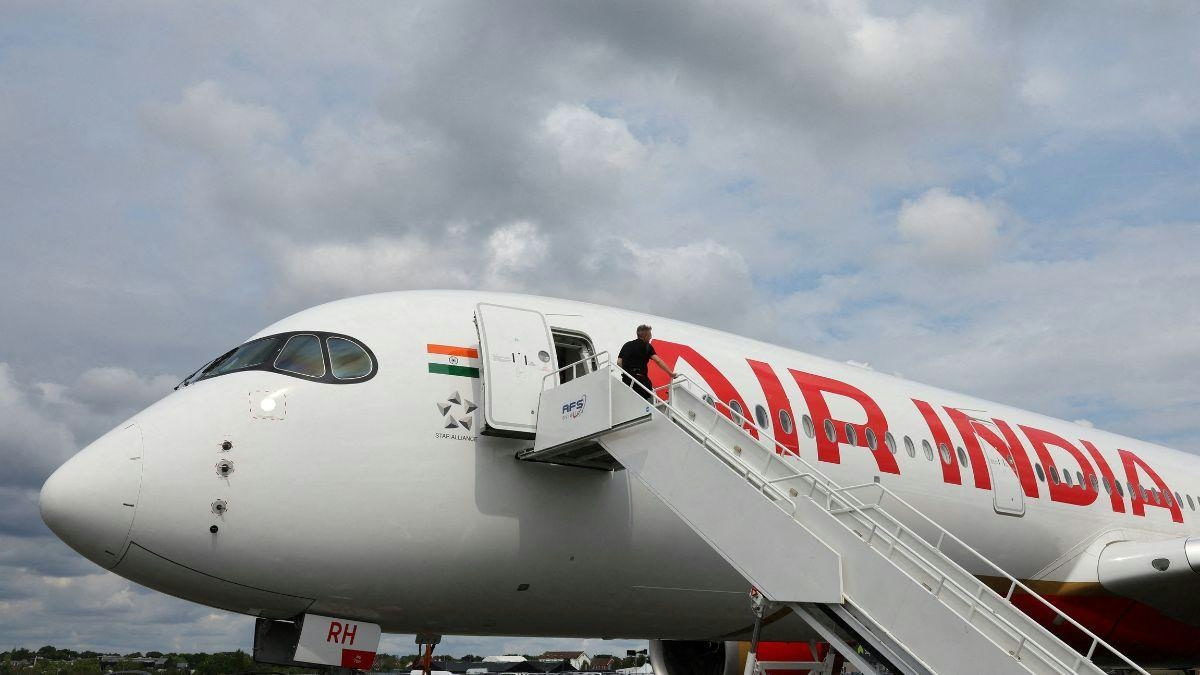
Supreme Court Declines Plea for Comprehensive AI Safety Audit Across Airlines
Background and Petition Details
The Supreme Court of India on Friday dismissed a petition seeking a comprehensive safety audit of all airlines in the wake of the recent Air India AI-171 crash near Ahmedabad on June 12. The petitioners, advocate N K Goswami and L P Goswami—a passenger on Air India flight AI-143—had called for urgent intervention following a fire incident aboard the flight from Delhi to Paris on June 7, which necessitated an emergency landing in Sharjah and resulted in passengers being stranded for 16 hours. The petition alleged systemic safety lapses and deliberate negligence by Air India, urging the court to issue a writ of mandamus to enforce corrective measures.
Supreme Court’s Response and Reasoning
The bench, comprising Justices Surya Kant and Joymalya Bagchi, expressed reservations about the petition’s narrow focus on a single airline. Justice Kant questioned the rationale behind singling out Air India, emphasizing that concerns about airline safety should not be confined to one carrier. The court suggested that such issues are better addressed through existing regulatory frameworks, including consumer forums, the Directorate General of Civil Aviation (DGCA), and the Union government. The bench further cautioned against any perception that the petition was motivated by competitive interests, advising that a public interest litigation (PIL) encompassing all domestic and international airlines would be more appropriate. Only if regulatory bodies failed to act would the court consider intervention.
Implications for the Aviation Sector
The Supreme Court’s refusal to mandate an industry-wide safety audit underscores the complexities involved in regulating safety standards across India’s rapidly expanding aviation market. This decision may elicit mixed reactions: some investors and stakeholders might view it as a missed opportunity to enforce stricter safety oversight, while others could interpret the ruling as preserving operational flexibility and encouraging innovation within the sector. Airlines may respond by enhancing their internal safety protocols or advocating for more nuanced regulatory approaches tailored to their specific operational contexts.
By emphasizing the need for comprehensive, sector-wide solutions rather than targeting individual carriers, the court’s ruling highlights the delicate balance between regulatory oversight, industry innovation, and passenger safety in India’s aviation landscape.
American Airlines Plans to Receive New Aircraft Deliveries in 2026
Delta Flight Returns to Atlanta Airport Due to Engine Trouble

Samoa Airways Recovers Damaged DHC-6-300 Aircraft
Man Ingested by Frontier Airlines Engine Marks Denver’s Sixth Airfield Security Breach in Three Years

The Advantages and Disadvantages of Owning Versus Leasing a Private Jet
Former Spirit Employees Express Concerns Over AI Partnership With Google
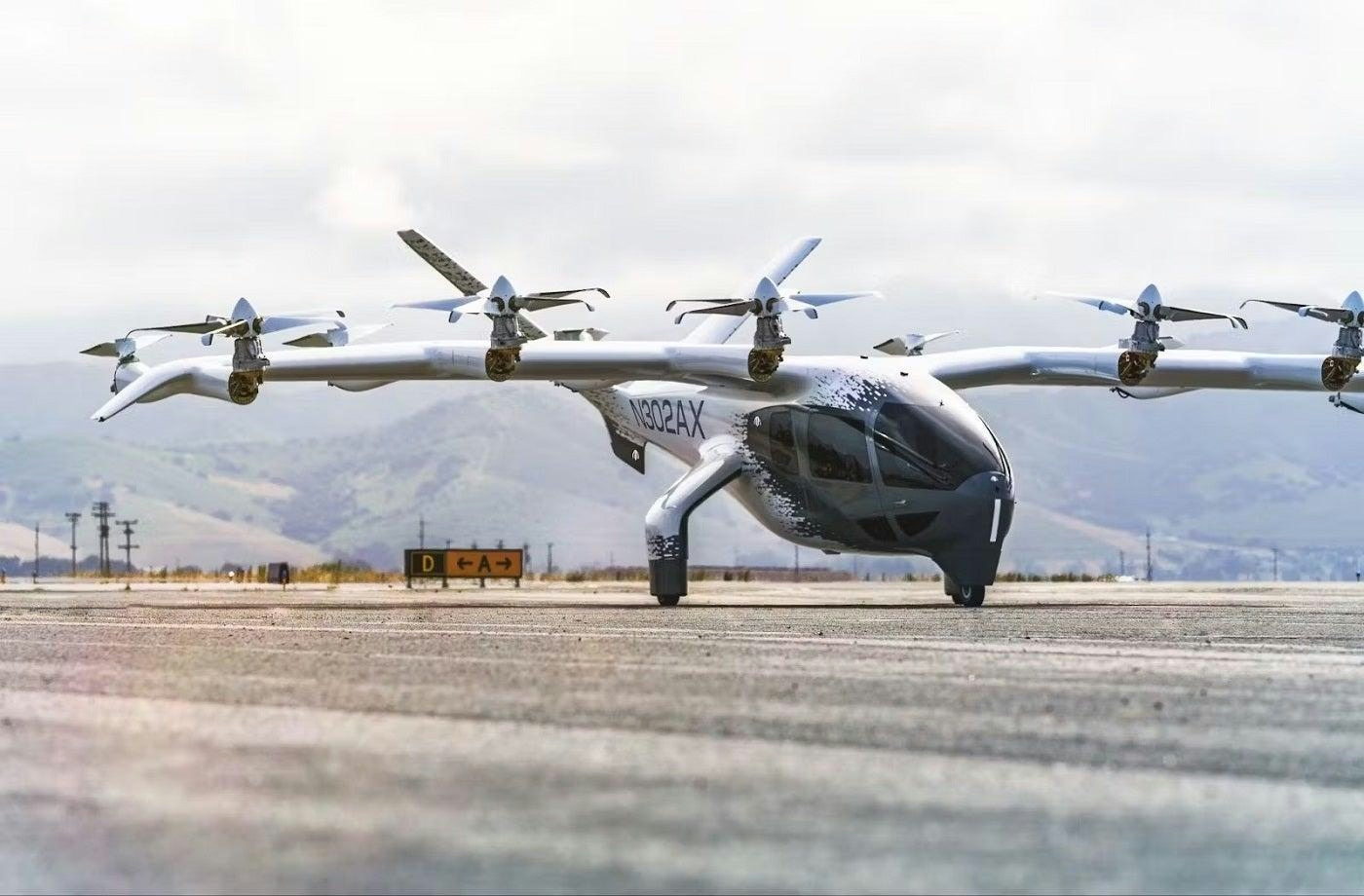
China Certifies Pilotless Air Taxi for Export; Sri Lanka First Buyer
US Pilot Hourly Pay Ranges from $90 for Regional to $465 for Widebody Flights

NASA Chooses University Teams to Support Aviation Research

Airbus Conducts Freighter First Flight as Delivery Figures Influence Stock
