
Trasforma le intuizioni dell’IA in azioni concrete

Tendenze
Categories
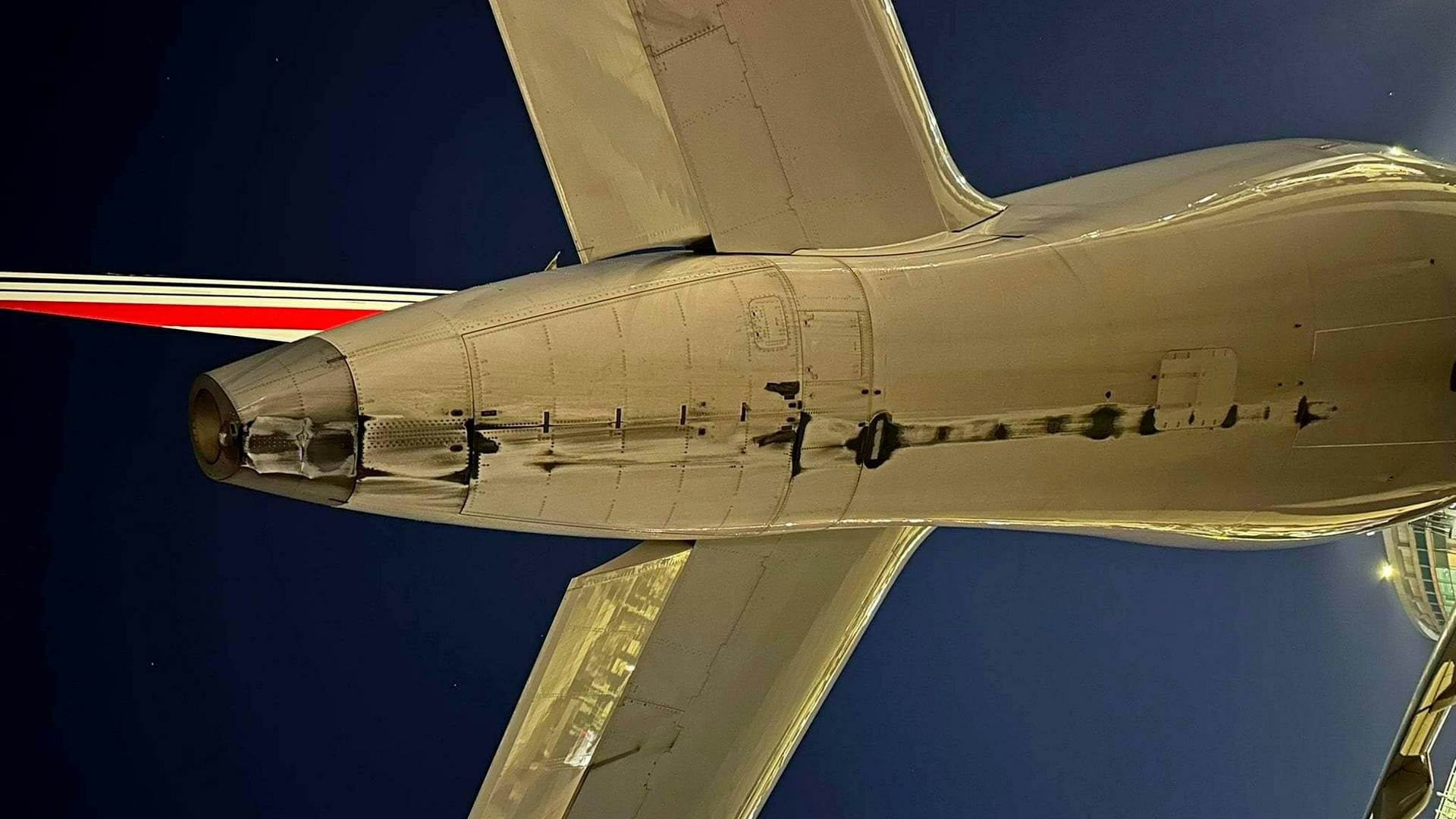
Tail Strikes Ground Boeing 787 and Airbus A350 for Weeks, While 777 Returns to Service in Days
Tail Strikes Ground Boeing 787 and Airbus A350 for Weeks, While 777 Returns to Service in Days
Composite Materials and Their Operational Implications
Modern widebody aircraft such as the Boeing 787 and Airbus A350 have significantly advanced long-haul air travel through their extensive use of carbon-fiber composite materials. These composites constitute approximately half of each aircraft’s weight, offering substantial advantages including reduced mass, enhanced fuel efficiency, and superior resistance to corrosion. Consequently, both models have become highly favored by major airlines operating global routes.
However, the very composite technology that underpins these benefits also introduces distinct challenges when incidents occur. A notable example is the tail strike, an event where the rear fuselage makes contact with the runway during takeoff, landing, or a go-around maneuver. While minor tail strikes may only affect external components such as the tail skid or panels, more severe impacts risk compromising the aircraft’s pressurized structure, raising significant safety concerns.
Differences in Damage Assessment and Repair
On traditional metal aircraft like the Boeing 777, tail strike damage is often readily apparent through visible dents, cracks, or buckled panels. This visibility allows maintenance teams to assess and address damage relatively quickly, with repairs sometimes completed within days if the impact is limited. In contrast, the composite structures of the 787 and A350 can conceal internal damage beneath superficial surface scratches, complicating inspection and repair processes. As a result, tail strikes on these newer aircraft models can ground them for several weeks, whereas a 777 might return to service in a matter of days under comparable circumstances.
Operational and Market Responses
This disparity in repair timelines has tangible operational consequences. Airlines such as Qantas have experienced prolonged groundings of their 787 fleets following tail strike incidents, prompting strategic decisions to redeploy these aircraft as new Airbus A350-1000ULRs enter service. The market is responding accordingly; Singapore Airlines is reportedly considering orders for larger aircraft like the Boeing 777X or Airbus A350-1000 to enhance capacity and operational flexibility. Meanwhile, Cathay Pacific has reaffirmed its commitment to the A350 family by extending its order for A350 freighters.
Safety Considerations and Industry Adaptation
Safety remains paramount in addressing tail strike incidents. Boeing has previously emphasized that unrepaired tail strike damage, particularly to the pressurized fuselage, can escalate into more severe structural issues if not properly managed. This concern was highlighted by a recent incident involving a Lufthansa Boeing 787, where a nose landing gear collapse underscored the critical importance of rigorous inspection and maintenance protocols for composite aircraft.
Despite these challenges, the Boeing 787 and Airbus A350 continue to rank among the safest and most technologically advanced aircraft in operation, having successfully passed extensive structural certification tests. Airlines are adapting to these maintenance complexities while maintaining service reliability. For instance, Qatar Airways recently resumed its Doha-Philadelphia route following American Airlines’ withdrawal, demonstrating sustained demand for dependable, long-range widebody jets.
The evolution of composite materials has undeniably transformed modern aviation, necessitating new approaches to maintenance and repair, particularly after incidents such as tail strikes. As airlines and manufacturers navigate these challenges, the industry strives to balance innovation with operational resilience and uncompromising safety standards.

Etihad and Swissport Extend Global Partnership

Sepehran Airlines B737 Returns to Mashhad After Tyre and Engine Issues

Etihad Deploys Widebody Fleet to Meet Strong Demand

Korean Air Finalizes $36.2 Billion Deal with Boeing
Australia’s RFDS Queensland Section Orders Six King Air 260Cs
Korean Air Finalizes Order for 103 Boeing Jets and Engines
Embraer E195-E2 Features Distinctive Engine Placement Among Regional Jets
What Passengers Can Expect on Boeing’s New 777X Jet

How Ethiopian Airlines Became Africa’s Leading Carrier Amid Gulf Competition

Joby Aviation Extends Autonomous Flight Capabilities with Cross-Country Tour
