
Trasforma le intuizioni dell’IA in azioni concrete

Tendenze
Categories
Technology, Defense, and Supply Chains Reshape Aerospace and Aviation
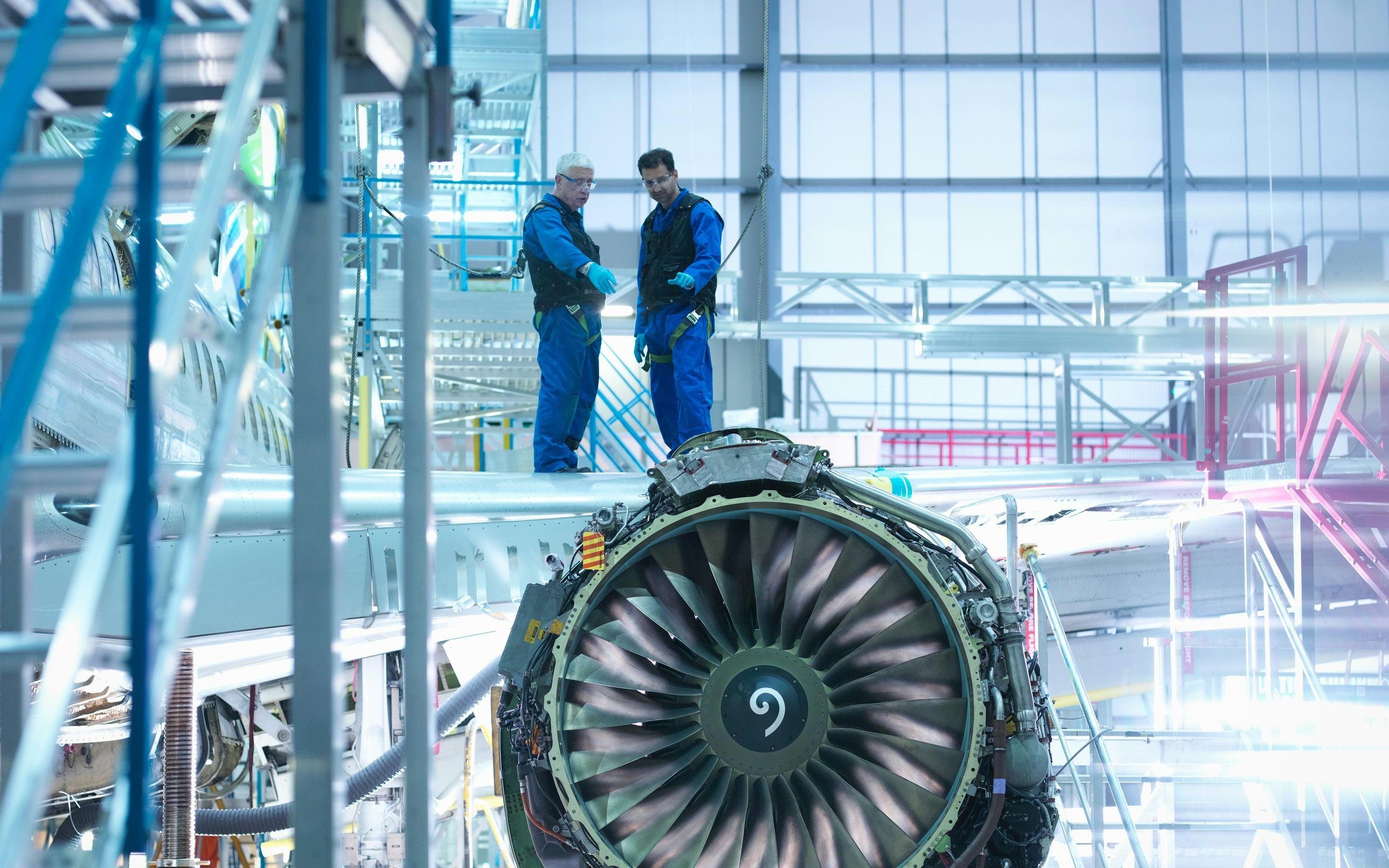
Technology, Defense, and Supply Chains Reshape Aerospace and Aviation
The aerospace and aviation industry is experiencing an unprecedented transformation, with changes that historically took decades now occurring within years or even months. This rapid evolution is driven by the convergence of advanced technologies, shifting defense priorities, and the vulnerabilities of global supply chains. Together, these factors are fundamentally altering the processes of aircraft design, manufacturing, maintenance, and sourcing on a global scale.
Defense Innovation as a Catalyst for Change
Military and defense requirements have become a primary force behind modern aerospace innovation. Technologies once considered specialized—such as hypersonic platforms, unmanned aerial systems (UAS), stealth enhancements, and electronic warfare capabilities—are increasingly becoming standard features across the industry. Major global powers are directing substantial defense budgets toward air superiority, intelligence, surveillance, reconnaissance (ISR), and rapid deployment systems. These investments are not confined to military applications; they are accelerating progress in commercial aviation through advancements in materials science, avionics, propulsion, and manufacturing techniques.
The traditional distinction between commercial aviation, which emphasized scale, and defense, which prioritized precision, is diminishing. Companies like GE Aerospace are surpassing technological milestones ahead of schedule, reflecting the heightened urgency and competitiveness that now characterize the sector.
The Commercial Aviation Capacity Challenge
Commercial aviation currently faces a paradoxical situation regarding capacity. While passenger demand has rebounded robustly, the expansion of fleets is constrained by production delays and the extended use of aging aircraft. Airlines are operating near their technical limits, elevating the importance of maintenance, repair, and overhaul (MRO) operations. Critical issues such as component traceability, parts availability, and regulatory compliance have become strategic priorities at the highest levels of management.
This complex environment is further intensified by fierce competition between industry leaders like Airbus and Boeing. The landscape is also being reshaped by mergers and acquisitions, alongside policy shifts that have introduced new uncertainties. Notably, recent critiques of the defense industry by former President Trump have reverberated through both defense and commercial aerospace sectors, influencing market dynamics and strategic planning.
Supply Chains as Strategic Assets
The aerospace supply chain has emerged as a vital strategic asset amid these challenges. Manufacturers and operators are contending with obsolete components, extended lead times for certified parts, and increased demands for sourcing transparency. In response, procurement strategies are evolving to emphasize National Stock Number (NSN) classification, approved supplier networks, and comprehensive lifecycle traceability. The capacity to source compliant parts swiftly can be the determining factor between keeping an aircraft operational or facing grounding.
Supply chain stability is especially critical for the defense sector, where disruptions can trigger cascading effects across military and commercial operations alike. The anticipated public debut of SpaceX is poised to further disrupt the market, compelling competitors to reevaluate their strategies and market positions in light of emerging competitive pressures.
Digital Transformation and Sustainability Efforts
Digitalization has become the backbone of aerospace operations. Technologies such as predictive maintenance, digital twins, AI-assisted diagnostics, and blockchain-enabled traceability are being widely adopted. These innovations allow operators to anticipate component failures, optimize maintenance schedules, reduce downtime, and maintain regulatory compliance across international jurisdictions. Aircraft are increasingly functioning as data platforms, continuously transmitting operational intelligence that informs engineering and procurement decisions.
Sustainability remains a critical concern, though the sector’s stringent safety and performance standards limit the speed of change. Progress in sustainable aviation fuels, lightweight composite materials, and more efficient engines is ongoing, but the most immediate environmental benefits are being realized through operational efficiencies. These include smarter flight routing, reduced idle times, and optimized maintenance practices.
Toward an Integrated Aerospace Future
The aerospace and aviation industry is moving toward greater integration rather than operating in isolated segments. The interplay of technological innovation, defense imperatives, supply chain resilience, and market competition is reshaping the sector at every level. As both new entrants and established players adapt to these evolving pressures, the industry’s capacity for innovation and strategic responsiveness will be pivotal in defining its future trajectory.

Etihad Airways Suspends Airbus A380 Flights on Key Route

Aditya Birla Group Seeks Approval for Aircraft Leasing in GIFT City

Qatar Airways Highlights Innovation and Connectivity at Arabian Travel Market 2026

Hong Kong's Five-Year Plan Includes Andrew Fan's Aircraft Parts Processing Hub Proposal

ACIA Aero Leasing Delivers ATR72-600 to Air Nostrum

RTX Appoints Jill Albertelli as Head of Pratt & Whitney

TAT Technologies Joins Beyond Aero Hydrogen Aircraft Program

AURAK Study Highlights Barriers to Air Taxi Adoption in Emerging Economies

Xiamen Air Selects Altitude for 787 Maintenance at Heathrow

Etihad and Swissport Extend Global Partnership
