
Trasforma le intuizioni dell’IA in azioni concrete

Tendenze
Categories
The Cost of De-Icing a Boeing 777 for Airlines
The Cost of De-Icing a Boeing 777 for Airlines
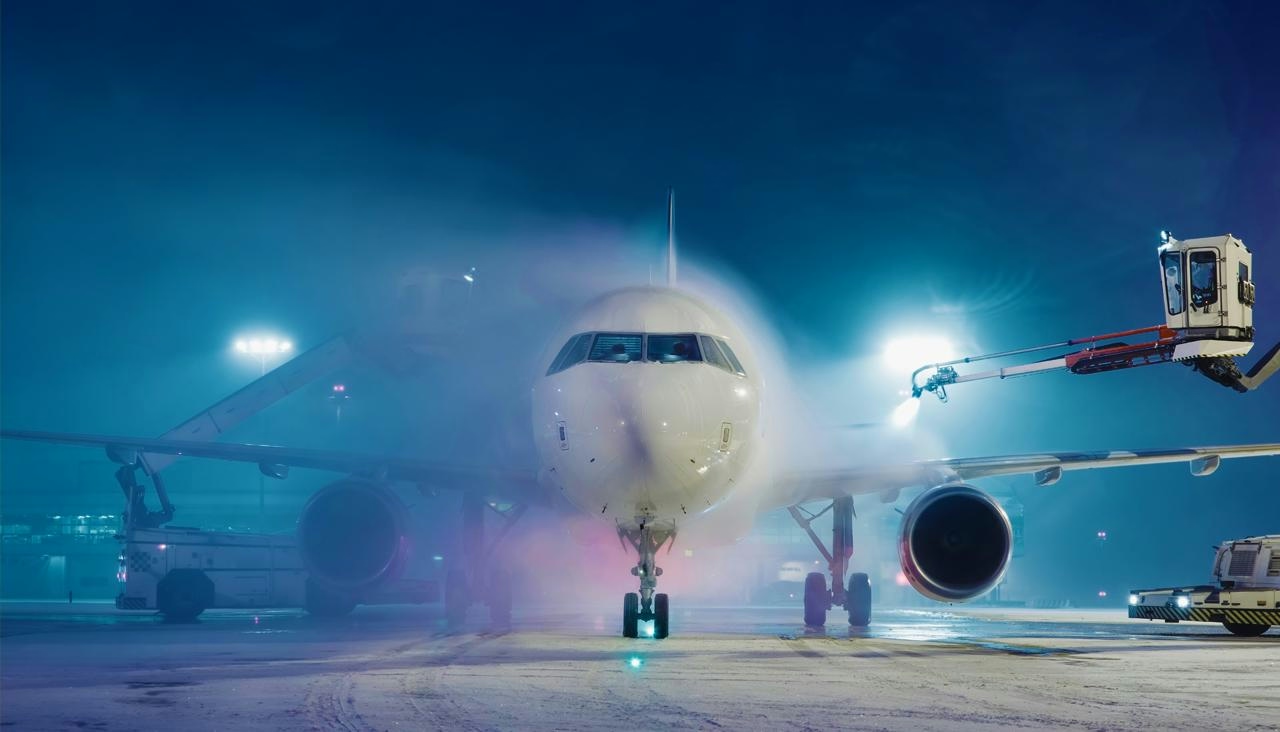
As winter takes hold across airports in the northern United States, Canada, and Europe, commercial airlines confront a critical safety challenge: the complete removal of ice, snow, and frost from aircraft surfaces before departure. The Federal Aviation Administration’s (FAA) “clean aircraft” mandate enforces this requirement through stringent federal regulations. For airlines operating large widebody jets such as the Boeing 777-300ER—with its wingspan exceeding 212 feet and wing area surpassing 4,600 square feet—de-icing is a complex and costly necessity.
Specialized vehicles equipped with heated glycol-based fluids spray aircraft surfaces at high pressure to eliminate contaminants. This process is followed by the application of a thicker anti-icing coating designed to protect the aircraft as it taxis to the runway. Each de-icing event for a Boeing 777 can consume hundreds of gallons of fluid and incur costs running into several thousand dollars. At major winter hubs including Chicago O’Hare (ORD), Minneapolis-St. Paul (MSP), Denver (DEN), and Toronto Pearson (YYZ), airlines may de-ice hundreds of aircraft daily during severe weather. Over the course of a season, a single carrier’s expenditure on de-icing can reach between $30 million and $50 million, involving millions of gallons of fluid.
The Safety Imperative of De-Icing
Ice accumulation on an aircraft’s wings poses a serious threat to flight safety by disrupting the smooth airflow necessary for lift. Research conducted by NASA indicates that even a thin layer of frost or ice on the leading edge can reduce lift by up to 30% while increasing drag by 40%. This hazard extends beyond the wings to the horizontal stabilizer and control surfaces, potentially impairing pitch control and restricting the movement of ailerons, elevators, and rudders. Additionally, ice can obstruct critical sensors such as pitot tubes, which provide essential data to flight instruments. Erroneous readings from these sensors have been linked to catastrophic incidents, including the crash of Air France Flight 447 in 2009.
In recognition of these dangers, FAA regulations strictly prohibit takeoff with any ice, snow, or frost adhering to critical aircraft surfaces, underscoring the indispensable nature of thorough de-icing procedures.
Financial and Operational Challenges
The financial burden of de-icing widebody aircraft like the Boeing 777 extends beyond the direct costs of fluids and labor. Airlines also incur increased fuel consumption and maintenance expenses due to the additional ground time required for de-icing. These operational delays can cascade through flight schedules, compelling airlines to adjust departure and arrival times, and in some cases, leading to cancellations or missed connections.
Market dynamics often compel airlines to transfer a portion of these costs to passengers through higher ticket prices, particularly during peak winter months. In response, carriers are actively exploring more efficient de-icing technologies and investing in aircraft equipped with advanced de-icing systems to reduce turnaround times and operational expenditures. The pursuit of cost-effective solutions remains a priority as airlines strive to balance safety imperatives with efficiency and profitability amid challenging winter conditions.
While essential for ensuring flight safety, de-icing represents a significant operational and financial challenge for airlines, influencing winter operations, competitive strategies, and the overall passenger experience.

Etihad Airways Suspends Airbus A380 Flights on Key Route

Aditya Birla Group Seeks Approval for Aircraft Leasing in GIFT City

Qatar Airways Highlights Innovation and Connectivity at Arabian Travel Market 2026

Hong Kong's Five-Year Plan Includes Andrew Fan's Aircraft Parts Processing Hub Proposal

ACIA Aero Leasing Delivers ATR72-600 to Air Nostrum

RTX Appoints Jill Albertelli as Head of Pratt & Whitney

TAT Technologies Joins Beyond Aero Hydrogen Aircraft Program

AURAK Study Highlights Barriers to Air Taxi Adoption in Emerging Economies

Xiamen Air Selects Altitude for 787 Maintenance at Heathrow

Etihad and Swissport Extend Global Partnership
