
Trasforma le intuizioni dell’IA in azioni concrete

Tendenze
Categories
The Design Choices Behind Boeing’s 777X Cabin
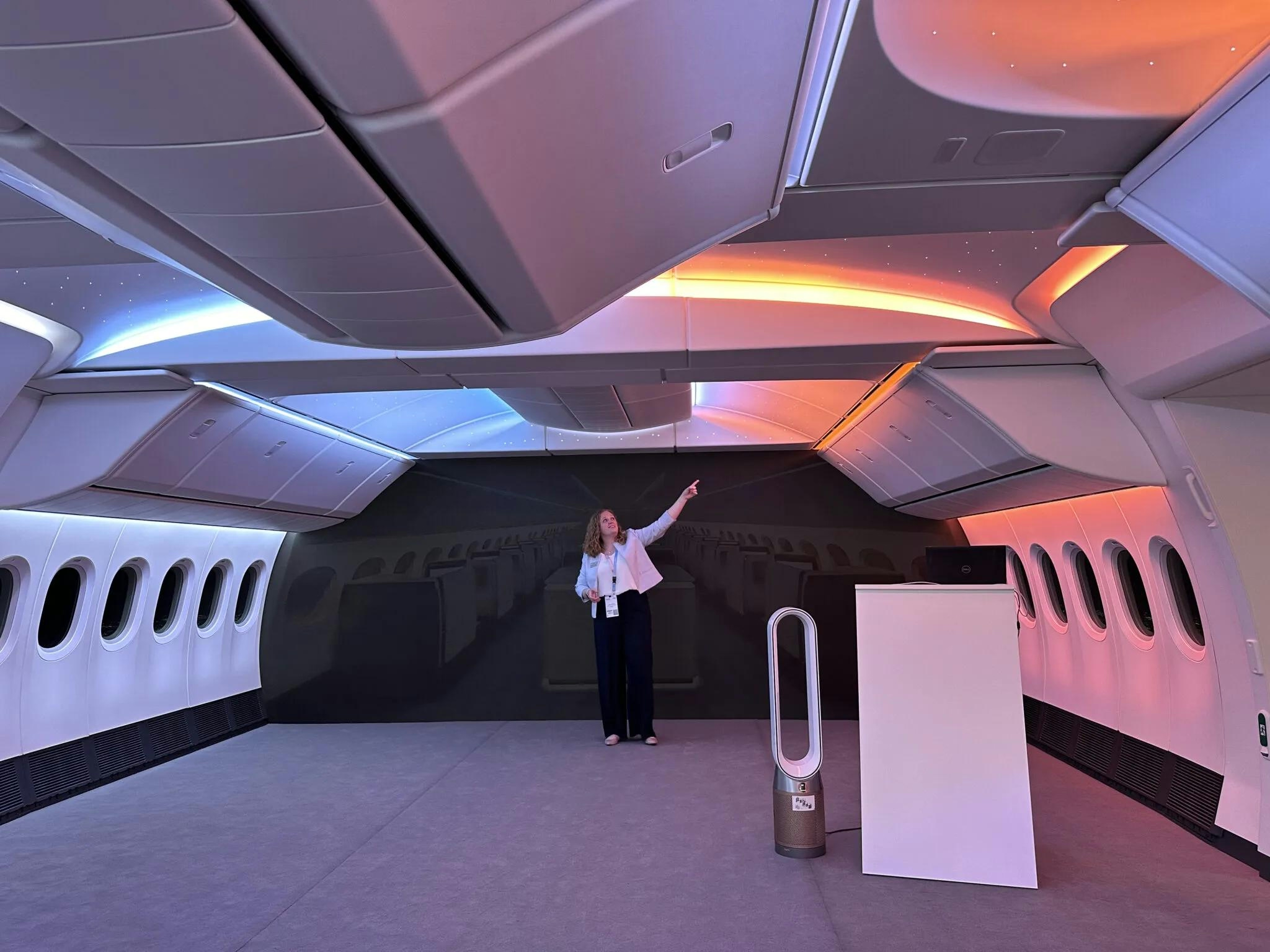
The Design Choices Behind Boeing’s 777X Cabin
Boeing’s 777X is set to become the largest twin-engine commercial aircraft in aviation history, with a cabin design that emphasizes both innovation and passenger comfort. As the aerospace industry faces intensifying competition and shifting passenger expectations, the 777X’s interior seeks to establish new benchmarks in the long-haul market.
Innovations in Cabin Design
Building on the success of the 787 Dreamliner, the 777X incorporates larger windows—16% bigger than those on the previous 777 model—strategically positioned higher on the fuselage to enhance outside views. These windows feature electronic dimming technology, allowing passengers to customize their in-flight lighting experience. The cabin is further enhanced by embedded LED lighting, a modular layout that enables airlines to tailor configurations, and expanded overhead bins, all contributing to a more spacious and adaptable environment.
Boeing has also redesigned the sidewalls to increase shoulder room in the outer seats, improving overall passenger comfort. The cabin altitude has been lowered and humidity levels increased, measures aimed at reducing fatigue and mitigating jet lag on long-haul flights. Such enhancements, typically reserved for clean-sheet aircraft designs, underscore Boeing’s commitment to making the 777X not only more economical for airlines but also more comfortable for passengers and crew.
Strategic Drivers and Market Context
The comprehensive overhaul of the 777X cabin architecture responds to several key factors: escalating competition, airline demands for greater flexibility, and passengers’ growing willingness to pay for enhanced flying experiences. The 777-300ER, a stalwart since 2004, is increasingly challenged by newer models such as the 787 Dreamliner and Airbus A350, which have impressed operators and travelers alike with their advanced cabin environments. To maintain its competitive edge, Boeing has combined proven airframe reliability with a suite of new technologies designed to deliver operational efficiency alongside a compelling passenger experience.
Despite these advancements, the 777X program has encountered significant challenges. Technical issues, including a potential durability problem with the GE9X engine’s seal, have caused substantial delays and resulted in over $15 billion in charges for Boeing. These setbacks have affected the program’s timeline, even as the company signals a broader financial recovery by increasing production of its 737 MAX to 42 aircraft per month.
The competitive landscape remains intense. While Airbus continues to dominate the single-aisle market, Boeing is focusing on strengthening its widebody portfolio, positioning the 777X as a flagship response to evolving market demands. The aircraft’s advanced cabin features are central to Boeing’s strategy to attract both airlines and passengers in an industry where comfort, efficiency, and innovation are increasingly interconnected.
In essence, the Boeing 777X cabin represents a fusion of technological progress and passenger-focused design, aiming to redefine the long-haul flying experience amid the complexities of a rapidly changing aerospace market.

Etihad Airways Suspends Airbus A380 Flights on Key Route

Aditya Birla Group Seeks Approval for Aircraft Leasing in GIFT City

Qatar Airways Highlights Innovation and Connectivity at Arabian Travel Market 2026

Hong Kong's Five-Year Plan Includes Andrew Fan's Aircraft Parts Processing Hub Proposal

ACIA Aero Leasing Delivers ATR72-600 to Air Nostrum

RTX Appoints Jill Albertelli as Head of Pratt & Whitney

TAT Technologies Joins Beyond Aero Hydrogen Aircraft Program

AURAK Study Highlights Barriers to Air Taxi Adoption in Emerging Economies

Xiamen Air Selects Altitude for 787 Maintenance at Heathrow

Etihad and Swissport Extend Global Partnership
