
Trasforma le intuizioni dell’IA in azioni concrete

Tendenze
Categories
The Engine Behind Boeing’s Latest Widebody Aircraft
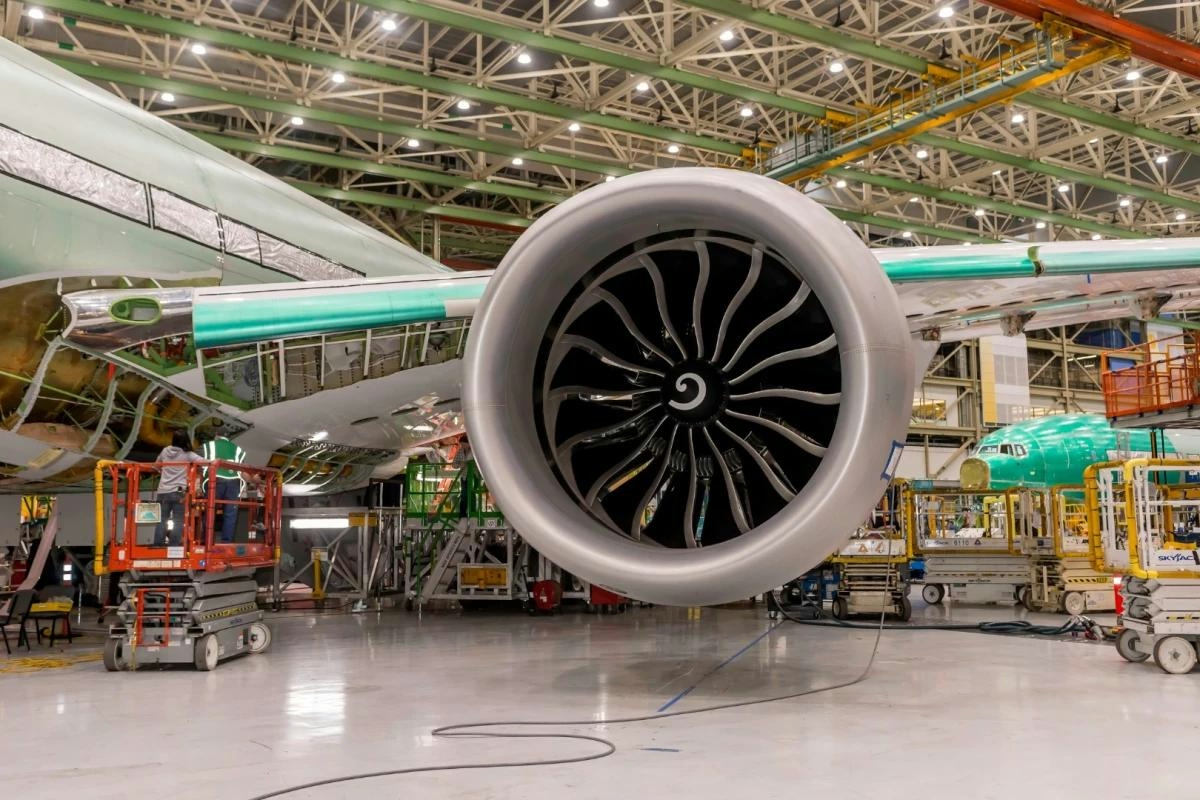
The Engine Behind Boeing’s Latest Widebody Aircraft
When Boeing unveiled the 787 Dreamliner, it marked a transformative moment in the evolution of long-haul air travel and widebody aircraft design. More than a mere successor to models like the Boeing 767 and Airbus A330, the Dreamliner introduced a fundamental shift through its extensive use of composite materials, advanced aerodynamic features aimed at reducing fuel consumption, and a modern cockpit equipped with standard head-up displays. Central to the aircraft’s promise of enhanced efficiency was the performance of its engines.
The 787-10: Efficiency and Innovation in Focus
The 787-10, the largest and most capable variant of the Dreamliner family, embodies Boeing’s commitment to efficiency and innovation. Launched in 2013 and taking flight in 2017, this model extends the composite airframe to its maximum length, accommodating approximately 330 passengers in a typical two-class configuration. Although its range is shorter than that of the 787-9, the 787-10 is optimized for high-density, long-haul, and premium regional routes. This makes it an attractive option for airlines aiming to replace aging widebodies such as the Airbus A330-300, Boeing 777-200, and early Airbus A340 models.
Major international carriers including Singapore Airlines, United Airlines, Etihad Airways, and ANA have incorporated the 787-10 into their fleets, valuing its balance of capacity, efficiency, and reliability. The aircraft’s economic viability depends heavily on high utilization rates, which in turn place considerable importance on engine durability and extended time-on-wing performance. Consequently, engine selection for the 787-10 is especially critical, often more so than for its smaller Dreamliner counterparts.
Engine Options and Market Preferences
Boeing offers two exclusive engine choices for the 787 family: the Rolls-Royce Trent 1000 and the GE Aerospace GEnx. Both engines were developed specifically to meet the Dreamliner’s unique performance and environmental requirements. Initially, orders for the 787’s engines were fairly evenly divided between the two manufacturers. However, the 787-10 variant has seen a noticeable shift in airline preference, with market adoption increasingly favoring one engine over the other.
Boeing’s dual-supplier strategy was designed to encourage competition and innovation while providing airlines with flexibility. The Rolls-Royce Trent 1000 employs the company’s signature three-shaft architecture, a design honed through multiple widebody programs. In contrast, the GE GEnx incorporates technological advancements tailored to the Dreamliner’s high bypass ratio and stringent environmental targets.
Challenges Facing Boeing’s Widebody Portfolio
Despite the technological advancements embodied in the 787-10, Boeing faces significant challenges in scaling up production and maintaining its market position. Lingering concerns from past safety incidents—including the 737 Max crashes and the midair door plug event—have affected the company’s reputation and disrupted delivery schedules. Regulatory scrutiny remains intense, with the Federal Aviation Administration (FAA) closely overseeing certification timelines for new models such as the 737 MAX 10. Decisions regarding emissions waivers also carry implications for Boeing’s stock performance.
Additionally, Boeing’s 777F freighter model confronts difficulties in meeting evolving fuel-efficiency standards, prompting the company to seek regulatory waivers to sustain air cargo operations. Market dynamics are further complicated by intensifying competition from Airbus in the long-haul widebody segment. Some carriers, including Southwest Airlines, have postponed the introduction of new Boeing models amid ongoing certification challenges, reflecting a cautious stance in an uncertain industry environment.
As Boeing navigates these multifaceted challenges, the performance and reliability of the 787-10 and its engines remain pivotal to the company’s efforts to restore confidence and uphold its competitive standing in the global widebody aircraft market.

Etihad Airways Suspends Airbus A380 Flights on Key Route

Aditya Birla Group Seeks Approval for Aircraft Leasing in GIFT City

Qatar Airways Highlights Innovation and Connectivity at Arabian Travel Market 2026

Hong Kong's Five-Year Plan Includes Andrew Fan's Aircraft Parts Processing Hub Proposal

ACIA Aero Leasing Delivers ATR72-600 to Air Nostrum

RTX Appoints Jill Albertelli as Head of Pratt & Whitney

TAT Technologies Joins Beyond Aero Hydrogen Aircraft Program

AURAK Study Highlights Barriers to Air Taxi Adoption in Emerging Economies

Xiamen Air Selects Altitude for 787 Maintenance at Heathrow

Etihad and Swissport Extend Global Partnership
