
Trasforma le intuizioni dell’IA in azioni concrete

Tendenze
Categories
The Future of Travel, According to the CEO of Europe’s Busiest Airport
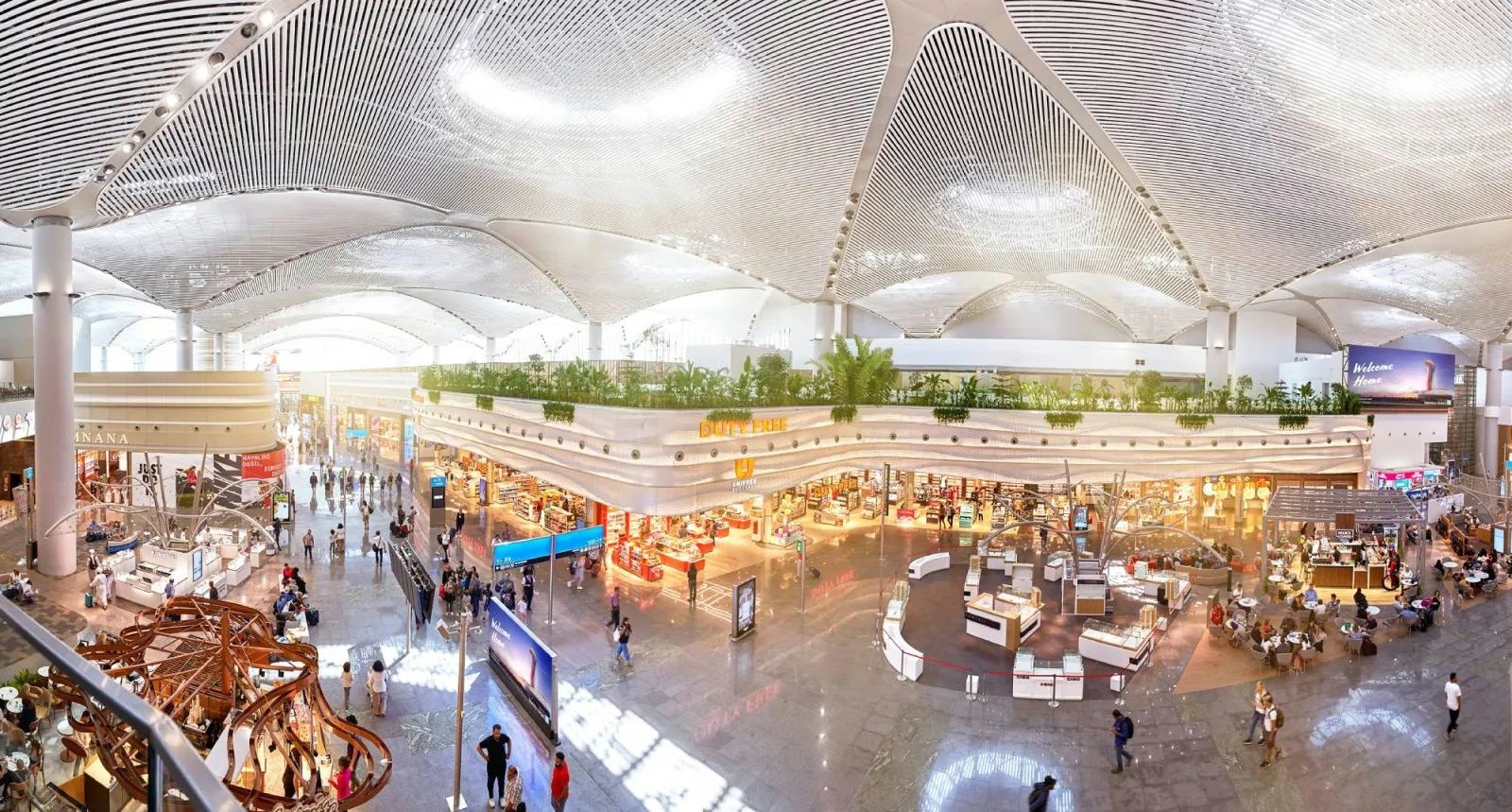
The Future of Travel, According to the CEO of Europe’s Busiest Airport
Istanbul Airport has rapidly emerged as a dominant force in global aviation, now serving over 80 million passengers annually. A November report by the European Air Traffic Safety Organization (EUROCONTROL) identified it as Europe’s busiest airport by average daily flights. Furthermore, Airports Council International (ACI) Europe recognized Istanbul Airport as the world’s most connected airport in its 2025 analysis, with direct flights to approximately 340 destinations worldwide.
Pioneering Automation and Passenger Experience
Beyond its impressive scale and connectivity, Istanbul Airport is positioning itself as a model for the future of air travel through advanced automation. CEO Selahattin Bilgen emphasized that the airport’s greatest achievement lies in its seamless, largely automated operations. He described an intricate ecosystem where over 100 integrated systems enable the airport to manage nearly 300,000 passengers and close to 2,000 air traffic movements daily with minimal human intervention. “We turn that operation on automatically, without human touch,” Bilgen explained, highlighting the airport’s sophisticated technological infrastructure.
Automation also enhances the passenger experience. The airport employs an AI-powered indoor navigation system designed to assist travelers, including those with disabilities, in efficiently navigating the terminal, locating amenities, and reaching their gates. This integration of technology aims to streamline travel and reduce stress for passengers.
Commitment to Sustainability and Industry Challenges
Istanbul Airport is also setting new standards in sustainability. It has become the world’s first major airport to fulfill all its electricity needs through solar power. The airport’s Eskişehir Solar Power Plant, covering approximately three million square meters, is projected to generate 340 million kilowatt-hours of solar energy annually—sufficient to power a mid-sized city. Bilgen noted, “Currently, Istanbul Airport is the first major airport that is capable of producing its own electricity from solar power plants.” This initiative forms part of a broader strategy to achieve net-zero emissions, encompassing not only the airport itself but also all companies operating within its ecosystem. In 2024, the airport reported greenhouse gas emissions 1.4 percent lower than the previous year and 10.5 percent below earlier benchmarks.
Despite these advancements, the future of travel faces significant challenges. Olivier Jankovec, Director General of ACI Europe, has drawn attention to rising operational pressures and capacity constraints across European airports. Only 53 percent of airports on the continent have returned to pre-pandemic traffic levels, exposing ongoing performance gaps. Concurrently, airports confront structural revenue declines and escalating costs, necessitating a reassessment of performance management strategies.
In response to these pressures, the aviation industry is witnessing a shift toward premium travel products, with premium airline traffic growth consistently outpacing economy travel since the pandemic. Major airline mergers involving carriers such as Air France-KLM, Lufthansa Group, Korean Air, and Alaska Airlines are expected to reshape the competitive landscape. Airports are also investing in enhanced facilities to improve passenger experience and increasingly leveraging data analytics to optimize business travel.
As Istanbul Airport continues to innovate in automation and sustainability, it exemplifies how major hubs can adapt to evolving industry challenges while setting new benchmarks for operational efficiency and environmental responsibility.

Etihad Airways Suspends Airbus A380 Flights on Key Route

Aditya Birla Group Seeks Approval for Aircraft Leasing in GIFT City

Qatar Airways Highlights Innovation and Connectivity at Arabian Travel Market 2026

Hong Kong's Five-Year Plan Includes Andrew Fan's Aircraft Parts Processing Hub Proposal

ACIA Aero Leasing Delivers ATR72-600 to Air Nostrum

RTX Appoints Jill Albertelli as Head of Pratt & Whitney

TAT Technologies Joins Beyond Aero Hydrogen Aircraft Program

AURAK Study Highlights Barriers to Air Taxi Adoption in Emerging Economies

Xiamen Air Selects Altitude for 787 Maintenance at Heathrow

Etihad and Swissport Extend Global Partnership
