
Trasforma le intuizioni dell’IA in azioni concrete

Tendenze
Categories
The GE90: MTU Maintenance Hanover's Largest Turbofan Engine

The GE90: MTU Maintenance Hanover's Largest Turbofan Engine
The GE90 holds the distinction of being the largest turbofan engine ever constructed, celebrated for its extraordinary power and advanced engineering. Measuring 3.26 meters in diameter, this engine generates sufficient thrust to lift the equivalent of 55 small cars vertically, establishing new benchmarks in aviation propulsion. It serves as the primary powerplant for various models of the Boeing 777, cementing its role as a vital component in long-haul commercial aviation.
MTU Maintenance Hanover’s Expertise and Industry Challenges
MTU Maintenance Hanover has developed a reputation as a leading specialist in the repair and maintenance of the GE90, addressing the complex and demanding upkeep requirements of this powerful engine. The facility’s technical proficiency ensures that airlines operating Boeing 777 aircraft can depend on the GE90’s performance and reliability—two essential factors in the highly competitive aviation sector.
Despite its engineering prowess, the GE90 faces mounting challenges amid a rapidly evolving industry landscape. Competition from other turbofan engines, notably CFM International’s Leap series, is intensifying. GE projects that the Leap series will eventually achieve durability comparable to the widely used CFM56, thereby raising industry standards for reliability and longevity. Market perceptions of the GE90 remain closely linked to its operational performance, particularly as Boeing accelerates production of the 787 and GE addresses ongoing delivery delays.
Strategic Shifts and Future Prospects
The competitive environment is further influenced by strategic decisions among key industry players. MTU Maintenance Hanover is reportedly reevaluating its position in the military engine market, a move that could have significant implications for the broader turbofan engine sector. Concurrently, GE’s development of a new small turbofan engine aimed at the collaborative combat aircraft market reflects a diversification strategy, potentially shifting focus away from large engines like the GE90 and toward emerging segments.
As the aviation industry advances, the GE90 continues to symbolize engineering excellence and remains a benchmark for power and performance. Nevertheless, ongoing technological innovation and evolving market strategies will shape the future trajectory of turbofan engines, demanding both progress and adaptability from manufacturers and service providers alike.

Bangladesh Launches Initiative to Become Regional Aviation Hub
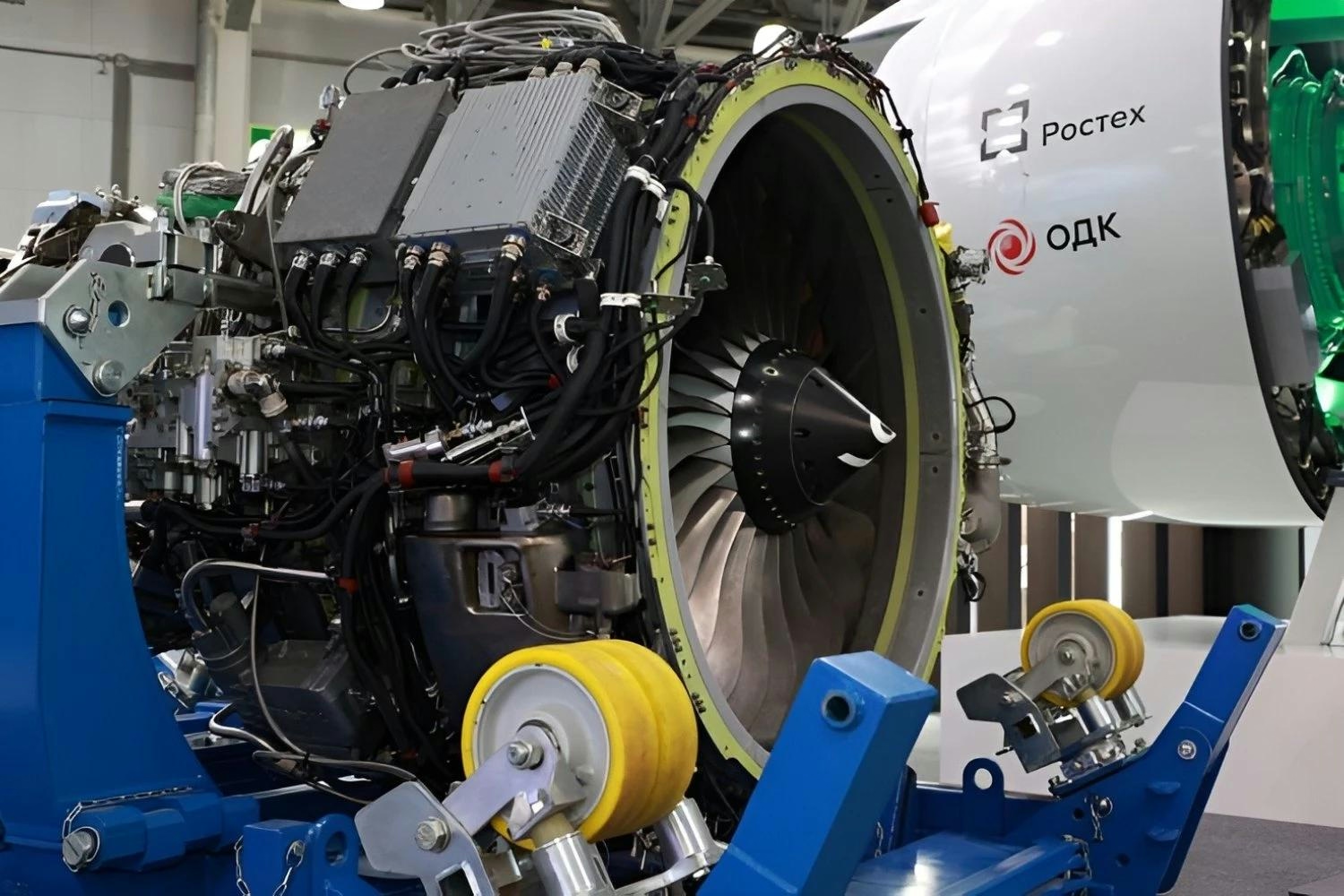
Russia Transports PD-8 Engine to India for International Certification

Kyrgyzstan to Adopt EMPIC GmbH Software for Flight Safety Oversight

Why Hawaiian Airlines Is Waiting Until 2028 To Add A Premium Economy Cabin To Its Airbus A330 Fleet

Engine Fault Causes Royal Navy Helicopter Crash Fatality

Joby Aviation Begins Texas Air Taxi Test Flights Amid Stock Decline

Iberia Receives Full Approval for Airbus A350 Heavy Maintenance

NetJets to Construct Terminal and Hangar at Dallas Love Field

Using AI in Aircraft Purchases

CIAM Unveils RPD-150T Engine to Replace Rotax 150 hp Model
