
Trasforma le intuizioni dell’IA in azioni concrete

Tendenze
Categories
The Safest Commercial Aircraft in History
The Safest Commercial Aircraft in History
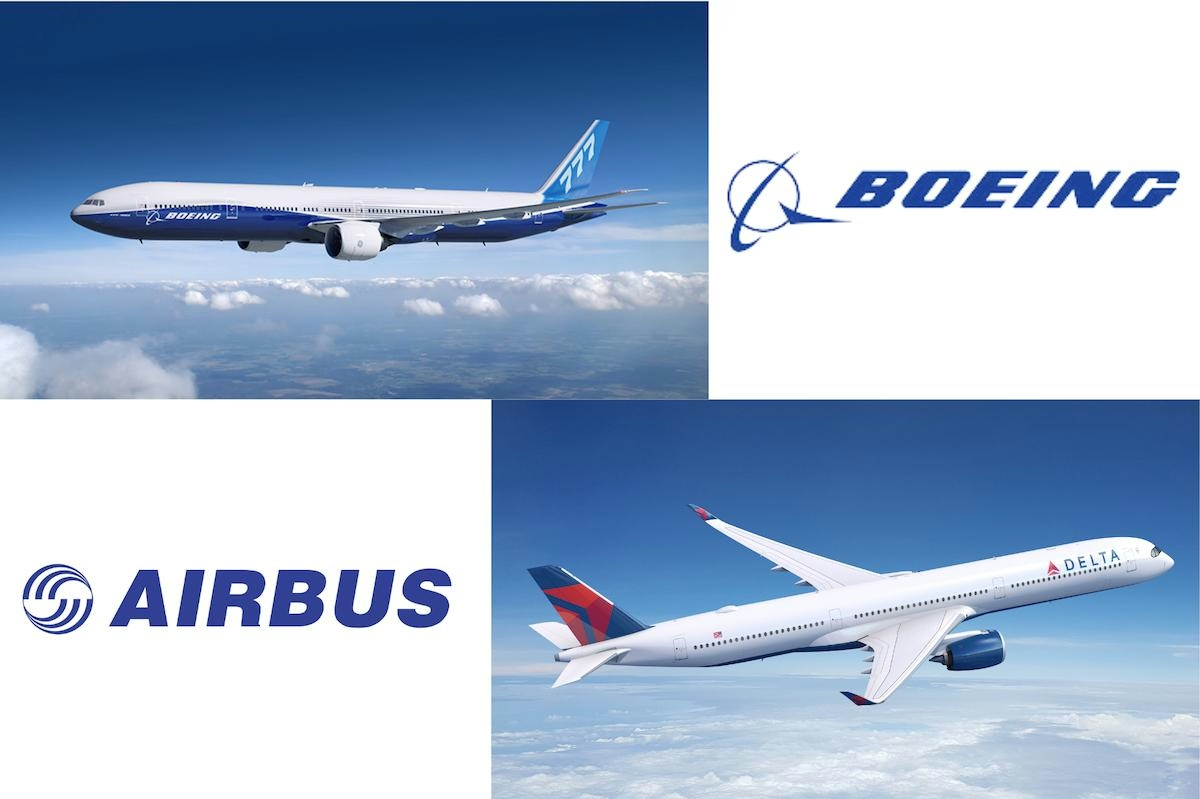
Safety continues to be the fundamental priority within the aviation industry, where ongoing innovation and rigorous standards have significantly enhanced operational security. The measure of an aircraft’s safety is often reflected in its record of hull losses and fatalities, with a select group of commercial jets from Boeing and Airbus distinguished by their exemplary safety histories.
Boeing 717: A Model of Reliability and Safety
The Boeing 717, initially developed as the McDonnell Douglas MD-95 in the early 1990s, was tailored for the 100-seat, mid-range market segment. Following the merger of McDonnell Douglas with Boeing in 1997, the aircraft was rebranded as the Boeing 717 and entered service in 1999. Production concluded in 2006 after delivering over 150 units. As of December 2024, 99 Boeing 717s remain operational, with Delta Air Lines maintaining a substantial portion of the fleet.
Equipped with two Rolls-Royce BR715 turbofan engines, the 717 offers an operational range of 2,060 nautical miles and cruises at Mach 0.77. Its cabin configuration accommodates up to 117 passengers in a single-class layout, combining efficiency with reliability. Delta Air Lines CEO Richard Anderson has emphasized the aircraft’s economic benefits and its appeal to customers, noting its significant role in enhancing mainline service offerings.
Most notably, the Boeing 717 has maintained an impeccable safety record, having never experienced a hull loss or fatal accident since its introduction nearly thirty years ago. This achievement underscores the aircraft’s robust design and the effectiveness of its operational protocols.
Airbus A380: Safety in the World’s Largest Commercial Jet
The Airbus A380, recognized as the largest commercial airliner globally, also boasts a commendable safety record. Manufactured until 2021, the A380’s sophisticated engineering and stringent safety measures have established it as one of the safest aircraft currently in service. Its size and complexity have not compromised its operational security, reflecting Airbus’s commitment to safety at scale.
Industry Challenges and Advancements in Safety
Despite these high safety standards, the aviation industry continues to confront significant challenges. Supply chain disruptions, as reported by Embraer, have impacted production schedules and delivery rates across various manufacturers. Nevertheless, demand for both commercial and business jets remains robust, even as airlines grapple with capacity reductions and rising fuel costs.
In response, competitors are advancing technological innovations, including the development of new anti-icing systems and next-generation aircraft designs, exemplified by initiatives from Textron Aviation and Germany’s DLR. Furthermore, the increasing adoption of sustainable aviation fuel (SAF) is transforming regulatory frameworks and market strategies. Manufacturers and airlines are investing heavily in greener technologies to align with evolving environmental standards, which also influence safety and operational protocols.
The Boeing 717 and Airbus A380 stand as benchmarks of commercial aircraft safety, reflecting decades of engineering excellence and disciplined operation. As the industry adapts to supply chain constraints, market dynamics, and the shift toward sustainable fuels, the unwavering commitment to safety and innovation remains central to ensuring the continued security of air travel worldwide.

Etihad Airways Suspends Airbus A380 Flights on Key Route

Aditya Birla Group Seeks Approval for Aircraft Leasing in GIFT City

Qatar Airways Highlights Innovation and Connectivity at Arabian Travel Market 2026

Hong Kong's Five-Year Plan Includes Andrew Fan's Aircraft Parts Processing Hub Proposal

ACIA Aero Leasing Delivers ATR72-600 to Air Nostrum

RTX Appoints Jill Albertelli as Head of Pratt & Whitney

TAT Technologies Joins Beyond Aero Hydrogen Aircraft Program

AURAK Study Highlights Barriers to Air Taxi Adoption in Emerging Economies

Xiamen Air Selects Altitude for 787 Maintenance at Heathrow

Etihad and Swissport Extend Global Partnership
