
Trasforma le intuizioni dell’IA in azioni concrete

Tendenze
Categories
The VFW-614: An Airliner with Engines Mounted Above the Wings
The VFW-614: An Airliner with Engines Mounted Above the Wings
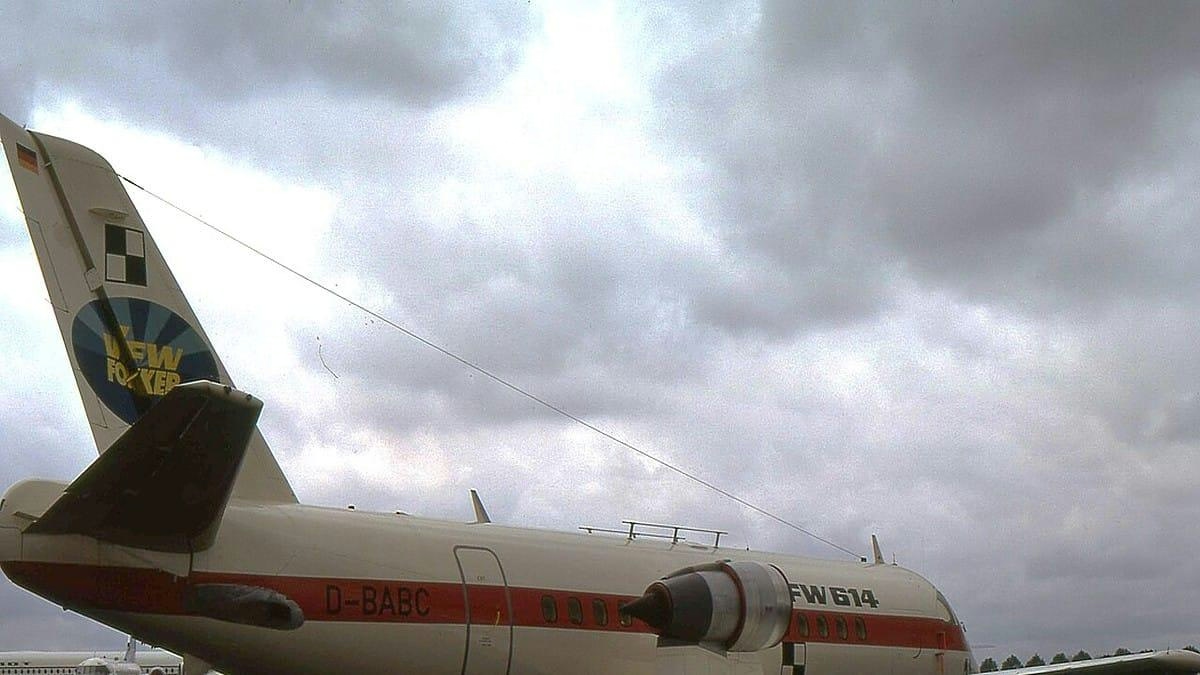
The VFW-614 stands out in aviation history for its unconventional design, featuring two jet engines mounted on pylons above the wings—a configuration rarely seen in commercial airliners. As West Germany’s first domestically produced jet airliner, the VFW-614 emerged in the 1970s as a quietly radical innovation. Despite its technical ingenuity, the aircraft ultimately failed to achieve commercial success. Both its pioneering design and subsequent challenges offer valuable insights into the complexities of aircraft development and market dynamics.
Innovative Design and Practical Considerations
The VFW-614 was conceived as a rugged regional jet intended to replace the venerable Douglas DC-3 on short-haul routes, often serving small airports with unpaved or rough runways. The decision to mount the two Rolls-Royce/SNECMA M45H engines above the wings was driven by practical considerations. This placement protected the engines from debris and stones commonly encountered on unimproved airstrips, a significant hazard for conventional underwing engines. Additionally, positioning the engines above the wings eliminated the structural weight penalties associated with rear-fuselage engine installations and allowed the cabin floor to be closer to the ground. This facilitated easier boarding and cargo handling without the need for specialized ground equipment or tall airstairs.
However, the novel engine configuration introduced its own set of challenges. The aircraft entered a market characterized by volatility in engine supply and maintenance, with industry analysts warning of potential sharp corrections in engine trading. Airlines faced prolonged turnaround times for engine overhauls amid ongoing supply chain disruptions, complicating procurement and maintenance for the VFW-614. Established competitors with entrenched engine partnerships and streamlined logistics held a distinct advantage. Furthermore, the unique design attracted heightened regulatory scrutiny, especially following incidents such as the UPS MD-11 crash, which underscored the necessity for rigorous inspection protocols for unconventional engine arrangements.
Development and Operational History
The VFW-614’s development began with the first of three prototypes taking flight on 14 July 1971. This maiden flight also marked the first airborne test of the M45H engine, which had bypassed the traditional flying test-bed phase. The program suffered a significant setback on 1 February 1972, when the first prototype was lost due to elevator flutter. Although two of the three crew members survived, the destruction of the airframe dealt a serious blow to the project’s momentum.
Despite these difficulties, deliveries commenced in the mid-1970s. Denmark’s Cimber Air became the first commercial operator in 1975, followed by France’s Touraine Air Transport, which operated the largest fleet of eight aircraft. The West German Luftwaffe also employed three VFW-614s as VIP transports until 1999. Nevertheless, production remained limited, with only 19 aircraft built in total.
Market Challenges and Legacy
The VFW-614 entered service during the turbulent period of the 1970s oil crisis, facing intense competition and limited market interest. Lufthansa, West Germany’s flagship carrier, showed little enthusiasm for the type, and the aircraft’s economics failed to meet expectations. Production ceased in 1977, and following the dissolution of VFW in 1981, the aircraft lost manufacturer support and gradually disappeared from airline fleets.
Despite its commercial failure, the VFW-614 found a renewed purpose in aerospace research. The German Aerospace Center (DLR) converted one airframe into the “ATTAS” flying laboratory, which was used for decades to test fly-by-wire controls and advanced flight systems. While the over-wing engine configuration did not gain widespread adoption in commercial aviation, it later reemerged in business aviation with the HondaJet. The VFW-614 remains a notable example of bold engineering and the inherent challenges faced by innovative designs within a complex and evolving industry.

Etihad and Swissport Extend Global Partnership

Sepehran Airlines B737 Returns to Mashhad After Tyre and Engine Issues

Etihad Deploys Widebody Fleet to Meet Strong Demand

Korean Air Finalizes $36.2 Billion Deal with Boeing

Australia’s RFDS Queensland Section Orders Six King Air 260Cs

Korean Air Finalizes Order for 103 Boeing Jets and Engines

Embraer E195-E2 Features Distinctive Engine Placement Among Regional Jets

What Passengers Can Expect on Boeing’s New 777X Jet

How Ethiopian Airlines Became Africa’s Leading Carrier Amid Gulf Competition

Joby Aviation Extends Autonomous Flight Capabilities with Cross-Country Tour
