
Trasforma le intuizioni dell’IA in azioni concrete

Tendenze
Categories
Three Decades of Global Tourism Influenced by the Boeing 777
Three Decades of Global Tourism Influenced by the Boeing 777
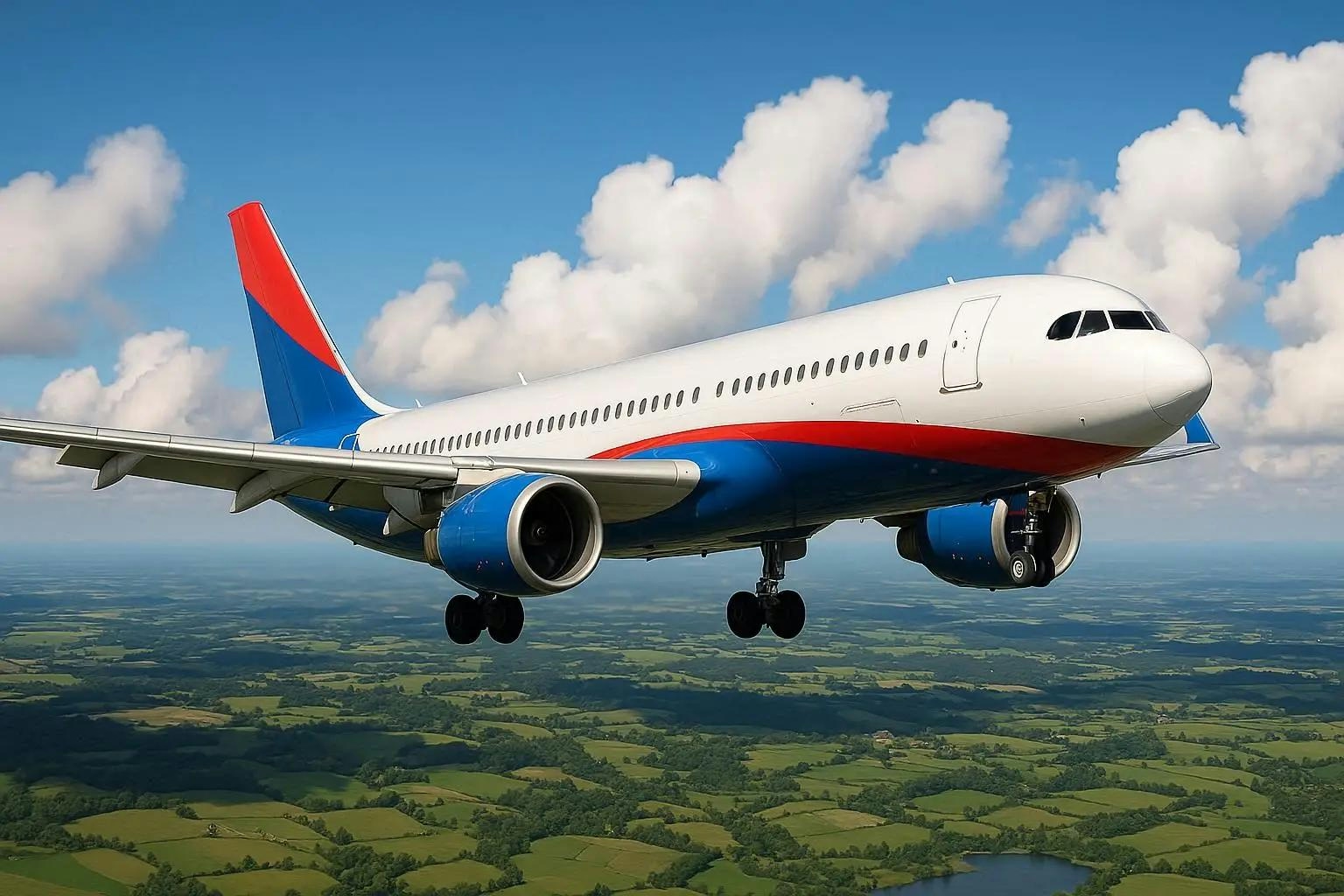
Over the past thirty years, the Boeing 777 has fundamentally transformed global air travel and long-haul tourism, reshaping the way continents connect and how people experience the world. Since its commercial debut, the aircraft has served as both a technological and economic bridge, linking regions and cultures across the United States, United Kingdom, Japan, Australia, Canada, and beyond. Developed during a period of rapid globalization, the 777 was engineered to meet airlines’ increasing demands for efficiency, extended range, and enhanced passenger comfort on intercontinental routes.
Nearly four billion travelers have flown aboard the Boeing 777 family, facilitating unprecedented levels of leisure tourism, business travel, diaspora connections, and cultural exchange. The aircraft’s consistent operational performance and adaptability have strengthened major tourism corridors between North America, Europe, and Asia, while also enabling new long-haul routes to previously remote destinations. As international airports expanded and destination cities evolved into global hubs, the 777 became a cornerstone of worldwide mobility.
A Milestone in Aviation and Tourism
Marking thirty years since its entry into commercial service, the Boeing 777 has become the best-selling widebody aircraft family in aviation history. Its inaugural passenger flight, operated by United Airlines between London Heathrow and Washington Dulles, heralded a new era of efficient long-haul travel. Over three decades, the aircraft has transported nearly four billion passengers, reinforcing tourism links and supporting the expansion of international travel networks. This immense scale of movement underscores not only the aircraft’s popularity among airlines but also its deep integration into the global tourism infrastructure.
Scale, Connectivity, and Industry Impact
Currently, the Boeing 777 fleet operates nearly 1,800 flights daily, connecting major tourism gateways, financial centers, and remote regions. Its presence on routes linking North America with Europe, Asia-Pacific, and the Middle East has allowed destination cities to flourish as global tourism hubs. The cumulative number of travelers carried by the 777 over thirty years would fill a major U.S. sports stadium every day for more than a century, a testament to its enduring significance in the travel and tourism ecosystem.
The aircraft’s development was distinctive, shaped through close collaboration with eight major airlines worldwide. This cooperative approach ensured the 777 would bridge the capacity and range gap between the Boeing 767-300ER and the 747-400, effectively meeting the diverse needs of a global market.
Navigating Industry Challenges and Future Prospects
Despite its success, Boeing continues to face significant challenges. High engine maintenance costs, the anticipated doubling of the global commercial fleet by 2044, and the aviation industry’s shift toward sustainable propulsion present ongoing hurdles. Market reactions to Boeing have been mixed; while the company’s stock has surged following a 2026 cash-flow pledge and positive analyst ratings, volatility remains due to delivery data fluctuations and regulatory scrutiny. Competitors such as Airbus have responded by trimming delivery goals amid technical issues, while Boeing’s acquisition of Spirit AeroSystems aims to strengthen production quality and supply chain resilience.
Looking ahead, confidence in the Boeing 777 remains robust. Emirates’ commitment to the next-generation 777X, even as certification processes continue, underscores the aircraft’s enduring role in shaping the future of global tourism and connectivity.

Etihad Airways Suspends Airbus A380 Flights on Key Route

Aditya Birla Group Seeks Approval for Aircraft Leasing in GIFT City

Qatar Airways Highlights Innovation and Connectivity at Arabian Travel Market 2026

Hong Kong's Five-Year Plan Includes Andrew Fan's Aircraft Parts Processing Hub Proposal

ACIA Aero Leasing Delivers ATR72-600 to Air Nostrum

RTX Appoints Jill Albertelli as Head of Pratt & Whitney

TAT Technologies Joins Beyond Aero Hydrogen Aircraft Program

AURAK Study Highlights Barriers to Air Taxi Adoption in Emerging Economies

Xiamen Air Selects Altitude for 787 Maintenance at Heathrow

Etihad and Swissport Extend Global Partnership
