imabge

AeroGenie: il tuo copilota intelligente.

Chiedi qualsiasi cosa. Analizza tutto. Agisci all'istante.

Tendenze

Categories

Toyota-Backed VTOL Company Plans 25 Vertiports Across the U.S.
December 29, 2025By ePlane AI
Toyota-Backed VTOL Company Plans 25 Vertiports Across the U.S.
0
0
Joby Aviation
Electric Air Taxi
Vertiport Infrastructure

Toyota-Backed VTOL Company Plans 25 Vertiports Across the U.S.

Joby Aviation’s Expansion into Urban Air Mobility Infrastructure

California-based Joby Aviation, a prominent figure in the emerging electric air taxi industry, has unveiled plans to develop 25 vertiports across the United States. This ambitious initiative, announced shortly before Christmas, is supported by Metropolis Technologies, North America’s largest parking network operator. Metropolis manages over 4,200 parking locations and provides aviation services at more than 350 sites, positioning it as a strategic partner in Joby’s infrastructure rollout.

The initial vertiports will be established at existing Metropolis locations, beginning in the New York City metropolitan area. These sites will integrate Metropolis’ Bags VIP services, enhancing convenience for travelers by streamlining passenger experience. The vertiports are strategically located in areas where Metropolis already facilitates early electric air taxi operations, enabling Joby to leverage the company’s AI-driven operational technology to optimize service efficiency.

Aircraft Fleet and Technological Development

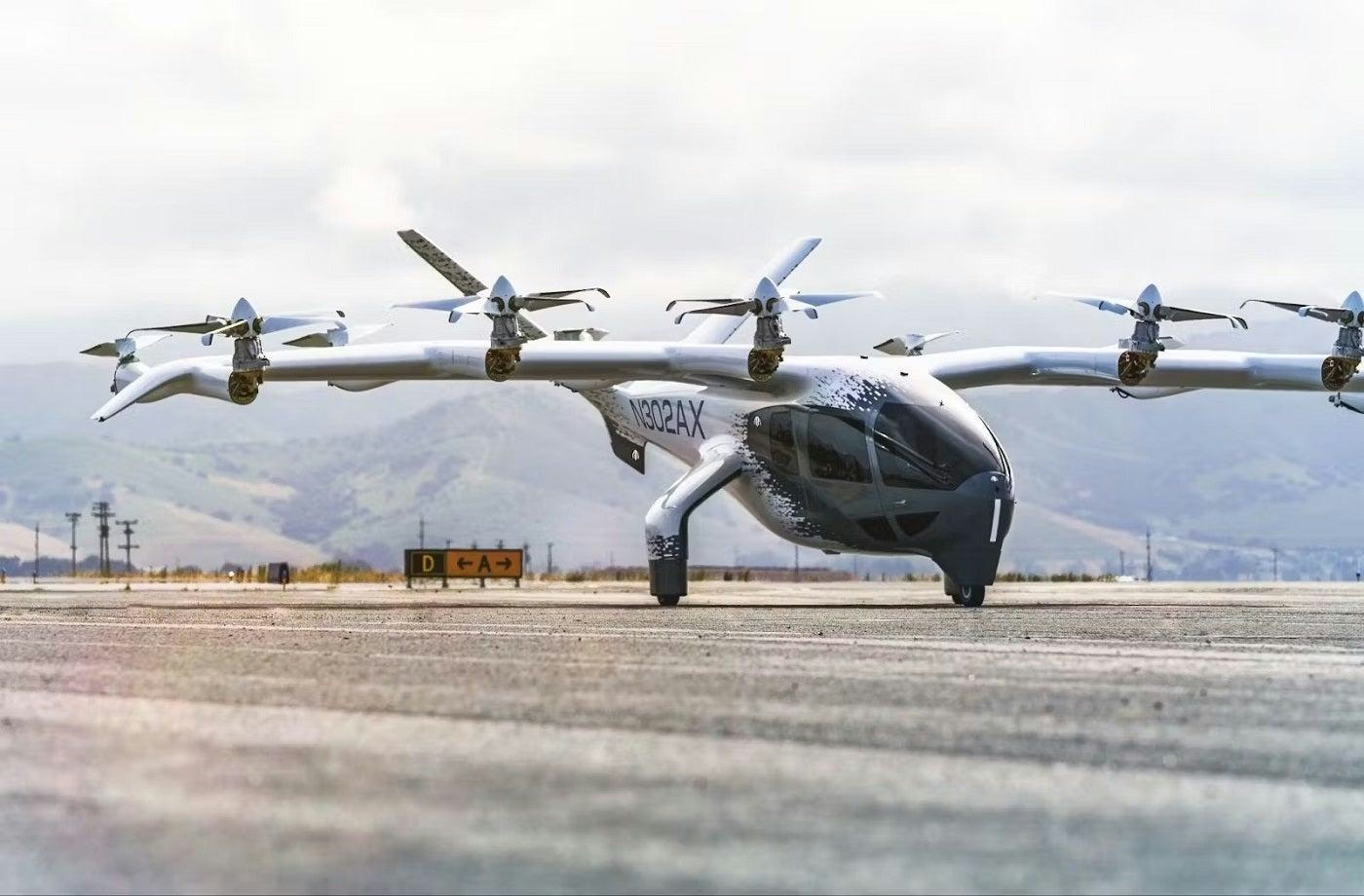
While Joby has not explicitly identified the aircraft models to be deployed for its air taxi services, it is expected to utilize the fleet acquired through its recent acquisition of Blade Air Mobility. This fleet includes helicopters and amphibious aircraft currently operating rapid shuttle services between Manhattan and major airports such as JFK and Newark, reducing travel times to as little as five minutes—a substantial improvement over conventional ground transportation. However, Joby’s own vertical takeoff and landing (VTOL) aircraft, under development since 2009, has yet to enter commercial service.

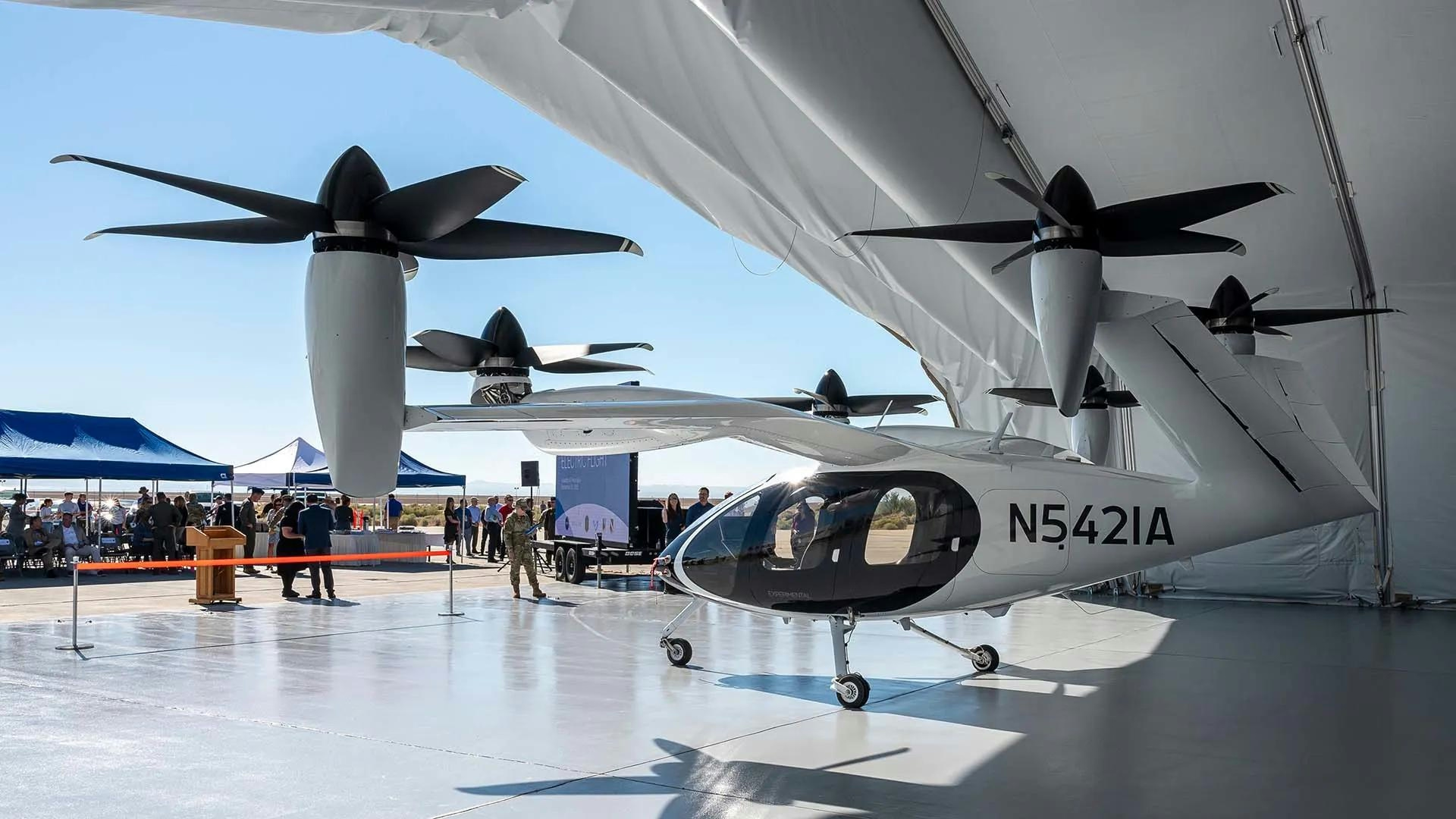
The design and capabilities of Joby’s VTOL have attracted considerable attention and investment. Japanese automaker Toyota has invested nearly $1 billion in Joby over the past seven years, providing engineering expertise and support in powertrain and actuation systems. Additionally, the U.S. Air Force has demonstrated interest by evaluating a Joby VTOL at Edwards Air Force Base in California in late 2023, with NASA’s Armstrong Flight Research Center participating in the trials. Although the results of these evaluations have not been disclosed, the collaboration highlights the growing interest in VTOL technology from both commercial and military sectors. The U.S. Army’s exploration of short/vertical takeoff and landing (S/VTOL) aircraft as potential replacements for the Gray Eagle unmanned system further underscores the expanding market for advanced air mobility solutions.

Strategic Partnerships and Market Outlook

Joby’s VTOL aircraft is designed to carry four passengers and a pilot up to 100 miles (161 kilometers) on a single battery charge, targeting short-distance urban and regional travel. The partnership with Metropolis aims to reduce infrastructure costs by utilizing existing parking facilities, a strategic approach as Joby navigates regulatory challenges, substantial infrastructure investments, and intensifying competition from other advanced air mobility companies.

Market responses to Joby’s announcement have focused on the company’s capacity to scale its vertiport network and meet production targets. In response, Joby plans to double its U.S. manufacturing capacity, signaling confidence in its growth prospects. Meanwhile, competitors are expected to pursue strategic alliances and increase manufacturing investments to remain competitive in the rapidly evolving air mobility sector.

As Joby Aviation advances its vertiport development, the company positions itself at the forefront of a transportation transformation that could significantly alter urban and regional mobility across the United States in the coming years.
More news
Top Widebody Business Class Seats Available for Booking

Top Widebody Business Class Seats Available for Booking

Top Widebody Business Class Seats Available for Booking The landscape of long-haul business class travel has undergone a significant transformation, with airlines dedicating substantial resources to enhancing space, privacy, and service consistency. Modern business class cabins now feature fully lie-flat beds, exclusive lounges, priority boarding, and elevated dining experiences—amenities that were once exclusive to first class. This comprehensive approach ensures that the premium travel experience begins well before departure and extends seamlessly beyond arrival. Qatar Airways Qsuite Since its introduction in 2017, Qatar Airways’ Qsuite has established itself as a benchmark in the industry. Available across the airline’s Airbus A350-1000 fleet and select Boeing 777 and A350-900 aircraft, the Qsuite is one of the most accessible next-generation business class products. However, availability varies depending on the route and aircraft, making seat selection a critical consideration for travelers. The defining feature of the Qsuite is its fully enclosed suite with a sliding privacy door, offering an unprecedented level of personal space at the time of its launch. The center seats can be configured into paired “double beds” or combined into four-seat quads, accommodating families, colleagues, or couples. This versatility distinguishes the Qsuite by balancing privacy for solo travelers with social options for groups. Beyond the seat itself, Qatar Airways maintains a consistently high standard of service. Business class passengers benefit from carefully plated meals, an extensive wine and beverage selection, and attentive cabin crew. The amenity kits, supplied by Diptyque, include branded skincare products that add a further element of luxury. At the 2024 Farnborough International Airshow, Engr. Al-Meer emphasized Qatar Airways’ ongoing commitment to innovation, highlighting recent additions such as the Boeing 787-9 Dreamliner and Gulfstream G700 to its fleet. Singapore Airlines Singapore Airlines offers a variety of business class seat configurations across its widebody and narrowbody fleets, each tailored to the specific mission of the aircraft. The flagship widebody business class seats are featured on long-haul Airbus A380s, A350s, and Boeing 777s, while regional A350s and 787s are equipped with designs optimized for shorter flights. Notably, even the airline’s Boeing 737s include lie-flat business class seats, a rarity among narrowbody operators. Across all aircraft, the emphasis remains on full-flat beds and a robust inflight entertainment system, KrisWorld, which is renowned for its large, high-resolution screens and extensive content library. Industry Challenges and Competitive Landscape Despite these advancements, airlines continue to face challenges in introducing new business class products. Certification delays have affected programs such as Delta’s A321neo and Air India’s retrofit initiatives, slowing the rollout of next-generation suites. Additionally, some carriers have encountered passenger dissatisfaction due to new monetization strategies, exemplified by Air France’s recent changes to its front-row business class seats. Competition within the premium travel sector remains intense. Airlines like Saudia are preparing to launch new business class products on their forthcoming Airbus A321XLRs, which may further elevate industry standards. As carriers navigate regulatory hurdles and shifting passenger expectations, the business class experience continues to evolve, delivering comfort, privacy, and service levels that rival or exceed those traditionally associated with first class.
How AI Helped Uncover Airline Pricing Strategies and Reduce Costs

How AI Helped Uncover Airline Pricing Strategies and Reduce Costs

How AI Helped Uncover Airline Pricing Strategies and Reduce Costs A recent social media post by Peru-based artificial intelligence expert Gina Acosta has reignited discussions surrounding airline pricing transparency. Acosta claimed that AI tools can uncover deeply discounted fares often hidden from conventional search engines. In her post on X, she described how she used Grok, an AI chatbot, to reduce the cost of a flight from $1,200 to $340 by employing targeted prompts designed to analyze airline pricing behaviors. Acosta emphasized that these savings were achieved not through traditional fare comparison websites but by exploiting pricing loopholes revealed through AI analysis. She outlined six specific AI-driven strategies that expose the dynamic nature of airline pricing and offer travelers methods to circumvent standard pricing models. AI Strategies for Navigating Airline Pricing One key approach involves route-level pricing intelligence, where AI analyzes typical pricing patterns for a given route, identifying the cheapest days to fly, optimal booking windows, and seasonal fluctuations. Another tactic is the consideration of alternative airports; AI is instructed to locate all nearby airports within a 100-mile radius of departure and destination cities, factoring in ground transportation costs to assess true savings. Acosta also highlighted the use of hidden city ticketing, where AI searches for flights with the intended destination as a layover, which can sometimes be less expensive than direct flights. She noted the associated risks and airline policies that travelers must consider. Additionally, AI can track mistake fares and pricing errors by monitoring specific websites and alert systems, helping distinguish genuine errors from promotional offers. Points arbitrage is another strategy, where AI compares the cost-effectiveness of purchasing miles, utilizing credit card bonuses, transferring loyalty points, or booking positioning flights to cheaper hubs, calculating the financial implications of each option. Finally, dynamic pricing tactics are examined, including whether clearing cookies, using a VPN, switching devices, or booking at particular times can help avoid inflated prices. Acosta also shared a comprehensive prompt that integrates all these strategies into a step-by-step booking plan within a fixed budget. She described these AI-driven prompts as tools that reveal pricing strategies, loopholes, and insider knowledge capable of saving travelers hundreds of dollars on flights. Implications and Industry Response The post has struck a chord with frequent travelers and technology enthusiasts, reflecting a growing interest in leveraging generative AI not only for trip planning but also for scrutinizing how prices are determined in the global aviation sector. However, the increasing use of AI for fare analysis has raised concerns among consumer advocates and lawmakers regarding transparency, fairness, and the potential misuse of personal data within sophisticated, hyper-personalized pricing models. Major airlines, including Delta, are facing intensified pressure to clarify the workings of their AI-driven pricing systems and to ensure that consumers are not disadvantaged by opaque algorithms. Regulators are currently assessing whether existing oversight mechanisms are adequate to protect travelers as AI continues to reshape pricing strategies. This evolving debate highlights the tension between technological innovation and the imperative for fairness and transparency in the airline industry, as both consumers and carriers navigate a rapidly transforming digital environment.
Delta Flight Returns to Atlanta After Engine Issue

Delta Flight Returns to Atlanta After Engine Issue

Delta Flight Returns to Atlanta Following Engine Malfunction Incident Overview A Delta Air Lines flight en route to Jacksonville, Florida, was compelled to return to Hartsfield-Jackson Atlanta International Airport on Sunday after the flight crew identified an engine problem shortly after takeoff. Flight DL2627, operated by a Boeing 757 and carrying 191 passengers alongside six crew members, departed Atlanta at 4:22 p.m. The aircraft safely landed back at the airport at 5:25 p.m., with no injuries reported. In an official statement, Delta underscored the priority placed on passenger and crew safety, noting that the flight crew adhered to established protocols by returning to Atlanta upon detecting the engine issue. The airline expressed regret for the inconvenience caused by the delay and confirmed that affected passengers were rebooked on an alternative flight scheduled to continue to Jacksonville later that evening. Safety and Industry Context The incident highlights ongoing concerns within the aviation industry regarding engine reliability and safety. It follows a recent event involving United Airlines, where an engine failure necessitated an emergency landing, prompting intensified scrutiny from regulatory authorities. Such occurrences have led airlines to reevaluate and strengthen their maintenance and safety procedures to prevent similar incidents. Delta faces the operational challenge of managing passenger rebookings while ensuring the affected aircraft undergoes a comprehensive inspection before returning to service. The airline has not disclosed specific details about the engine malfunction but reaffirmed its commitment to safety and minimizing disruption for travelers. Delta also confirmed its full cooperation with regulatory investigations and pledged to provide updates as further information becomes available.
Etihad Airways Introduces New A321LR with Enhanced Comfort

Etihad Airways Introduces New A321LR with Enhanced Comfort

Etihad Airways Introduces New A321LR with Enhanced Comfort A New Chapter in Long-Haul Single-Aisle Travel Etihad Airways has unveiled its first Airbus A321LR, marking a significant shift in the airline’s approach to long-haul travel. Traditionally known for its spacious wide-body jets and premium service, Etihad is now embracing the efficiency and flexibility offered by the long-range, single-aisle A321LR. The aircraft, delivered from Airbus’s Hamburg facility, represents a strategic adaptation to evolving market demands, enabling the carrier to serve routes that do not justify the use of larger wide-body aircraft. The A321LR, priced at approximately €70 million, boasts a range of 6,300 kilometers and a top speed of 960 kilometers per hour. It accommodates 160 passengers, offering a balance between capacity and operational efficiency. This model is part of a growing trend among airlines such as SAS and American Airlines, which are also incorporating the A321LR and its extended-range variant, the A321XLR, into their fleets to expand direct flight options to smaller or less frequented markets. Premium Comfort in a Compact Cabin One of the most striking features of Etihad’s A321LR is its business-class cabin, which rivals the comfort found on the airline’s larger 787 and A350 aircraft. Passengers benefit from lie-flat beds, generous counter space, large footwells, and direct aisle access, all designed to maximize privacy and comfort. This level of luxury is uncommon in single-aisle aircraft and underscores Etihad’s commitment to maintaining its premium service standards even on smaller planes. The A321LR is optimized for flights lasting six to seven hours from Etihad’s Abu Dhabi hub. Its sibling, the A321XLR, extends this range to 8,700 kilometers through an innovative central fuel tank, enabling non-stop flights on longer routes such as London to Dallas. Despite differences in range, the onboard experience remains consistent across both models. During the delivery flight to Abu Dhabi, Etihad demonstrated its full-service offering, including attentive cabin crew, high-speed Viasat Wi-Fi, and a refined business-class menu. The champagne selection has been upgraded from Blanc de Blancs by EPC to Taittinger, complementing the luxurious amenities such as Armani Casa bedding, which includes a blanket, pillow, and mattress pad to enhance comfort in bed mode. Market Context and Operational Considerations While the onboard experience is largely impeccable, the single-aisle configuration can feel more confined compared to wide-body aircraft. Additionally, the A321LR’s lower cruising altitude and speed may result in slightly longer flight durations and occasional weather-related route adjustments. The six-hour and 50-minute delivery flight exemplifies the typical journey time for this aircraft on medium-haul routes. Etihad’s introduction of the A321LR occurs amid intensifying competition in the long-haul, single-aisle market segment. Airlines such as AirAsia and American Airlines are also deploying similar aircraft, which is likely to increase competitive pressures, potentially driving down fares and prompting carriers to enhance their premium offerings. Strategic pricing and service differentiation will be critical as airlines vie to maintain market share. Industry forecasts remain optimistic, projecting robust airline profits by 2026, which supports the continued introduction of new aircraft models. However, recent operational challenges experienced by carriers like IndiGo underscore the importance of meticulous planning and execution as Etihad expands its single-aisle long-haul operations. Long-haul, single-aisle flights are becoming an established component of modern air travel, offering a combination of efficiency and appropriately scaled capacity. Etihad’s A321LR is positioned to play a pivotal role in this evolving landscape.
Rolls-Royce Considers India for Aircraft Engine Production Hub

Rolls-Royce Considers India for Aircraft Engine Production Hub

Rolls-Royce Considers India as a Strategic Hub for Aircraft Engine Production UK-based aerospace giant Rolls-Royce is exploring India as a potential third major home market, alongside its established bases in the United Kingdom, the United States, and Germany. In a recent interview with the Press Trust of India (PTI), Sashi Mukundan, Executive Vice President of Rolls-Royce India, outlined the company’s plans for substantial investment aimed at supporting India’s ambitions to develop and manufacture next-generation combat jet engines. Expanding Footprint in India’s Defense Sector Rolls-Royce already operates significant manufacturing facilities in the US and Germany, but India’s scale, policy clarity, and commitment to building a sophisticated defense and industrial ecosystem present a compelling opportunity. The company has been steadily deepening its engagement with India’s defense sector and is preparing to formalize partnerships through two memoranda of understanding (MoUs) with Indian defense public sector undertakings. One MoU will focus on producing engines for the Arjun tank, while the other will target propulsion systems for future combat vehicles under the Advanced Medium Combat Aircraft (AMCA) program. The AMCA, envisioned as a fifth-generation, twin-engine multirole combat aircraft, is scheduled for production in the mid-2030s for deployment by both the Indian Air Force and Navy. The initial AMCA variant is expected to be powered by General Electric’s F414 INS6 engines. However, the more advanced AMCA Mk2 will require a next-generation engine boasting a thrust-to-weight ratio exceeding ten and wet thrust above 110 kilonewtons. India is actively seeking a foreign partner to collaborate on the design, development, and testing of this advanced engine, with Rolls-Royce, Safran, and GE Aerospace currently engaged in discussions. Mukundan emphasized Rolls-Royce’s capabilities, stating, “If India is thinking about next-generation engines, Rolls-Royce is probably the best partner. We have the capability, we have the experience both in India and globally, and we have repeatedly demonstrated that we can do it.” Challenges and Competitive Landscape Establishing an aircraft engine production hub in India will not be without challenges. Rolls-Royce must navigate a complex regulatory environment, manage intricate supply chain logistics, and contend with established industry leaders such as General Electric and Pratt & Whitney. These competitors possess deep technological expertise and extensive global supply networks, and they are expected to intensify their efforts to secure market share as India’s defense sector expands. Despite these obstacles, market sentiment regarding Rolls-Royce’s plans in India has been largely positive. The company’s stock has experienced a record-breaking rally, supported by strong cash flow and operational improvements. Expanding its presence in India would not only reinforce Rolls-Royce’s position in the military engine segment but also complement its longstanding leadership in commercial aviation, where it has powered airline fleets worldwide for decades. Currently, Rolls-Royce leads the Global Combat Aircraft Programme, a UK-led initiative involving Japan and Italy to develop a sixth-generation combat aircraft engine. The company has a proven track record, powering platforms such as the Eurofighter Typhoon with its EJ200 engine and playing a key role in the F136 engine program for the F-35 Lightning II, developed in partnership with GE Aerospace. As India accelerates its push for indigenous defense manufacturing, Rolls-Royce’s potential investment could represent a pivotal step in the country’s pursuit of self-reliance in advanced aerospace technology.
Southwest Joins Other Major Airlines in Operating the World’s Largest Narrowbody Fleets

Southwest Joins Other Major Airlines in Operating the World’s Largest Narrowbody Fleets

Southwest Airlines Joins Elite Group Operating the World’s Largest Narrowbody Fleets Southwest Airlines has solidified its position among the world’s leading carriers by operating one of the largest narrowbody fleets globally, joining the ranks of United, American, Delta, and other major airlines. This achievement highlights Southwest’s continued dominance in the narrowbody sector, with its all-Boeing 737 fleet making it the largest single-type narrowbody operator worldwide. Narrowbody aircraft, characterized by their single-aisle design and primarily used for short- to medium-haul routes, remain the cornerstone of modern air travel. Airlines such as Southwest, United, American, Delta, IndiGo, and Ryanair depend heavily on these jets to sustain extensive domestic and international networks. In 2025, these carriers are not merely participants in the narrowbody market; they are actively shaping its trajectory. Southwest’s fleet, consisting of approximately 810 Boeing 737 aircraft, offers significant operational benefits. By standardizing on a single aircraft type, the airline streamlines maintenance, crew training, and scheduling processes, thereby enhancing efficiency and reliability. This strategic focus has firmly established Southwest as the world’s largest operator of Boeing 737s. Strategic Shifts Amid Industry Evolution Despite its strong position, Southwest is adapting to a rapidly evolving industry landscape. The airline recently announced a partnership with Turkish Airlines aimed at expanding into transatlantic travel, signaling a broader international ambition beyond its traditional domestic focus. Concurrently, Southwest is contemplating the introduction of more conventional revenue models, including seat assignments, extra legroom options, and baggage fees. While these changes may appeal to customers seeking additional convenience and choice, they also risk alienating loyal passengers accustomed to Southwest’s longstanding no-fee policies. The competitive response from other airlines remains uncertain. Some carriers may adjust their service offerings to mirror Southwest’s new initiatives, while others might reinforce their existing strengths. Market reactions are expected to be varied, reflecting the ongoing tension between innovation and tradition in airline customer service. Southwest’s financial outlook has encountered recent challenges. The US government shutdown caused a temporary decline in air traffic and capacity, adversely affecting the airline’s fourth-quarter performance. Nevertheless, Southwest’s extensive point-to-point network continues to distinguish it from hub-and-spoke competitors, providing travelers with greater flexibility and direct connections. As competition intensifies among airlines operating the world’s largest narrowbody fleets, carriers like Southwest, American, IndiGo, and Ryanair are redefining leadership in global aviation. Their dominance in narrowbody operations not only drives operational efficiency but also influences the future of air travel by offering passengers an expanding array of routes and choices.
Aviation Industry Faces Delays Amid Spare Parts Shortage

Aviation Industry Faces Delays Amid Spare Parts Shortage

Aviation Industry Faces Delays Amid Spare Parts Shortage The global aviation industry continues to confront a significant shortage of aircraft spare parts, a challenge that has deepened since the widespread supply chain disruptions of 2020. This ongoing crisis has had a pronounced impact on Kenyan carriers, with nearly half of the country’s airlines ending the year with at least one aircraft grounded. The situation is expected to persist into 2026, threatening further operational disruptions. Global Supply Chain Challenges and Manufacturer Delays Despite projections of record profits for the global aviation sector in 2024, according to the International Air Transport Association (IATA), supply chain difficulties remain a critical obstacle for airlines worldwide. Leading manufacturers such as Airbus and Boeing have reported delays in aircraft deliveries. Airbus, in particular, has recently reduced its delivery targets for 2025, citing ongoing quality control issues. Concurrently, GE Aerospace is experiencing increased demand for maintenance services as airlines extend the operational life of older aircraft. However, the company faces scrutiny over the reliability of its LEAP engines, adding to the maintenance challenges. Impact on Kenyan Airlines and Domestic Operations Kenyan airlines have been disproportionately affected by the spare parts shortage. The Kenya Civil Aviation Authority (KCAA) recorded a decline in domestic aircraft movements in 2024, falling from 207,962 to 206,315. This reduction is anticipated to grow as more aircraft remain grounded. Live tracking data reveals that at least 17 Kenyan-registered aircraft have been out of service for the majority of the year, significantly limiting airline capacity and revenue streams. Kenya Airways (KQ), the national carrier, has borne the brunt of the crisis. Currently, eight of its 34 aircraft are grounded, including two Boeing 787 Dreamliners that serve long-haul routes to key international destinations such as London and New York. At various points during the year, KQ had as many as 11 aircraft out of service, resulting in a capacity reduction of at least 20 percent. This has led to numerous flight delays and cancellations. Although some aircraft, including a Dreamliner and an Embraer ERJ-190, have returned to service, the airline reported a loss of Sh513 million in the first half of the year, a stark contrast to the profit recorded during the same period last year. Other local carriers have also experienced operational setbacks. Renegade Air, which focuses primarily on domestic routes, currently has three of its 19 aircraft grounded. Similarly, 748 Air Services has two of its 13 planes out of service, while African Express Airways, Astral Aviation, and Aircraft Leasing Services (ALS) each have one grounded aircraft. In contrast, several airlines including Jambojet, Safarilink, Skyward, AirKenya, Jetways, and Freedom Airline Express have reported no grounded aircraft throughout the year. Competitive Pressures and Government Response The scarcity of spare parts has intensified competition among smaller airlines in Kenya and globally, often forcing them to pay premium prices for limited resources. This dynamic places smaller carriers at a disadvantage relative to larger airlines, mirroring challenges faced by carriers such as JetBlue in other markets, where regulatory and operational complexities further hinder recovery efforts. In response to the crisis, the Kenyan government has intervened to support airlines, particularly the state-owned Kenya Airways, in efforts to restore lost capacity amid fierce global competition for parts. Industry leaders have called for coordinated measures to address supply chain bottlenecks and regulatory obstacles, emphasizing the importance of such actions to sustain the sector’s recovery and future growth.
How and Why Aircraft Dump Fuel

How and Why Aircraft Dump Fuel

How and Why Aircraft Dump Fuel The ability of certain aircraft to dump fuel, though infrequently employed, remains a vital safety mechanism in specific emergency situations. This system is not universally installed across all aircraft types, and its activation follows stringent protocols designed to safeguard both the environment and populations on the ground. The Purpose of Fuel Dumping Fuel dumping primarily serves to reduce an aircraft’s weight to within safe landing limits. Large, long-haul aircraft often depart with fuel loads that exceed their maximum allowable landing weight, carrying substantial quantities necessary for extended flights. In the event of an emergency shortly after takeoff—such as a technical malfunction, engine failure, or a medical crisis—the flight crew may need to return to the airport promptly. Instead of remaining airborne for extended periods to burn off excess fuel, the crew can initiate fuel dumping to quickly achieve a safe landing weight. A notable instance occurred in December 2025, when United Airlines Flight 803, a Boeing 777-200ER, suffered an engine failure soon after departing Washington Dulles International Airport en route to Tokyo Haneda. With a full fuel load, the crew entered a holding pattern over northern Virginia to jettison fuel before returning safely to Dulles. The aircraft landed within prescribed weight limits, and no injuries were reported. Aircraft Equipped with Fuel Dump Systems Fuel dumping capabilities are generally found on large, long-range aircraft. Most widebody passenger jets—including models such as the Boeing 777, 787 Dreamliner, and Airbus A330, A340, A350, and A380—are fitted with this system. Similarly, many military transport and tanker aircraft possess comparable fuel jettison mechanisms. Conversely, the majority of narrowbody aircraft, such as those in the Boeing 737 and Airbus A320 families, lack fuel dumping systems. These aircraft are engineered to land safely at or near their maximum takeoff weight if necessary, rendering fuel dumping unnecessary, although such heavy landings are not ideal. Mechanism of Fuel Dumping When activated, the fuel dumping system pumps fuel from the aircraft’s tanks and expels it through dedicated nozzles, typically positioned near the wingtips or along the trailing edges of the wings. This strategic placement facilitates rapid dispersal of fuel into the airflow, thereby minimizing any risk to the aircraft’s structure. Modern aircraft often feature systems that allow pilots to select a target landing weight. The fuel dumping process is then managed automatically, ceasing once the desired weight is attained. Safety, Environmental, and Regulatory Implications Fuel dumping is subject to rigorous regulation due to its environmental impact and public safety considerations. Flight crews are mandated to avoid densely populated areas and environmentally sensitive regions whenever possible during fuel jettison operations. Despite these precautions, the practice remains under close regulatory scrutiny, and incidents involving fuel dumping can provoke public concern and lead to increased oversight of airline safety protocols. Recent emergencies, such as the United Airlines Flight 803 incident, underscore the critical importance of robust safety procedures. Such events often prompt heightened examination of airline operations and can influence public confidence in the aviation industry. Competitors may respond by enhancing safety measures or investing in technologies aimed at improving fuel efficiency. Ongoing challenges faced by aircraft manufacturers—including software issues and quality control concerns, such as those reported with Airbus A320 fuselage panels—further emphasize the necessity for stringent safety oversight. These factors can affect market confidence and highlight the imperative for transparent and effective safety management throughout the aviation sector.
Major Aviation Conferences and Airshows in 2026

Major Aviation Conferences and Airshows in 2026

Major Aviation Conferences and Airshows in 2026 The global aviation industry is preparing for a significant year in 2026, building on the momentum of a record-breaking 2025 characterized by rising passenger and cargo demand, strong revenues, and robust profitability. The upcoming calendar is filled with a wide range of major airshows, conferences, and exhibitions that will convene stakeholders from across the aviation spectrum. These events will place particular emphasis on technological innovation, sustainability initiatives, and the advancement of air mobility solutions. Despite this optimism, the industry remains cautious amid broader economic uncertainties. Goldman Sachs projects a “sturdy” global economic growth rate of 2.8% for 2026, yet heightened volatility—evident in divisions within the Federal Reserve and market valuations exceeding historical averages—may affect participation and engagement at these gatherings. Additionally, potential tariff decisions, especially in the automotive sector, alongside shifting global economic conditions, are expected to influence the environment in which these aviation events take place. Business aviation leaders anticipate a dynamic year, with industry trends and macroeconomic factors shaping the tone and focus of key conferences and airshows. 2026 Aviation Events Calendar: Key Highlights The aviation events scheduled throughout 2026 span the entire year, offering a diverse array of forums from specialized conferences to expansive international airshows. These gatherings will address a broad spectrum of topics, including maintenance, repair and overhaul (MRO), aircraft leasing and finance, defense, sustainability, and digital transformation. The year begins in January with MRO Latin America, focusing on maintenance and repair in the Latin American region, followed by Wings India, which highlights commercial and regional aviation developments in India. February features several prominent events, including MRO Middle East, Aero Leasing, and the Singapore Airshow, which covers commercial, defense, and business aviation sectors. The World Defence Show in Saudi Arabia and the Sustainable Aviation conference, centered on decarbonization and climate technologies, also take place during this month. March is marked by a particularly busy schedule, with events such as ISTAT Americas, Sustainable Skies, and the Aviation Festival, which explores digital transformation and passenger experience. Military-focused gatherings like IMMAE and DPRTE Farnborough, alongside inclusion initiatives such as Women of Aviation Worldwide Week, further enrich the month’s agenda. Regional business aviation is represented by NBAA Ohio, while aerospace and defense supply chain issues are addressed at A&DSS Seattle. April continues with MRO Americas and the CAPA Airline Summit, which provides insights into airline strategy and market outlook. Aerospace Tech Week and PTE World focus on avionics, connectivity, and passenger experience technologies. The Space Symposium and AERO Friedrichshafen, dedicated to general and business aviation, also feature prominently. May’s calendar includes MRO Southeast Asia, Routes Europe, and MRO China, reflecting the global reach of maintenance and aftermarket services. ISTAT Asia and NBBA Maintenance highlight aircraft trading and business aviation maintenance, respectively. The month also observes National Clean Air Month and National Space Day, underscoring the industry’s commitment to sustainability and space education. The IATA Ground Handling Conference and RAeS Future Combat Air and Space event address ground operations safety and next-generation defense technologies. June brings the Space Tech Expo, Engine Leasing conference, and EBACE, Europe’s premier business aviation event. The ILA Airshow in Germany showcases aerospace, defense, and space technologies. July features the Farnborough International Airshow, one of the world’s largest aerospace events, alongside the Royal International Air Tattoo (RIAT) and the EAA AirVenture in the United States, which focuses on general aviation. August is dedicated to space research and exploration with the Space Science event. September rounds out the major gatherings with Aero Engines, MRO Asia, and the Istanbul Airshow, which highlights commercial and defense aerospace developments in Türkiye. As the aviation sector confronts a year marked by both opportunity and uncertainty, these events will provide essential platforms for industry leaders to engage with emerging challenges, demonstrate innovation, and shape the future trajectory of global aviation.
ITA Airways to Retire Airbus A330ceo Fleet in New Year

ITA Airways to Retire Airbus A330ceo Fleet in New Year

ITA Airways to Retire Airbus A330ceo Fleet in New Year ITA Airways is set to retire its final Airbus A330-200 aircraft by the end of 2026, concluding its operations with the A330ceo model as the airline advances toward a modernized fleet. Aviation analytics firm Cirium reports that the last scheduled A330-200 flight will take place on December 31, 2026, operating between Boston Logan and Rome Fiumicino. This retirement aligns with the accelerated delivery of the more fuel-efficient Airbus A330-900neo, which is gradually replacing the older aircraft in ITA’s long-haul operations. Fleet Transition and Operational Impact Originally, ITA Airways had planned to phase out the A330-200 by October 2025. However, delays in the arrival of new aircraft extended the service life of the A330ceo fleet. The final active A330-200, registered EI-EJH and named "Marco Pantani," continues to serve routes including Delhi, New York-JFK, and Boston. Other aircraft in the A330ceo fleet have already been withdrawn or parked, with the most recent retirement occurring in November 2025 following a flight from Rio de Janeiro. Historically, the A330-200 was deployed on long-haul routes to destinations such as Rio de Janeiro, São Paulo, Dubai, Miami, Toronto, and Washington. In recent months, its operations have been concentrated on Boston, New York-JFK, and Delhi. From January 2027 onward, ITA’s booking platform indicates that these routes will be exclusively operated by the A330-900neo, reflecting the airline’s full transition to the newer generation aircraft. The retirement of the A330ceo fleet represents a significant operational shift for ITA Airways. While the introduction of the A330-900neo is expected to enhance fuel efficiency and improve passenger experience, the transition poses challenges. The airline must carefully manage potential service disruptions and operational adjustments, particularly in light of previous delays in A330-900neo deliveries. Notably, between July 2024 and November 2025, ITA did not receive any new A330-900neos, with deliveries resuming only in late November 2025. Market and Industry Implications The fleet renewal is likely to provoke mixed reactions in the market. ITA Airways may face fluctuations in stock prices and shifts in passenger and cargo demand as it navigates the operational changes. Competitors could capitalize on this period of transition by intensifying marketing efforts or adjusting their own fleet strategies to attract ITA’s customers and fill any service gaps. The broader aviation industry will be closely monitoring ITA’s move, as it may influence competitive dynamics and operational approaches among other carriers. As ITA Airways enters the new year, the exclusive operation of the A330-900neo marks a new chapter for the airline. This transition underscores both the opportunities and complexities inherent in modernizing a long-haul fleet amid evolving market conditions.
Ask AeroGenie