
Trasforma le intuizioni dell’IA in azioni concrete

Tendenze
Categories
TransDigm Group Reshapes the Aerospace Supply Chain
TransDigm Group Reshapes the Aerospace Supply Chain
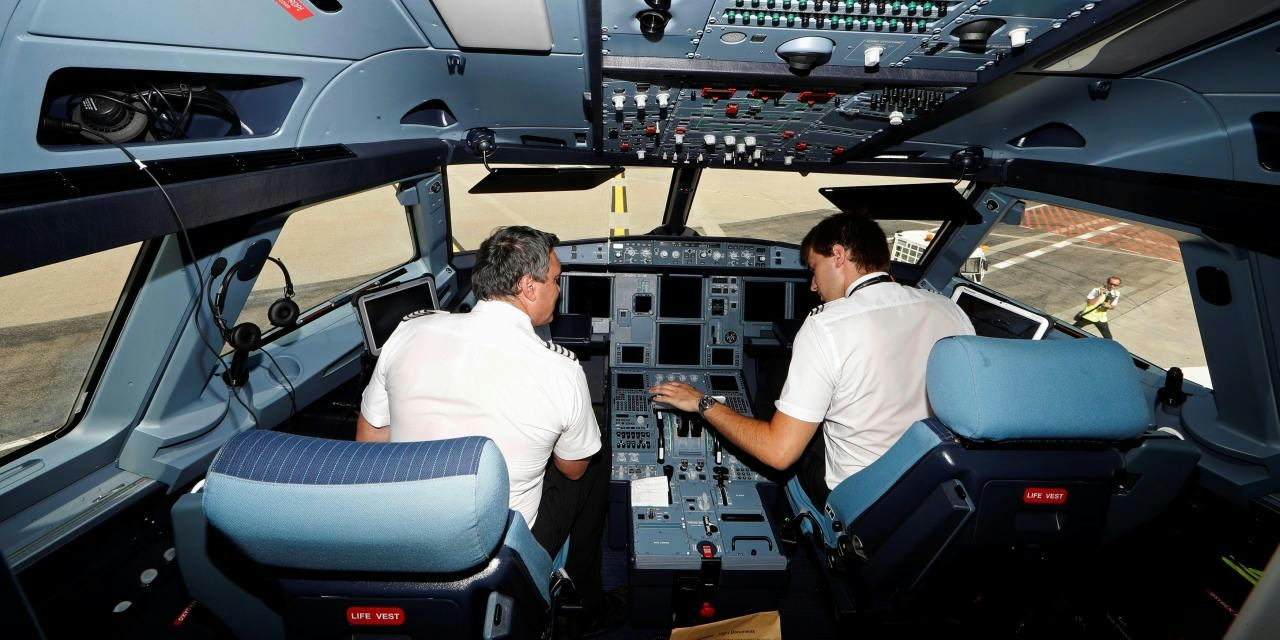
TransDigm Group, though not widely recognized by the general public, plays a critical role in the global aviation industry through its precision-engineered aircraft components. Its products, ranging from cockpit controls to lavatory latches, are integral to commercial, business, and military aircraft, quietly ensuring the safety and reliability of modern air travel.
The Invisible Backbone of Aviation
While passengers rarely notice TransDigm’s presence, airlines and aircraft manufacturers depend heavily on the company’s mission-critical parts. TransDigm has established a dominant position by specializing in highly technical components that are both difficult to substitute and essential for aircraft operation. In an era marked by supply chain vulnerabilities and increasing air traffic, the dependability of these parts has become more vital than ever.
Unlike firms that focus on high-profile airframes or engines, TransDigm targets niche systems characterized by high barriers to entry. Each new aircraft platform it supports secures decades of aftermarket revenue, as airlines require ongoing maintenance and replacement parts to keep their fleets operational.
Inside TransDigm’s Portfolio
TransDigm operates through a network of specialized units, manufacturing thousands of components across several key domains. Its power and control systems include actuators, ignition systems, valves, pumps, and latching devices that regulate fuel flow, secure doors, and maintain electrical stability. The rigorous certification and integration standards in this area provide TransDigm with a durable competitive advantage.
In the realm of aircraft interiors and safety, the company produces custom seat belts, restraint systems, lavatory hardware, and interior locks tailored to specific aircraft platforms. These products undergo exhaustive testing and receive long-term support, with recurring demand driven by cabin upgrades and increased passenger density.
TransDigm’s avionics and connectivity segment supplies antennae, enclosures, and cockpit interface hardware that meet the growing need for connected aircraft and real-time data transmission. The company’s emphasis on reliability allows it to command a premium in these critical components.
Additionally, TransDigm serves the defense and rotorcraft markets by providing components for military aircraft, helicopters, and defense support platforms. These sectors are characterized by stringent export controls and lengthy qualification cycles, making entry difficult. However, once established, TransDigm’s products often remain in service on platforms for 30 to 40 years.
Across all these categories, TransDigm’s strategy is consistent: it prioritizes high-value, engineered parts that generate recurring aftermarket revenue rather than pursuing high-volume, low-margin products.
Navigating a Shifting Supply Chain
TransDigm’s established position faces challenges as the aerospace supply chain undergoes significant changes. Suppliers to Airbus and Boeing are preparing for increased production starting in 2026, a development that could trigger substantial price increases. In response, competitors are exploring alternative suppliers or adopting vertical integration strategies, exemplified by Boeing’s recent acquisition of Spirit AeroSystems.
Market dynamics are also evolving. While strong demand for freighter aircraft supports Boeing’s stock performance, regulatory hurdles and certification timelines introduce new uncertainties. Concurrently, the commercial aerospace parts sector is experiencing heightened deal activity, driven by investor interest in scalable platforms and industry consolidation. This trend has the potential to reshape the competitive landscape and challenge TransDigm’s market dominance.
The Road Ahead
TransDigm’s data-driven, private-equity-style operating model has long distinguished it within the aerospace hardware sector. As the industry confronts rising demand, supply chain pressures, and increased consolidation, the company’s capacity to adapt will be essential to maintaining its quiet but commanding presence in the skies worldwide.

Etihad Airways Suspends Airbus A380 Flights on Key Route

Aditya Birla Group Seeks Approval for Aircraft Leasing in GIFT City

Qatar Airways Highlights Innovation and Connectivity at Arabian Travel Market 2026

Hong Kong's Five-Year Plan Includes Andrew Fan's Aircraft Parts Processing Hub Proposal

ACIA Aero Leasing Delivers ATR72-600 to Air Nostrum

RTX Appoints Jill Albertelli as Head of Pratt & Whitney

TAT Technologies Joins Beyond Aero Hydrogen Aircraft Program

AURAK Study Highlights Barriers to Air Taxi Adoption in Emerging Economies

Xiamen Air Selects Altitude for 787 Maintenance at Heathrow

Etihad and Swissport Extend Global Partnership
