
Trasforma le intuizioni dell’IA in azioni concrete

Tendenze
Categories
Uber Expands App to Include Parking, Air Taxis, and Autonomous Rides
Uber Expands App to Include Parking, Air Taxis, and Autonomous Rides
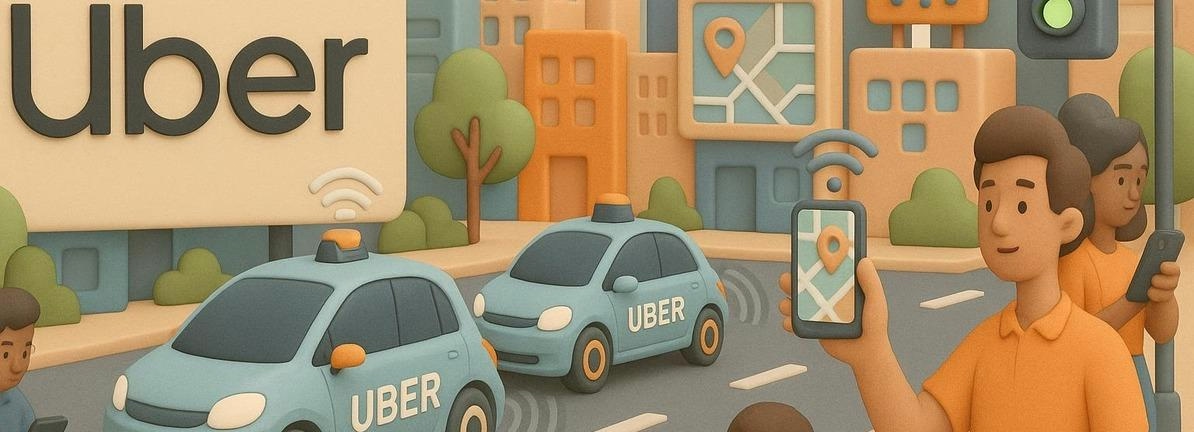
Uber Technologies (NYSE: UBER) is significantly broadening its mobility platform, moving beyond its traditional ride-hailing and delivery services. The company has announced the acquisition of SpotHero, a leading parking platform, which will enable users to reserve parking spaces directly through the Uber app in over 400 cities. This integration targets drivers who may not require a ride but still need convenient parking solutions, marking a strategic expansion into urban parking management.
Launch of Uber Air and Autonomous Vehicle Partnerships
In a further step into new mobility sectors, Uber is commercially launching Uber Air, powered by Joby Aviation. This service allows users to book air taxi rides within the existing Uber app interface, representing the company’s entry into the emerging urban air mobility market. Uber Air offers a premium travel option on select routes, aiming to provide faster and more efficient urban transportation.
Simultaneously, Uber is deepening its involvement in autonomous vehicle technology through partnerships with companies such as Wayve, Nuro, and WeRide. These collaborations focus on deploying autonomous ride options in major markets, positioning Uber as a central platform for a diverse range of mobility services, including robotaxis. This multi-modal approach reflects Uber’s ambition to become a comprehensive provider of urban transportation solutions.
Challenges and Market Response
Despite the promising expansion, Uber faces considerable challenges. Regulatory hurdles loom large as the company ventures into air taxis and autonomous vehicles, both of which are subject to evolving safety and operational standards. Competition is intensifying, with established players like Waymo and Lyft also investing heavily in autonomous and multi-modal mobility solutions. Integrating parking, ride-hailing, air travel, and autonomous services into a seamless user experience presents significant technological complexity.
Market reactions to Uber’s announcements have been mixed. Some investors recognize the potential for Uber to capture a larger share of the end-to-end urban journey, while others remain skeptical about the feasibility and profitability of these new services. The expansion increases operational complexity and exposes Uber to heightened regulatory scrutiny and substantial capital requirements across multiple transportation modes. Competitors are likely to accelerate their own innovations, intensifying the race to dominate the future of urban mobility.
Looking forward, critical questions remain regarding user adoption, regulatory approvals, and the speed at which these services can be deployed across different regions. Investors will closely monitor how Uber manages pricing strategies, user experience, and safety standards as it integrates these diverse offerings into a unified platform.
Uber’s recent initiatives underscore its commitment to redefining urban transportation amid uncertainty and fierce competition. The company’s success in executing these ambitious plans will be pivotal in shaping its future role within the evolving mobility landscape.

Etihad Airways Suspends Airbus A380 Flights on Key Route

Aditya Birla Group Seeks Approval for Aircraft Leasing in GIFT City

Qatar Airways Highlights Innovation and Connectivity at Arabian Travel Market 2026

Hong Kong's Five-Year Plan Includes Andrew Fan's Aircraft Parts Processing Hub Proposal

ACIA Aero Leasing Delivers ATR72-600 to Air Nostrum

RTX Appoints Jill Albertelli as Head of Pratt & Whitney

TAT Technologies Joins Beyond Aero Hydrogen Aircraft Program

AURAK Study Highlights Barriers to Air Taxi Adoption in Emerging Economies

Xiamen Air Selects Altitude for 787 Maintenance at Heathrow

Etihad and Swissport Extend Global Partnership
