
Trasforma le intuizioni dell’IA in azioni concrete

Tendenze
Categories
United Airlines Ventures Invests in Assaia
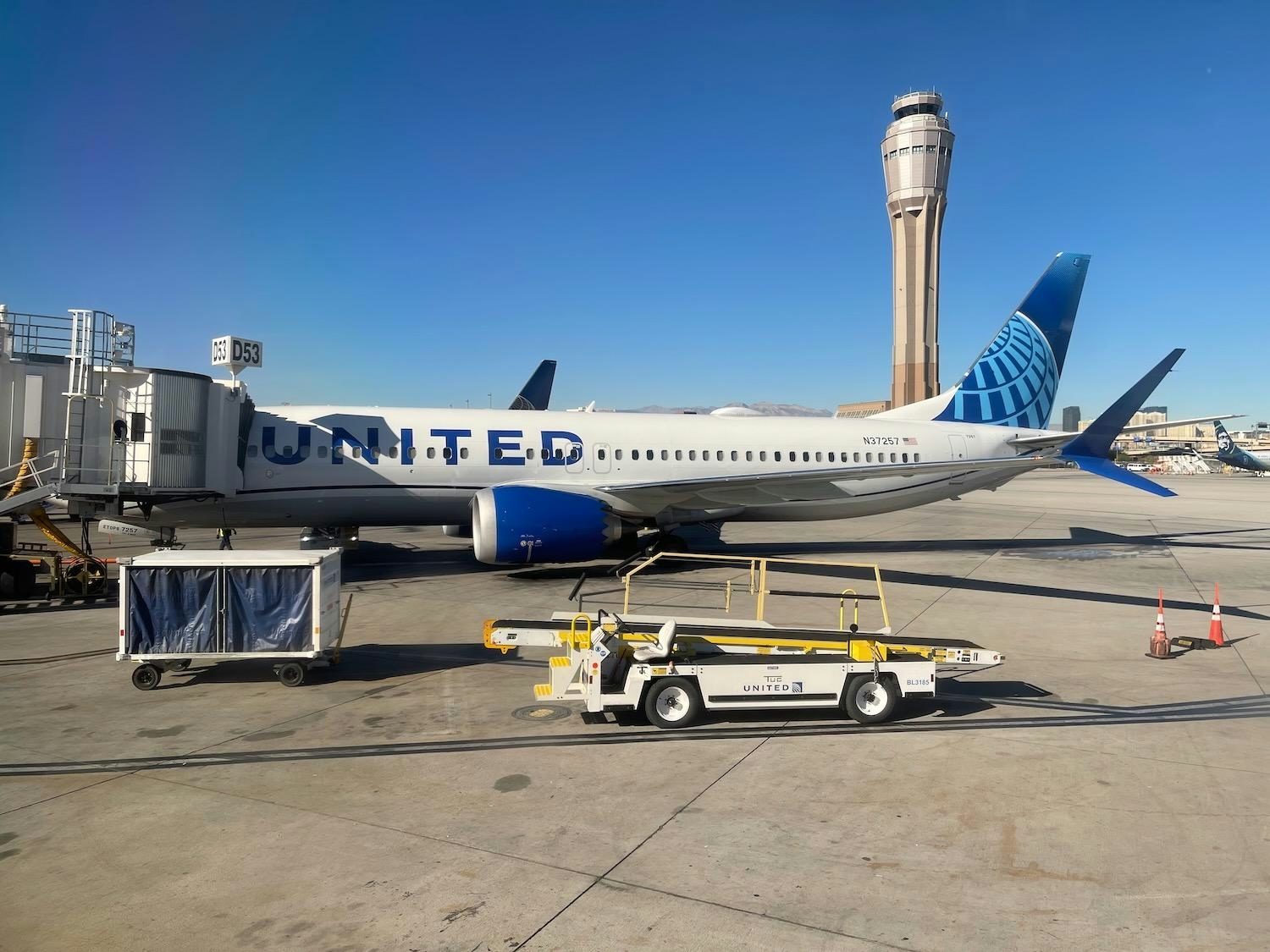
United Airlines Ventures Invests in Assaia to Advance AI in Airport Operations
Assaia, a specialist in artificial intelligence and computer-vision solutions for airport operations, has received a strategic investment from United Airlines Ventures (UAV), the venture capital division of United Airlines. This funding, secured earlier this year, is intended to accelerate the development of Assaia’s StandManager product, which supports airlines and airports in making dynamic stand and gate allocation decisions in response to evolving operational conditions.
Enhancing Airport Efficiency Through AI
StandManager, a component of Assaia’s broader ResourceManager platform, utilizes artificial intelligence and real-time data to address the growing complexity of stand and gate planning. By integrating operational data, business rules, and live situational inputs, the system enables airport operators to respond promptly to disruptions and optimize the allocation of resources. This capability is increasingly vital as airports contend with fluctuating schedules and operational challenges.
United Airlines Ventures’ investment signals the airline’s confidence in Assaia’s innovative approach to tackling the operational difficulties faced by modern airports. UAV’s mandate includes supporting technologies that advance the aviation sector while providing portfolio companies with access to industry expertise and resources.
Challenges and Industry Implications
Despite the promise of AI-driven solutions, integrating Assaia’s technology into United Airlines’ operations presents challenges. The adoption process may necessitate substantial investments in staff training and technology infrastructure upgrades, potentially affecting short-term operational costs. Market reactions to the investment have been varied; some investors view it as a strategic move to enhance operational efficiency and customer service, while others express caution regarding the broader implications of AI-driven disruption within the travel industry.
Competitors are closely monitoring United’s strategy, with some airlines likely to pursue similar investments in AI-powered operational tools to maintain competitive advantage. Others may choose alternative growth strategies, reflecting a cautious approach to the adoption of advanced automation. The overall industry response remains uncertain as airlines balance the potential benefits against the risks associated with these emerging technologies.
In a related development, United Airlines’ CEO has indicated that strong travel demand could lead to gradual fare increases in 2027, a trend that may be influenced by the company’s ongoing strategic investments in technology and operational efficiency.
Assaia’s collaboration with United Airlines Ventures highlights the expanding role of artificial intelligence in shaping the future of airport operations, as airlines seek innovative solutions to manage complexity and enhance the passenger experience.

Etihad and Swissport Extend Global Partnership

Sepehran Airlines B737 Returns to Mashhad After Tyre and Engine Issues

Etihad Deploys Widebody Fleet to Meet Strong Demand

Korean Air Finalizes $36.2 Billion Deal with Boeing

Australia’s RFDS Queensland Section Orders Six King Air 260Cs

Korean Air Finalizes Order for 103 Boeing Jets and Engines

Embraer E195-E2 Features Distinctive Engine Placement Among Regional Jets

What Passengers Can Expect on Boeing’s New 777X Jet

How Ethiopian Airlines Became Africa’s Leading Carrier Amid Gulf Competition

Joby Aviation Extends Autonomous Flight Capabilities with Cross-Country Tour
