
Trasforma le intuizioni dell’IA in azioni concrete

Tendenze
Categories
Upgraded Rolls-Royce Engines to Enhance Efficiency of B-52 Bomber

Upgraded Rolls-Royce Engines to Enhance Efficiency of B-52 Bomber
Modernizing a Strategic Icon
The Boeing B-52 Stratofortress, a stalwart of the U.S. Air Force since its inaugural flight in 1952, is undergoing a significant upgrade designed to extend its operational viability well into the mid-21st century. Despite its advanced age, the B-52—commonly known as the BUFF—continues to serve as a critical component of America’s strategic strike capabilities. The current modernization effort aims to equip the aircraft with contemporary technologies to meet the demands of modern air warfare.
At the heart of this transformation is the Commercial Engine Replacement Program (CERP), a collaborative initiative involving the U.S. Air Force, Boeing, and Rolls-Royce. This program will replace the B-52’s aging Pratt & Whitney TF33 engines with the more advanced Rolls-Royce F130 turbofan engines. These new powerplants are expected to deliver substantial improvements in performance, operational cost efficiency, durability, and mission readiness. Alongside the engine upgrade, the aircraft—redesignated as the B-52J—will be outfitted with cutting-edge systems, including enhanced data links and radar technology adapted from naval fighter aircraft.
Advancements in Engine Technology and Operational Impact
The Rolls-Royce F130 engine incorporates a modern high-bypass design, which increases air intake to produce equivalent thrust while significantly reducing fuel consumption. Industry estimates indicate that the new engines could reduce fuel usage by as much as 30 percent. This improvement not only extends the B-52’s unrefueled range but also eases the demand on the Air Force’s aerial refueling tankers. Consequently, bombers will be able to maintain longer on-station times and operate from a broader range of airfields. This operational flexibility is vital for agile combat employment, diminishing reliance on large, vulnerable bases and enhancing the unpredictability of the bomber fleet to potential adversaries.
Industry Concerns and Market Reactions
The decision to rely on a single engine supplier has sparked debate within the aviation sector. United Airlines CEO Scott Kirby has voiced concerns about exclusive engine agreements, highlighting risks related to supply shortages and vulnerabilities in the supply chain. While Rolls-Royce has demonstrated notable fuel efficiency gains with its XWB-84 EP engine—achieving double-digit reductions in fuel burn and significant annual cost savings—questions persist regarding the long-term resilience of the supply network. These apprehensions are reflected in broader market trends, with the U.S. Air Force concurrently investing in alternative propulsion projects, such as the Rolls-Royce Orpheus autonomous fighter engine developed in partnership with GE Aerospace.
Despite these challenges, Rolls-Royce’s technological advancements have been met with largely positive responses from both commercial airlines and military operators eager to benefit from improved efficiency and reduced maintenance requirements. Nonetheless, some industry stakeholders, including Emirates, have expressed cautious optimism. While supportive of Boeing’s 777X program, Emirates remains attentive to progress on Rolls-Royce engine upgrades for the Airbus A350-1000 before fully endorsing the developments.
Extending the Legacy of the B-52
With the final B-52 produced in 1962, the CERP initiative is set to sustain the fleet’s operational status until at least 2050. This extension could see individual airframes reaching an unprecedented century of service, underscoring the enduring strategic value of the B-52. Future generations of pilots will continue to operate this iconic aircraft, now powered by a new generation of Rolls-Royce engines, blending historic legacy with modern innovation.

Bangladesh Launches Initiative to Become Regional Aviation Hub
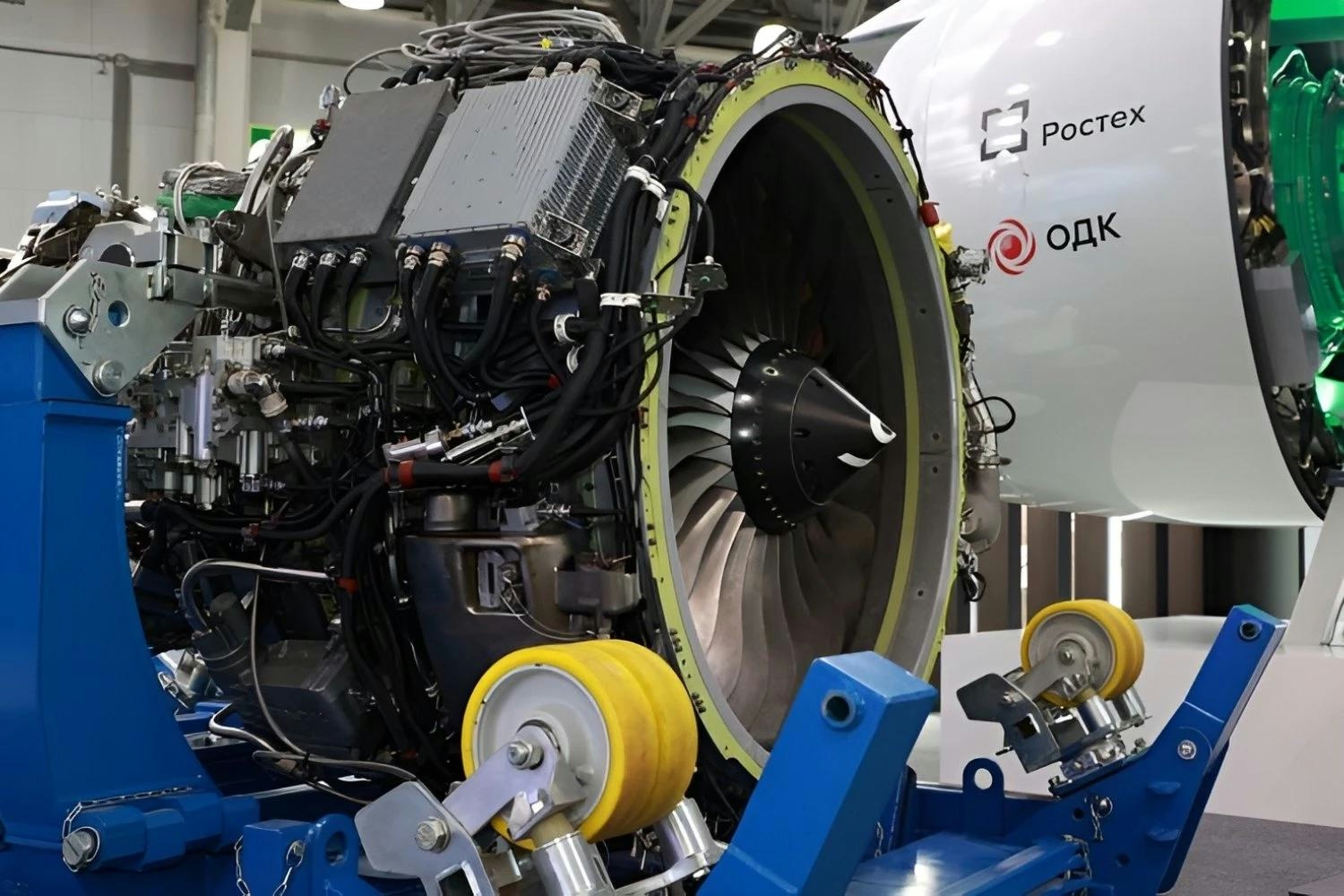
Russia Transports PD-8 Engine to India for International Certification

Kyrgyzstan to Adopt EMPIC GmbH Software for Flight Safety Oversight

Why Hawaiian Airlines Is Waiting Until 2028 To Add A Premium Economy Cabin To Its Airbus A330 Fleet

Engine Fault Causes Royal Navy Helicopter Crash Fatality

Joby Aviation Begins Texas Air Taxi Test Flights Amid Stock Decline

Iberia Receives Full Approval for Airbus A350 Heavy Maintenance

NetJets to Construct Terminal and Hangar at Dallas Love Field

Using AI in Aircraft Purchases

CIAM Unveils RPD-150T Engine to Replace Rotax 150 hp Model
