
Trasforma le intuizioni dell’IA in azioni concrete

Tendenze
Categories
US Airlines Introducing Updated Widebody Cabins in 2026
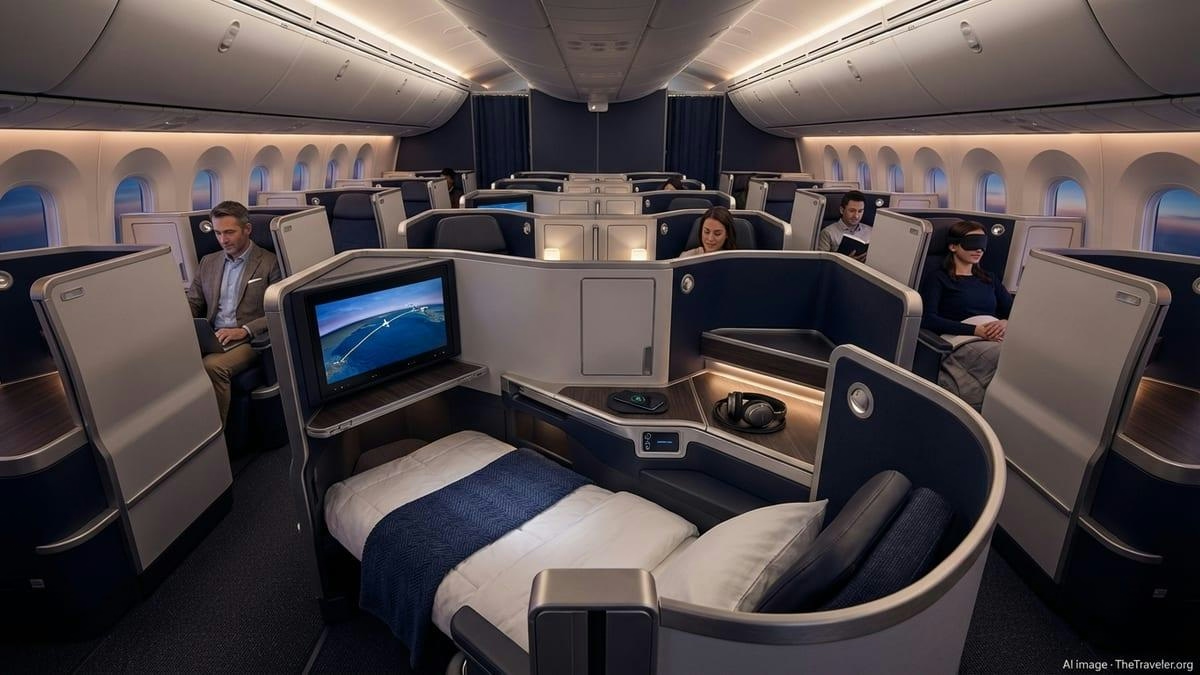
US Airlines to Launch Upgraded Widebody Cabins in 2026
American Airlines and United Airlines are embarking on significant fleet enhancements, focusing on premium-heavy widebody aircraft that signal a strategic evolution in the US long-haul aviation market. Both carriers have committed to the Boeing 787 Dreamliner series, with American currently leading the charge and United poised to expand aggressively in the coming years. Meanwhile, Delta Air Lines has taken a divergent path, favoring Airbus twin-aisle jets and only recently entering the Dreamliner market.
American Airlines’ Premium-Heavy Dreamliners
American Airlines introduced its 787-9P Dreamliner in the summer of 2025, marking a substantial shift in cabin configuration. The new aircraft feature a 65% increase in premium seating compared to previous models, achieved by removing the traditional first-class cabin to expand business class offerings. Each plane includes 51 Flagship Suite seats and 32 premium economy seats, totaling 83 premium seats per aircraft. The Flagship Suite is a notable innovation, offering sliding privacy doors on every business class seat for the first time in American’s fleet. The front-row suites provide over 40% more space than standard seats and include a unique chaise longue, a feature unprecedented in commercial aviation.
Premium economy passengers also benefit from enhanced amenities, including privacy headrest wings, 13-inch 4K screens, and wireless charging at every seat. These Dreamliners are the first in American’s fleet to be equipped with Viasat’s high-capacity Ka-band Wi-Fi, which will be complimentary for AAdvantage members. Beyond new deliveries, American is undertaking a retrofit program to upgrade its entire fleet of 20 Boeing 777-300ERs to the same premium standard.
United Airlines’ Ambitious Expansion
United Airlines plans to introduce its premium-heavy 787 Dreamliners nearly a year after American’s debut, with an even greater emphasis on premium seating. Each United Dreamliner will offer 99 premium seats, the highest number of any US jetliner to date. United’s long-term strategy involves acquiring nearly three times as many premium-heavy Dreamliners as American, positioning the airline to dominate the premium long-haul segment in the years ahead.
Industry Challenges and Competitive Dynamics
The introduction of these upgraded widebody cabins presents several challenges. Airlines must contend with the high costs associated with retrofitting existing aircraft and address potential resistance from passengers accustomed to older cabin layouts. Additionally, extensive training will be necessary for cabin crews to deliver service aligned with the new features and elevated standards.
The competitive landscape is expected to intensify as carriers seek to attract travelers through enhanced onboard experiences. Delta and other major airlines may respond with similar cabin upgrades or new orders for modern widebody aircraft from Boeing and Airbus. Industry data from January 2026 highlights Boeing’s current advantage, with eight widebody deliveries compared to just one from Airbus.
As American and United advance their premium-heavy strategies, the US airline industry is entering a new phase of long-haul travel characterized by upgraded cabins, heightened competition, and evolving passenger expectations.

Etihad Airways Suspends Airbus A380 Flights on Key Route

Aditya Birla Group Seeks Approval for Aircraft Leasing in GIFT City

Qatar Airways Highlights Innovation and Connectivity at Arabian Travel Market 2026

Hong Kong's Five-Year Plan Includes Andrew Fan's Aircraft Parts Processing Hub Proposal

ACIA Aero Leasing Delivers ATR72-600 to Air Nostrum

RTX Appoints Jill Albertelli as Head of Pratt & Whitney

TAT Technologies Joins Beyond Aero Hydrogen Aircraft Program

AURAK Study Highlights Barriers to Air Taxi Adoption in Emerging Economies

Xiamen Air Selects Altitude for 787 Maintenance at Heathrow

Etihad and Swissport Extend Global Partnership
