
Trasforma le intuizioni dell’IA in azioni concrete

Tendenze
Categories
Why Airlines Occasionally Fly Empty Planes Across the Globe
Why Airlines Occasionally Fly Empty Planes Across the Globe
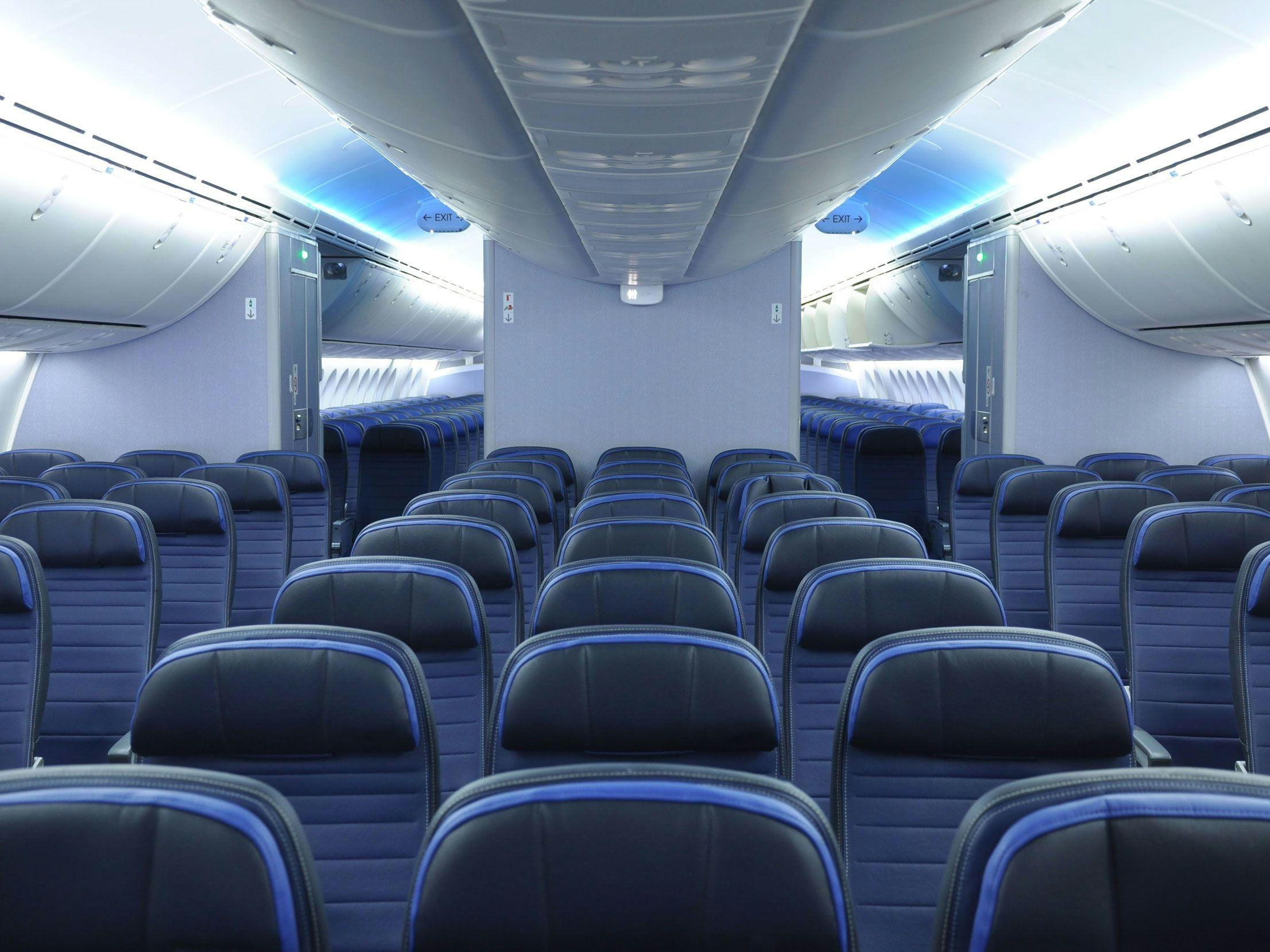
Open a flight tracking app at the right moment, and one might observe an unusual sight: a widebody jet operating a route not typically served by the airline, bearing a high-numbered flight code and carrying no passengers. These are known as ferry flights—operations in which airlines fly aircraft empty, often without cabin crew, for various operational reasons.
Operational Necessities Behind Empty Flights
The primary motivation for ferry flights is maintenance. Certain countries, such as the Philippines, have emerged as major hubs for aircraft maintenance, repair, and overhaul (MRO). Airlines based in Europe or the United States sometimes find it more economical to fly an empty aircraft thousands of kilometers to facilities in Manila for servicing rather than conducting the work at their home bases. This remains cost-effective even after accounting for the expenses associated with operating a long, passenger-less flight.
Ferry flights also occur when an aircraft experiences a technical issue at an airport where the airline lacks its own engineering support. In these situations, it may be unsafe to carry passengers, but the plane can still be flown by pilots back to a maintenance base for repairs. Additionally, there are instances when the aircraft is fully operational, but flights are canceled due to the unavailability of cabin crew. Instead of leaving a valuable asset grounded, airlines often choose to reposition the aircraft empty to return it to service promptly. While finding replacement crew might seem simpler, airlines frequently opt to rebook passengers on alternative flights and move the aircraft as efficiently as possible.
Storage considerations also contribute to ferry flights. During the early stages of the COVID-19 pandemic, ferrying planes into long-term storage became a common practice. Although less frequent now, this remains an option when demand declines or fleet adjustments are necessary.
Economic Pressures and Rising Costs
These operational decisions unfold amid a backdrop of escalating fuel prices. Major carriers such as United and American Airlines have faced fuel cost increases exceeding 50% compared to 2025, with United alone anticipating approximately $6 billion more in fuel expenses for 2026 than initially forecasted. Despite these rising costs, demand for air travel remains strong. Airlines have responded by raising fares, passing higher fuel expenses onto customers. According to United’s Chief Commercial Officer, this approach has not diminished demand. Furthermore, the recent collapse of Spirit Airlines has reduced competition, enabling major carriers to sustain higher prices and absorb the costs associated with operational necessities like ferry flights.
Crew and Identification of Ferry Flights
Typically, ferry flights carry only pilots, who are trained to manage all necessary safety procedures. Occasionally, cabin crew members are repositioned on these flights, traveling as passengers in a process known as “deadheading.” In such cases, some crew members must remain officially on duty to oversee safety protocols.
Identifying ferry flights can be challenging, as there is no universal system. However, many airlines assign four-digit flight numbers—often beginning with higher digits—that distinguish these flights from regular passenger services. Observant flight trackers may spot these unusual, empty journeys traversing the globe, offering a glimpse into the complex logistics and economic pressures that shape modern air travel.

Etihad Airways Suspends Airbus A380 Flights on Key Route

Aditya Birla Group Seeks Approval for Aircraft Leasing in GIFT City

Qatar Airways Highlights Innovation and Connectivity at Arabian Travel Market 2026

Hong Kong's Five-Year Plan Includes Andrew Fan's Aircraft Parts Processing Hub Proposal

ACIA Aero Leasing Delivers ATR72-600 to Air Nostrum

RTX Appoints Jill Albertelli as Head of Pratt & Whitney

TAT Technologies Joins Beyond Aero Hydrogen Aircraft Program

AURAK Study Highlights Barriers to Air Taxi Adoption in Emerging Economies

Xiamen Air Selects Altitude for 787 Maintenance at Heathrow

Etihad and Swissport Extend Global Partnership
