
Trasforma le intuizioni dell’IA in azioni concrete

Tendenze
Categories
Why Delta Air Lines Has Returned the Boeing 747 to Service
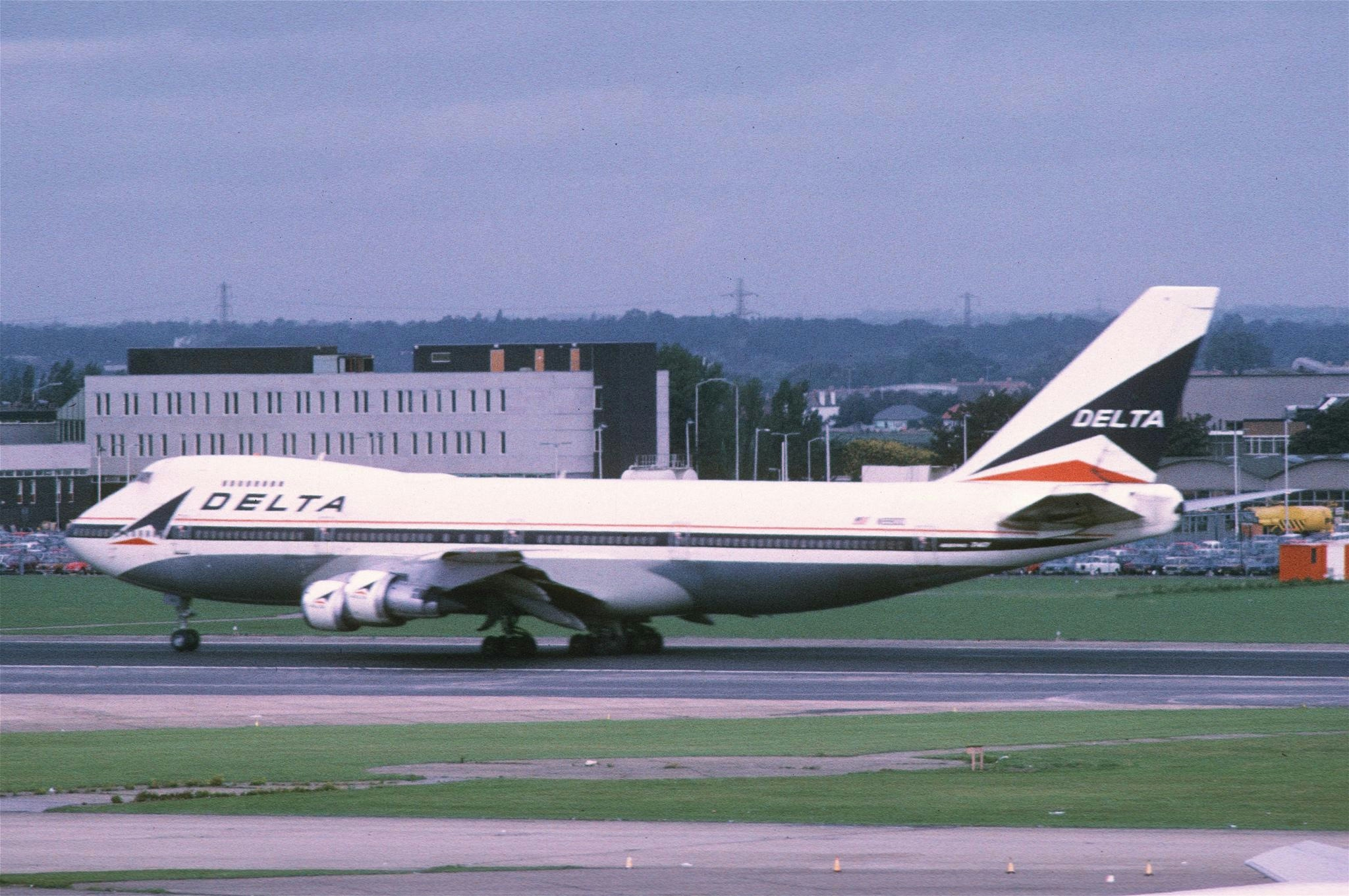
Why Delta Air Lines Has Returned the Boeing 747 to Service
For most airlines, reintroducing an aircraft type after decades of retirement is an uncommon occurrence. Yet, Delta Air Lines has revived the iconic Boeing 747 after an 18-year absence. This decision transcends nostalgia, reflecting a strategic response to significant industry transformations, evolving network priorities, and intensifying competition within the global aviation market.
The Boeing 747: A Transformative Legacy
The Boeing 747, which first took to the skies on February 9, 1969, fundamentally changed commercial aviation. Its distinctive hump-backed upper deck and unprecedented size earned it the moniker "Queen of the Skies." The original 747-100 model could accommodate over 350 passengers, nearly doubling the capacity of aircraft available at the time. With an initial range exceeding 5,000 nautical miles and later variants extending close to 8,000 nautical miles, the 747 enabled airlines to consolidate passenger demand on long-haul routes, thereby reducing operating costs and lowering ticket prices.
Over a production span of more than five decades, Boeing manufactured 1,574 units of the 747 across several variants, including the 747-100, 747-400, and 747-8. Although production ceased in early 2023, the 747 remains an enduring symbol of the modern era of air travel.
Delta’s Initial Experience and Subsequent Retirement
Delta introduced the Boeing 747-100 to its fleet in October 1970, marking its transition into the widebody aircraft era. By late 1971, the airline operated five 747-100s, each configured to carry approximately 370 passengers. However, the aircraft’s large capacity did not align well with Delta’s predominantly domestic network at the time, limiting its operational efficiency. Consequently, Delta retired the 747 after just seven years, opting to focus on aircraft better suited to its route structure and market demands.
Strategic Reintroduction Amid Industry Evolution
The decision to reintegrate the 747 into Delta’s fleet after nearly two decades was driven by strategic imperatives and emerging market opportunities. Following a major merger that expanded Delta’s international footprint, the airline required larger, long-range aircraft to service new transatlantic and transpacific routes. The 747’s capacity and range made it an optimal choice to support these expanded operations, reinforcing Delta’s position as a leading global carrier.
This reintroduction occurs amid heightened competition in the widebody aircraft segment. American Airlines is actively considering new widebody orders to enhance its competitiveness against Delta and United, both of which have already made substantial fleet investments. Additionally, the emergence of Riyadh Air, which aims to establish direct routes to major U.S. cities such as New York and Washington, introduces further competitive pressure. Meanwhile, Southwest Airlines has experienced increased demand following the collapse of Spirit Airlines, potentially diverting some passenger traffic from Delta.
Outlook for Delta and the 747
Delta’s return to the Boeing 747 reflects a broader strategic effort to adapt to a rapidly evolving industry landscape. While the 747 provides the capacity and range necessary to support Delta’s global ambitions, the airline faces significant challenges from both established competitors and new market entrants. As the aviation market continues to develop, Delta’s ability to capitalize on the strengths of the 747 will be pivotal in sustaining its status among the world’s foremost airlines.
Embraer Delivers 2,000th E-Jet as Airbus A220 Seeks Market Share
iniBuilds Releases Second In-Depth A380 Video
Ryanair and Alaska Airlines Apply AI to Operational Decision-Making

Digital Payments, AI, and Aviation Strengthen Philippines-India Relations
PlaneSense Suspends PC-12 Jet Card Sales
How AI Could Transform Bird-Strike Prevention for Business Aviation
American Airlines and Boeing Complete First 737 MAX Landing Gear Swap

Vietjet and Thales sign major MRO and AI deals in Paris
Etihad CEO Cites Aircraft Capacity as Limiting Factor Amid Growth in China and Africa
Artificial Intelligence Enters the Cockpit
