
Trasforma le intuizioni dell’IA in azioni concrete

Tendenze
Categories
Why the Boeing 747-400 Uses Three Different Engine Types
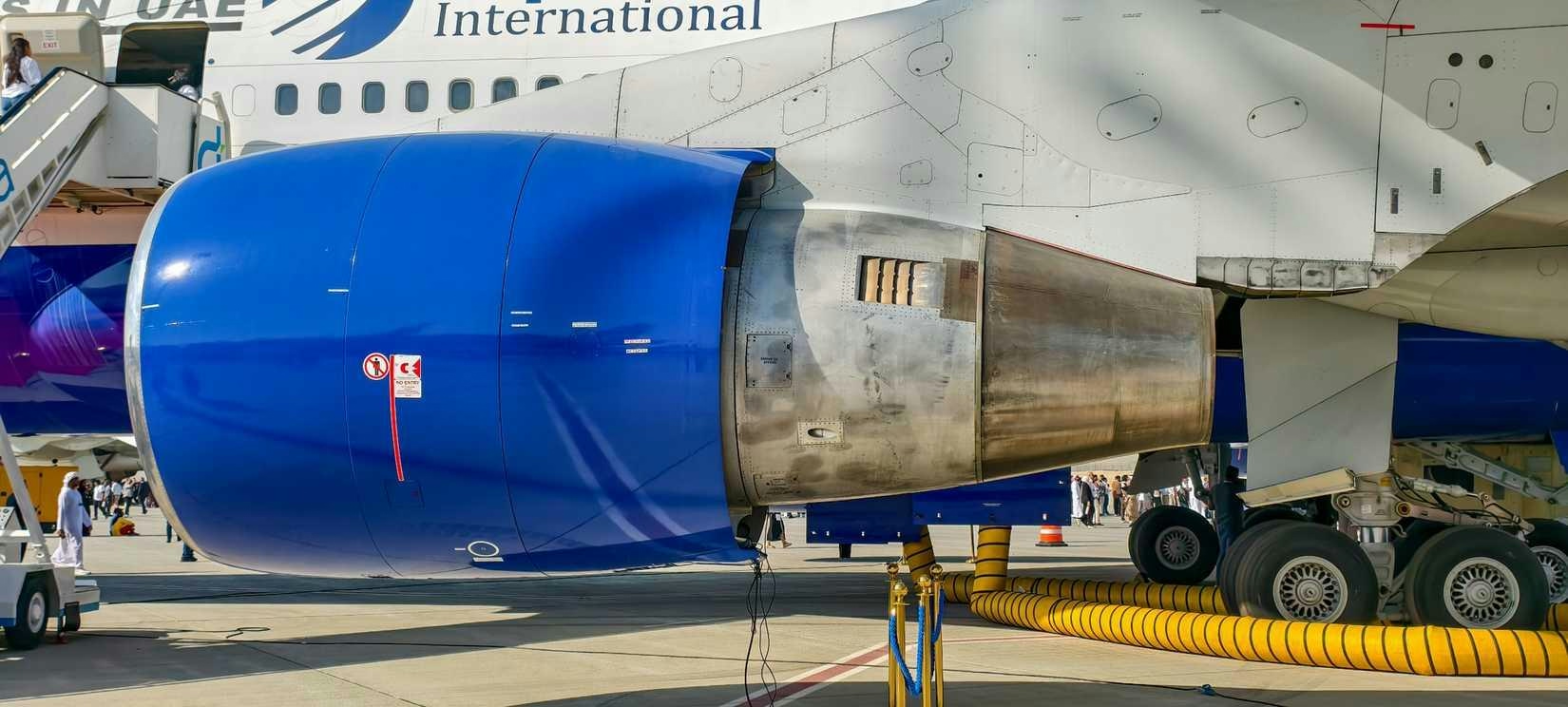
Why the Boeing 747-400 Uses Three Different Engine Types
The Boeing 747-400, introduced in the late 1980s, represented a significant advancement for the iconic jumbo jet. It featured state-of-the-art avionics, enhanced aerodynamics, and improved fuel efficiency. Among its most notable characteristics was Boeing’s decision to certify the aircraft with three distinct engine options: the General Electric CF6-80C2, Pratt & Whitney PW4000-94, and Rolls-Royce RB211-524. This choice was not merely about redundancy but was a strategic response to the complex demands of the global aviation market and the intense competition prevailing at the time.
Catering to Diverse Airline Requirements
Airlines operate under a variety of strategic frameworks, maintenance capabilities, and cost structures. By providing multiple engine options, Boeing allowed carriers to select powerplants that aligned with their existing fleets and operational preferences. Fleet commonality is a critical factor for many airlines, as utilizing the same engine family across different aircraft reduces training expenses for pilots and maintenance personnel, streamlines spare parts inventories, and simplifies simulator requirements. Familiarity with a particular engine type enhances operational efficiency and mitigates the need for costly retraining programs.
This approach enabled airlines to maintain loyalty to their preferred engine manufacturers, integrating the 747-400 into their operations without disrupting established maintenance regimes or renegotiating support contracts. Such flexibility broadened the aircraft’s appeal, maximizing sales potential and fostering long-term satisfaction among operators.
Addressing Market and Regulatory Complexities
The decision to offer three engine types was also influenced by varying market demands and regulatory environments across different regions. Airlines often maintain longstanding relationships with specific engine manufacturers or have existing maintenance agreements that heavily influence their purchasing decisions. In numerous instances, the choice of engine serves as a decisive factor in aircraft procurement.
Nonetheless, supporting multiple engine variants introduced additional challenges. It increased complexity within Boeing’s supply chain and maintenance logistics. While some investors expressed concerns regarding the operational burdens this entailed, others regarded the strategy as a competitive advantage, enabling Boeing to accommodate a wider spectrum of customer preferences.
Industry Competition and Strategic Implications
Boeing’s multi-engine certification strategy attracted attention from competitors. Airbus, for example, responded by adjusting its delivery targets and emphasizing tailored engine options for its own aircraft. This dynamic reflects a broader industry trend wherein manufacturers must continuously adapt to diverse operational and regulatory landscapes, balancing the benefits of flexibility against the challenges posed by increased complexity.
The Boeing 747-400’s adoption of three different engine types thus exemplifies how aircraft design decisions are shaped by economic considerations, competitive pressures, and the imperative for operational adaptability. While this approach introduced logistical complexities, it ultimately expanded the aircraft’s market appeal and demonstrated Boeing’s commitment to addressing the varied needs of airlines worldwide.

Etihad Airways Suspends Airbus A380 Flights on Key Route

Aditya Birla Group Seeks Approval for Aircraft Leasing in GIFT City

Qatar Airways Highlights Innovation and Connectivity at Arabian Travel Market 2026

Hong Kong's Five-Year Plan Includes Andrew Fan's Aircraft Parts Processing Hub Proposal

ACIA Aero Leasing Delivers ATR72-600 to Air Nostrum

RTX Appoints Jill Albertelli as Head of Pratt & Whitney

TAT Technologies Joins Beyond Aero Hydrogen Aircraft Program

AURAK Study Highlights Barriers to Air Taxi Adoption in Emerging Economies

Xiamen Air Selects Altitude for 787 Maintenance at Heathrow

Etihad and Swissport Extend Global Partnership
