
Trasforma le intuizioni dell’IA in azioni concrete

Tendenze
Categories
Why US Airlines Did Not Order the Boeing 747-8
Why US Airlines Did Not Order the Boeing 747-8
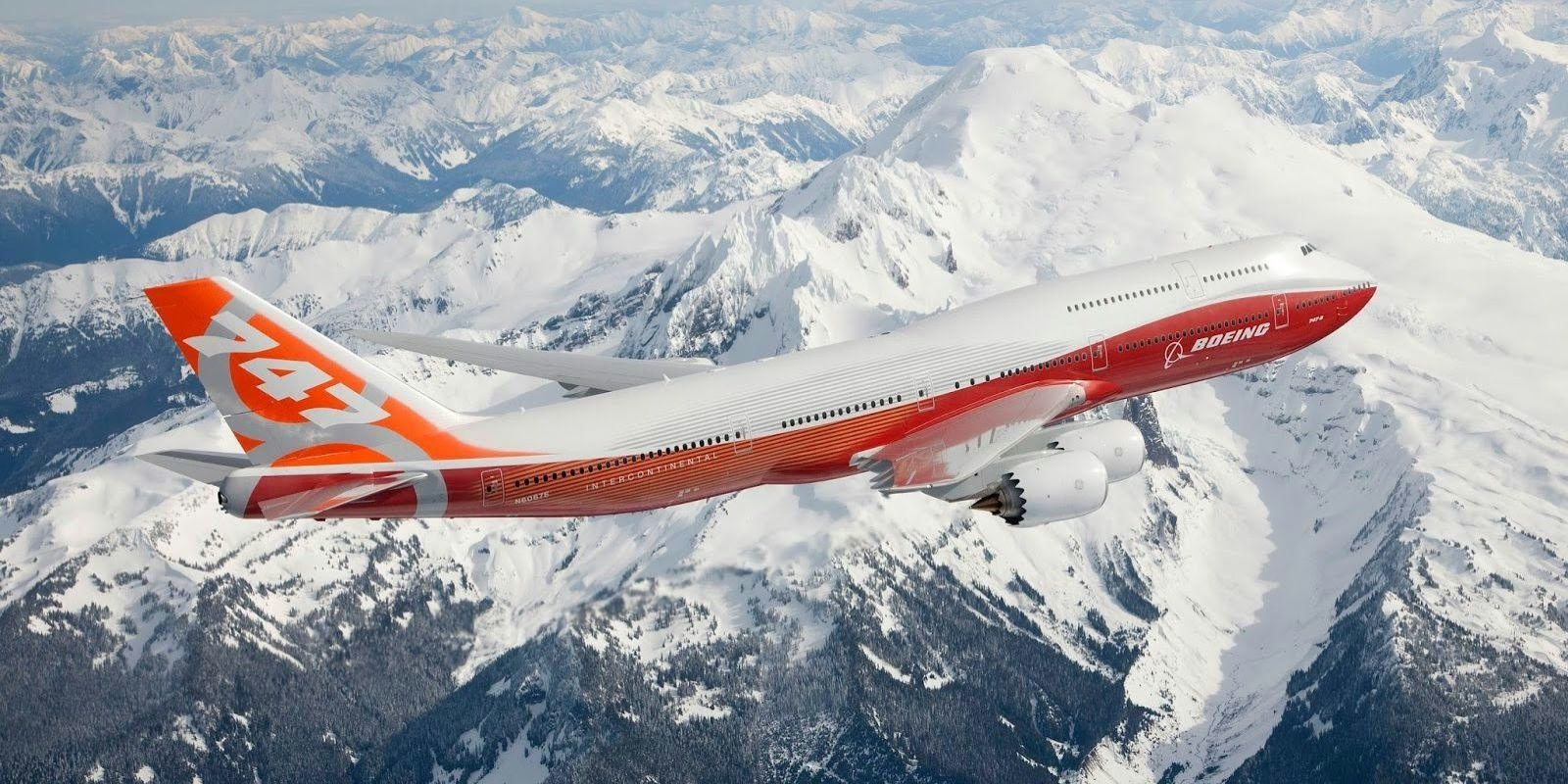
The Boeing 747 has long been an emblem of American aviation, celebrated as a flagship aircraft for major US carriers and a symbol of luxury air travel. Despite this illustrious history, the final iteration—the Boeing 747-8—never secured orders from any US passenger airline. Of the 155 747-8s produced between 2008 and 2023, the overwhelming majority were deployed as cargo freighters, with only a limited number of passenger variants sold exclusively to foreign carriers.
Economic and Industry Shifts
This absence is particularly notable given the 747’s historic prominence in the US market. When the original 747 was introduced, it was eagerly embraced by American airlines for their most prestigious and high-capacity routes. However, by the time the 747-8 entered production, the aviation industry had undergone significant transformation. The primary factor behind the lack of domestic passenger orders was economic. Newer twin-engine aircraft such as the Boeing 777 offered airlines enhanced fuel efficiency, greater operational flexibility, and improved profitability. The 747-8, with its four engines and larger size, could not match the cost advantages of these modern twinjets, making it less attractive to US carriers focused on optimizing their fleets.
Beyond pure economics, broader political and industry dynamics also influenced the 747-8’s reception. During the aircraft’s production period, the Trump administration imposed tariffs on imported aircraft and components, creating uncertainty for US airlines contemplating new purchases. Delta Air Lines publicly warned that these tariffs threatened to disrupt not only Airbus acquisitions but also future aircraft procurement more generally. Boeing itself faced retaliatory tariffs from other countries, complicating international aerospace transactions. Additionally, the administration’s scrutiny of the Qatari 747-8 as a potential Air Force One replacement underscored the complex political environment surrounding the aircraft. High-profile incidents, including the Air India accident involving a 747-8 and skepticism expressed by Airbus’ CEO regarding order prospects at the Paris Air Show, further contributed to a cautious atmosphere among US airlines.
The Legacy of the Jumbo Jet in the US
The decline of the 747 in the US passenger market is also intertwined with the fate of Pan Am, the original launch customer and most iconic operator of the jumbo jet. Pan Am’s identity was closely tied to the “Queen of the Skies,” but the airline struggled to navigate the challenges of deregulation and financial strain. It ultimately declared bankruptcy in 1991, citing factors such as rising fuel costs during the Persian Gulf crisis, the tragic terrorist bombing of Flight 103, and mounting legal and regulatory burdens. Many analysts argue that Pan Am’s reluctance to transition away from the jumbo jet and modernize its fleet contributed to its downfall.
Today, only a small number of 747-8 Intercontinental (747-8I) passenger aircraft remain in service, primarily with international airlines. The “I” designation reflects the aircraft’s design for long-haul intercontinental routes. In the United States, however, the era of the jumbo jet has effectively ended, supplanted by more efficient and versatile aircraft like the Boeing 777X. While the 747-8’s legacy endures as a milestone in aviation history, its absence from American passenger fleets highlights the evolving priorities and economic realities shaping the modern airline industry.

Etihad Airways Suspends Airbus A380 Flights on Key Route

Aditya Birla Group Seeks Approval for Aircraft Leasing in GIFT City

Qatar Airways Highlights Innovation and Connectivity at Arabian Travel Market 2026

Hong Kong's Five-Year Plan Includes Andrew Fan's Aircraft Parts Processing Hub Proposal

ACIA Aero Leasing Delivers ATR72-600 to Air Nostrum

RTX Appoints Jill Albertelli as Head of Pratt & Whitney

TAT Technologies Joins Beyond Aero Hydrogen Aircraft Program

AURAK Study Highlights Barriers to Air Taxi Adoption in Emerging Economies

Xiamen Air Selects Altitude for 787 Maintenance at Heathrow

Etihad and Swissport Extend Global Partnership
