
Trasforma le intuizioni dell’IA in azioni concrete

Tendenze
Categories
Willie Walsh Exits IATA, Issues Warning on Aviation’s Fragile Recovery
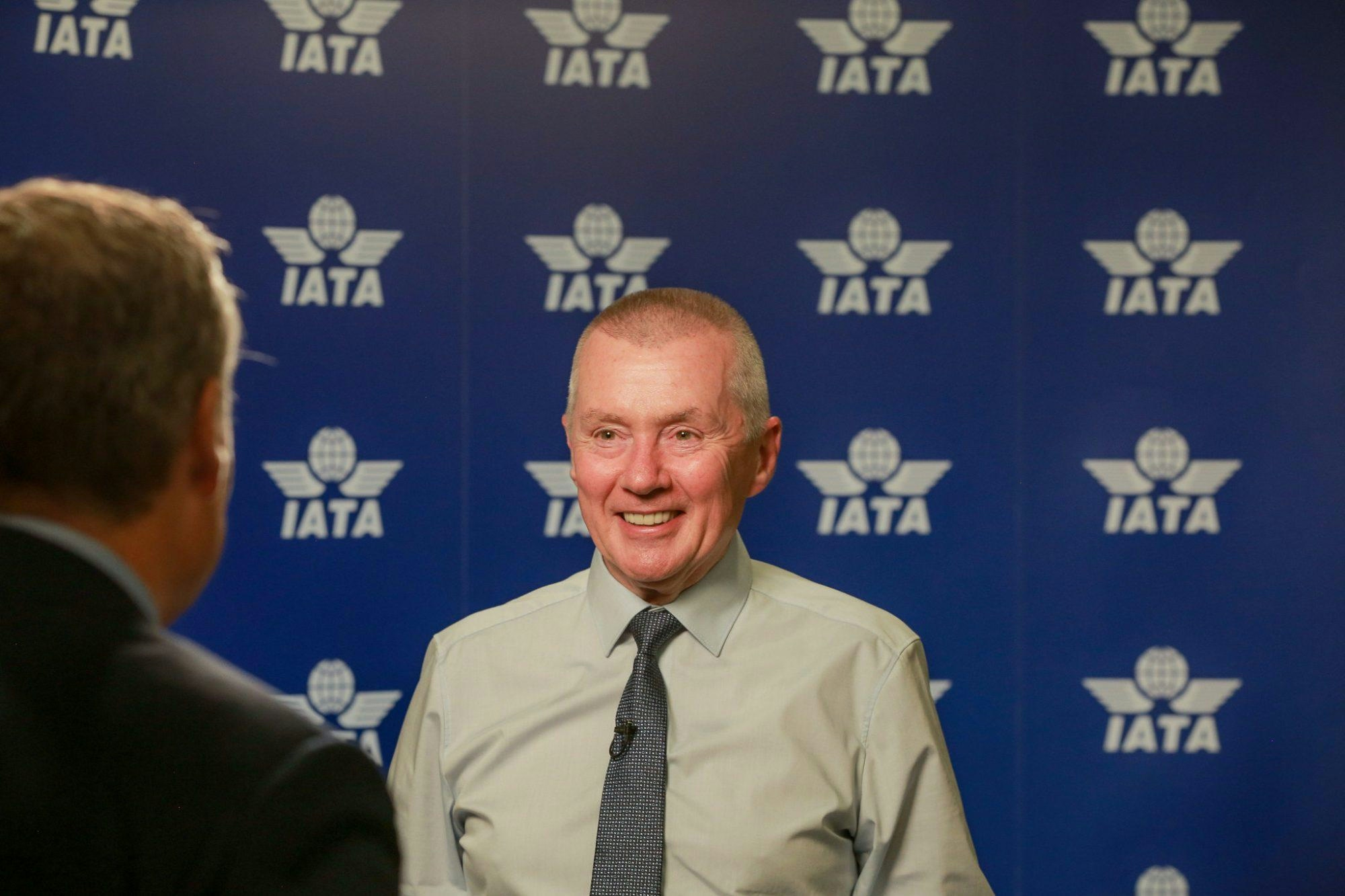
Willie Walsh Exits IATA, Issues Warning on Aviation’s Fragile Recovery
Willie Walsh concluded his tenure as director general of the International Air Transport Association (IATA) with a sobering assessment of the aviation industry’s precarious post-pandemic recovery. Addressing delegates at the 82nd IATA Annual General Meeting in Rio de Janeiro, Walsh outlined a series of systemic challenges that continue to impede the sector’s rebound. These include significant delays in aircraft and engine deliveries, soaring fuel prices, limited airport capacity, outdated air traffic management systems, increasing tax burdens, and climate policies that are advancing more rapidly than the availability of sustainable aviation fuel (SAF).
Challenges Threatening the Industry’s Recovery
Walsh’s departure coincides with a critical period for global airlines. Jet fuel prices have surged by 70 percent year-on-year, a rise largely driven by ongoing conflict in the Middle East. This geopolitical instability has also caused a 46.6 percent decline in demand for carriers operating in the affected region. The resulting fuel price shock has added approximately $100 billion to the collective fuel expenses of airlines worldwide, compelling many to consider cutting unprofitable routes to safeguard their financial margins. Despite robust passenger demand, airfares remain elevated as carriers struggle to absorb these escalating costs.
The industry’s dependence on sustainable aviation fuel further complicates recovery efforts. Walsh highlighted that climate policies are progressing faster than the supply of SAF, placing additional strain on airlines striving to meet environmental targets without sufficient resources. Moreover, persistent delays from engine manufacturers exacerbate operational challenges, hindering airlines’ ability to expand or renew their fleets efficiently.
Financial Outlook and Industry Implications
Reflecting these mounting pressures, IATA has revised its financial forecasts downward. The association now anticipates that global airline profitability will be halved by 2026, with net profits expected to decline from $45 billion in 2025 to just $23 billion the following year. This sharp adjustment underscores the sector’s vulnerability to external shocks and ongoing operational bottlenecks.
In his closing remarks, Walsh emphasized the paradox facing the industry: the very systems designed to support aviation are now undermining its recovery. “Once again, we meet in challenging and unpredictable times,” he told delegates, urging coordinated action among manufacturers, regulators, and governments to address the sector’s most urgent challenges as it prepares for another difficult year ahead.

Etihad Airways Suspends Airbus A380 Flights on Key Route

Aditya Birla Group Seeks Approval for Aircraft Leasing in GIFT City

Qatar Airways Highlights Innovation and Connectivity at Arabian Travel Market 2026

Hong Kong's Five-Year Plan Includes Andrew Fan's Aircraft Parts Processing Hub Proposal

ACIA Aero Leasing Delivers ATR72-600 to Air Nostrum

RTX Appoints Jill Albertelli as Head of Pratt & Whitney

TAT Technologies Joins Beyond Aero Hydrogen Aircraft Program

AURAK Study Highlights Barriers to Air Taxi Adoption in Emerging Economies

Xiamen Air Selects Altitude for 787 Maintenance at Heathrow

Etihad and Swissport Extend Global Partnership
