
Trasforma le intuizioni dell’IA in azioni concrete

Tendenze
Categories
Woodward Inc: Assessing the Strength of Its Aerospace Engine Control Advantage
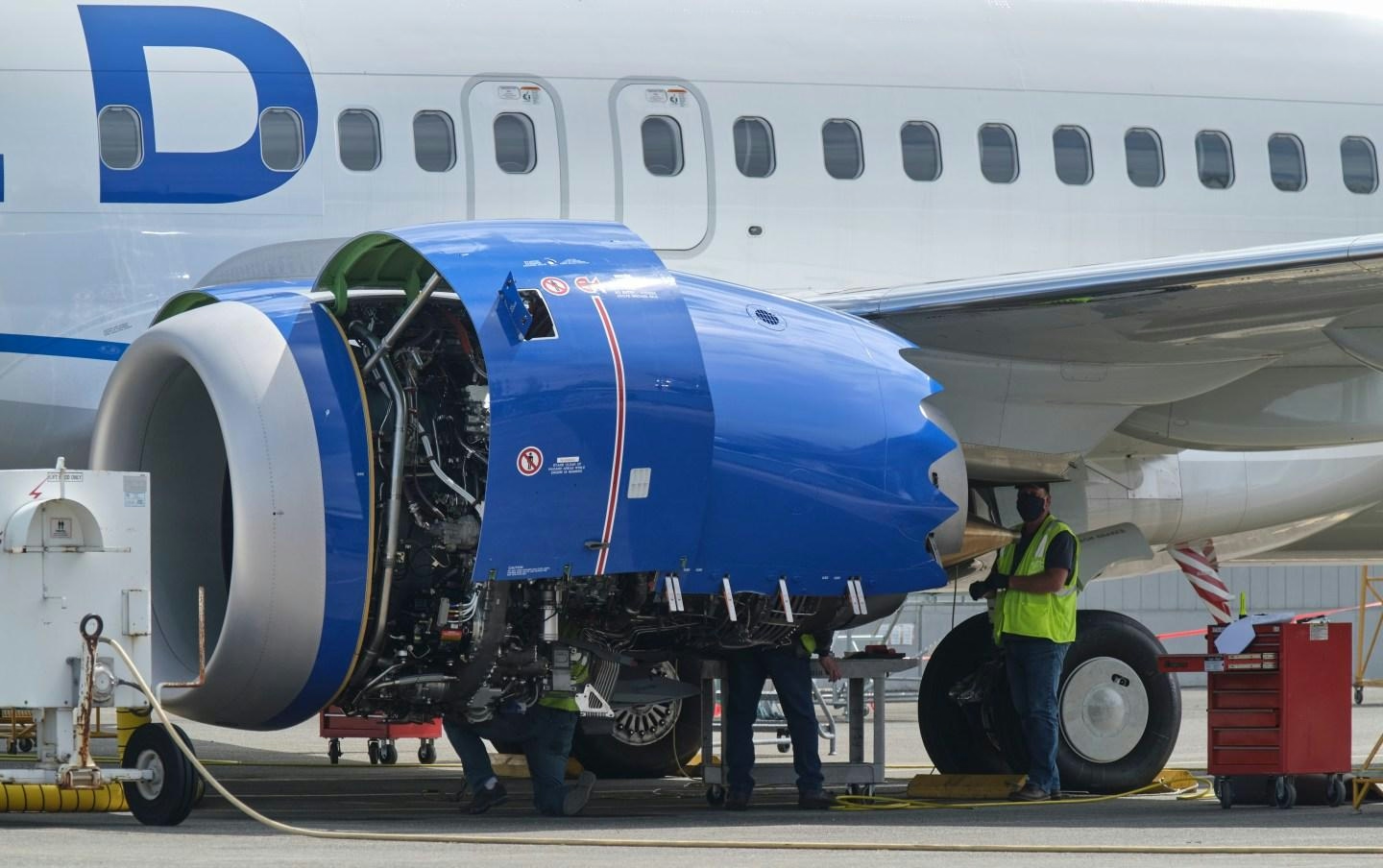
Woodward Inc: Evaluating Its Aerospace Engine Control Leadership
Woodward Inc has established itself as a specialist in precision control systems for aircraft engines and industrial applications, positioning the company to benefit from the recovery in aviation and the energy sector’s shift toward cleaner fuels. For investors in the United States and other English-speaking markets, Woodward offers targeted exposure to high-margin aftermarket services. The company’s reputation for engineering excellence in fuel controls, actuators, and electronics—critical components relied upon by original equipment manufacturers (OEMs) for safety and efficiency—underpins its competitive advantage.
Business Model and Market Position
At the core of Woodward’s operations is the design, manufacture, and servicing of control systems for aircraft engines, ground vehicles, and industrial turbines. This focus on high-reliability components enables the company to command premium pricing and secure long-term service contracts. Approximately two-thirds of Woodward’s revenue derives from aerospace, with the remainder from industrial segments, providing a balance between the cyclical nature of flight hours and the steady demand for turbines. The company’s extensive global installed base generates recurring service income, offering resilience against short-term fluctuations in new orders.
Woodward’s manufacturing footprint spans the United States, Europe, and Asia, strategically situating the company near major customers such as GE Aviation and Pratt & Whitney. This proximity mitigates supply chain risks that have affected broader industrial sectors. The company’s vertically integrated model—from initial design through to field support—creates a robust competitive moat, further strengthened by proprietary software that enhances engine performance. Woodward maintains a disciplined focus on its core controls expertise, supporting dividend payments and moderate growth without incurring excessive debt.
Strategic Developments and Industry Challenges
Recently, Woodward announced the sale of its pilot controls product line to Ontic Engineering and Manufacturing. This divestiture has elicited mixed responses from investors. Some interpret the move as a strategic effort to streamline operations and concentrate on core competencies, while others express concern about potential impacts on Woodward’s market position and portfolio diversity. The decision highlights the company’s commitment to its niche in engine controls but also raises questions about its capacity to sustain a competitive edge amid evolving industry demands.
The aerospace sector continues to grapple with supply chain constraints, intensified by rising demand from both aviation and the expanding artificial intelligence data center market. Competitors such as GE Vernova are capitalizing on high margins from aero-derivative gas turbines, a trend that may divert industry focus and resources away from traditional aerospace engine control technologies. This shifting environment presents both challenges and opportunities for Woodward as it strives to maintain leadership in a market increasingly defined by technological innovation and supply chain agility.
Product Portfolio, Market Reach, and Industry Drivers
Woodward’s product range includes fuel metering units, electronic controls, and health monitoring systems essential for turbine engines used in commercial jets, business aircraft, and power generation. The company is well-positioned in commercial aviation, where the re-fleeting of narrowbody aircraft drives demand for engine replacements. In industrial markets, Woodward supports gas turbines used for peaking power and energy security. Its geographic presence spans North America, Europe, and a growing footprint in the Asia-Pacific region, with aerospace remaining the dominant segment.
Industry dynamics such as the normalization of supply chains following the pandemic are contributing to increased engine shipments. Additionally, trends toward electrification are boosting demand for Woodward’s hybrid-electric propulsion controls. U.S. defense spending on next-generation fighter programs provides a stable revenue stream, with subcontracts awarded to established suppliers like Woodward.
Outlook
As global travel recovers and renewable energy integration accelerates, the critical question for investors is whether Woodward’s focused leadership in engine controls will translate into sustained earnings growth amid evolving industry dynamics and intensifying competition.

Etihad Airways Suspends Airbus A380 Flights on Key Route

Aditya Birla Group Seeks Approval for Aircraft Leasing in GIFT City

Qatar Airways Highlights Innovation and Connectivity at Arabian Travel Market 2026

Hong Kong's Five-Year Plan Includes Andrew Fan's Aircraft Parts Processing Hub Proposal

ACIA Aero Leasing Delivers ATR72-600 to Air Nostrum

RTX Appoints Jill Albertelli as Head of Pratt & Whitney

TAT Technologies Joins Beyond Aero Hydrogen Aircraft Program

AURAK Study Highlights Barriers to Air Taxi Adoption in Emerging Economies

Xiamen Air Selects Altitude for 787 Maintenance at Heathrow

Etihad and Swissport Extend Global Partnership
