
Zet AI‑inzichten om in gerichte actie

Trending
Categories
15 innovations transforming aircraft manufacturing
15 Innovations Transforming Aircraft Manufacturing
Rapid technological advancements are fundamentally reshaping the aircraft manufacturing sector, driving significant improvements in efficiency, safety, and sustainability. Innovations ranging from advanced materials to artificial intelligence are not only reducing costs and accelerating production but also redefining the future trajectory of aviation.
Key Innovations Shaping the Industry
One of the most notable developments is the widespread adoption of advanced composite materials, such as carbon fibre-reinforced polymers. These composites represent a marked departure from traditional aluminium alloys, offering lighter weight, greater strength, and enhanced resistance to corrosion and fatigue. Modern aircraft like the Boeing 787 Dreamliner and Airbus A350 incorporate structures composed of over 50% composites, resulting in improved fuel efficiency, reduced maintenance costs, and extended operational lifespans.
Additive manufacturing, commonly known as 3D printing, has revolutionised the production of complex, lightweight components that were previously difficult or impossible to fabricate using conventional methods. This technology not only minimises material waste but also accelerates prototyping and production cycles. Industry leaders such as General Electric employ 3D printing to manufacture lighter, more efficient engine parts, streamlining both design and manufacturing processes.
Digital twin technology has emerged as a powerful tool, enabling the creation of virtual replicas of aircraft or their components. These digital models allow engineers to simulate performance, monitor wear, and predict maintenance requirements in real time. Companies like Rolls-Royce utilise digital twins to optimise engine performance and manage lifecycle maintenance, thereby enhancing reliability and reducing downtime.
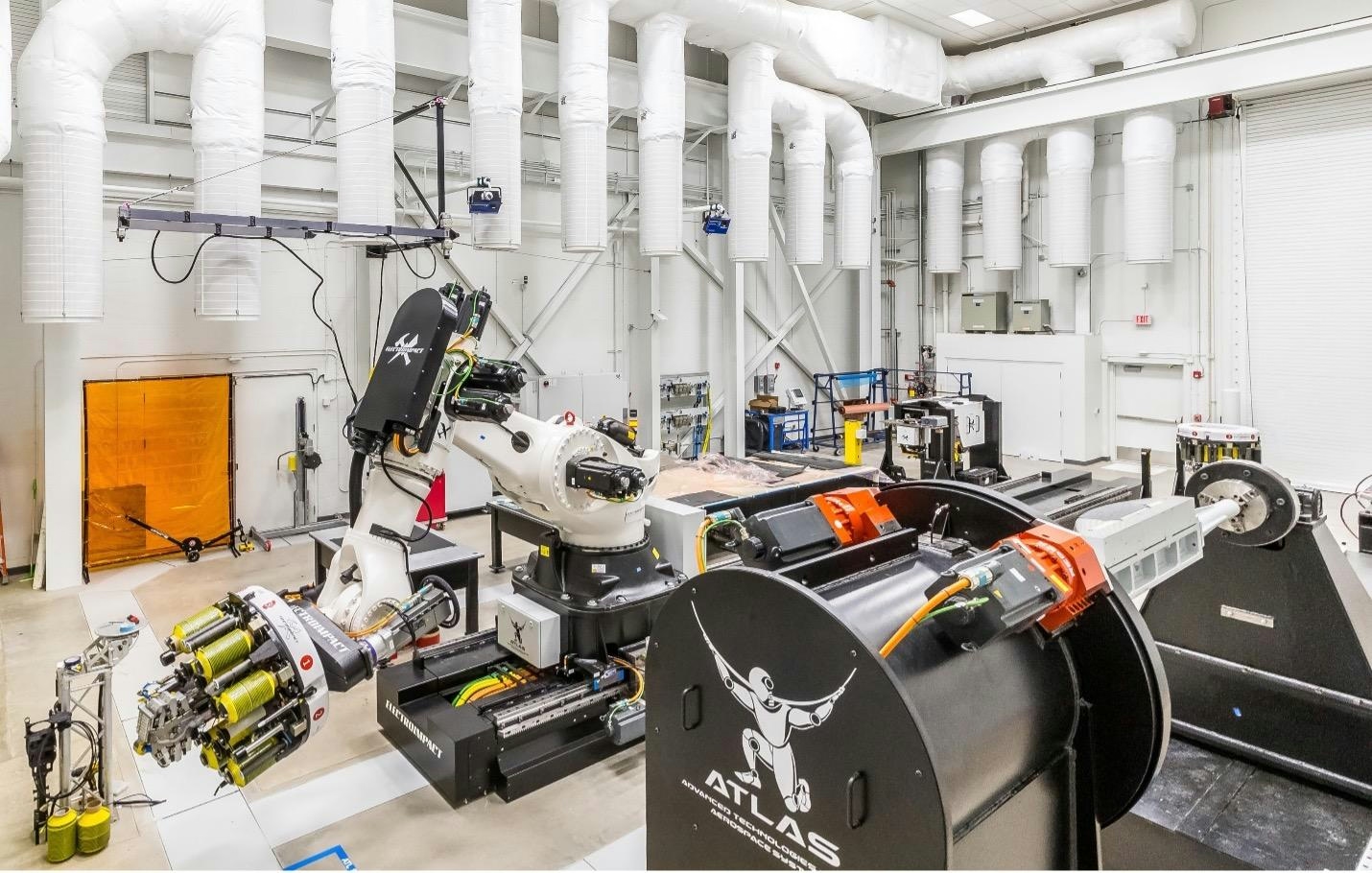
Automation and robotics have significantly enhanced precision and efficiency on assembly lines. Robotic systems now perform tasks including drilling, fastening, and painting with high accuracy. Airbus, for instance, leverages automated assembly techniques to increase production speed while upholding rigorous safety standards and minimising human error.
Artificial intelligence (AI) and machine learning are increasingly integral to aircraft design and manufacturing. These technologies analyse extensive datasets to optimise aerodynamic performance, forecast component failures, and streamline supply chains. AI-driven design tools facilitate the creation of structures that maximise strength while minimising weight, contributing to overall aircraft efficiency.
Advances in aerodynamic design have also played a crucial role. Innovations such as winglets and laminar flow wings reduce drag and improve fuel efficiency. The use of computational fluid dynamics enables precise airflow simulations, leading to more environmentally sustainable aircraft designs.
In response to growing environmental concerns, electric and hybrid-electric propulsion systems are under active development. Although large-scale commercial adoption remains in its infancy, these technologies are being tested in smaller aircraft and urban air mobility vehicles. Companies including Airbus are exploring hybrid propulsion concepts aimed at reducing emissions and decreasing reliance on traditional fossil fuels.
Manufacturers are also focusing on compatibility with sustainable aviation fuels (SAF), which are derived from renewable resources. Engines designed to operate on SAF have the potential to significantly lower lifecycle carbon emissions, aligning the industry with global sustainability goals.
Market Dynamics and Global Challenges
These technological advancements are unfolding against a backdrop of complex market dynamics and geopolitical challenges. Tensions between the United States and China have notably affected Boeing’s delivery schedules and order volumes in the Asia-Pacific region. Changes in U.S. foreign policy continue to influence Boeing’s capacity to sell aircraft to China, impacting both profitability and market positioning.
Simultaneously, new strategic partnerships are emerging to address regional transportation needs. The collaboration between India’s Adani Group and Brazil’s Embraer aims to enhance connectivity to remote areas, generate technical employment, and establish Asia as a hub for affordable and reliable short-haul flights. This initiative has the potential to transform air travel in rapidly growing regions.
The Future of Aircraft Manufacturing
As the industry integrates these fifteen innovations, manufacturers are poised to deliver aircraft that are safer, more efficient, and more sustainable. At the same time, they must navigate evolving market conditions and geopolitical realities that continue to shape the global aerospace landscape.
BBN Airlines Becomes IATA Member
FAA Orders Breeze Airways and Delta to Inspect Airbus A220 Fuel Hoses
Philippine Aviation Navigates Expansion and Costs Amid Fuel Price Volatility
On April 26, 1971, an SR-71 Blackbird Flew Over 15,000 Miles in 10.5 Hours, Limited by Liquid Nitrogen Supply
Boeing 747 Airframe Valued Less Than One Landing Gear Component

The Rear-Fan Engine Behind the Crash of the World's Fastest Airliner
Morphing Aircraft Skin Improves Safety and Fuel Efficiency
BRICS Nations Commit to Enhanced Cooperation on Sustainable Transport and Green Aviation
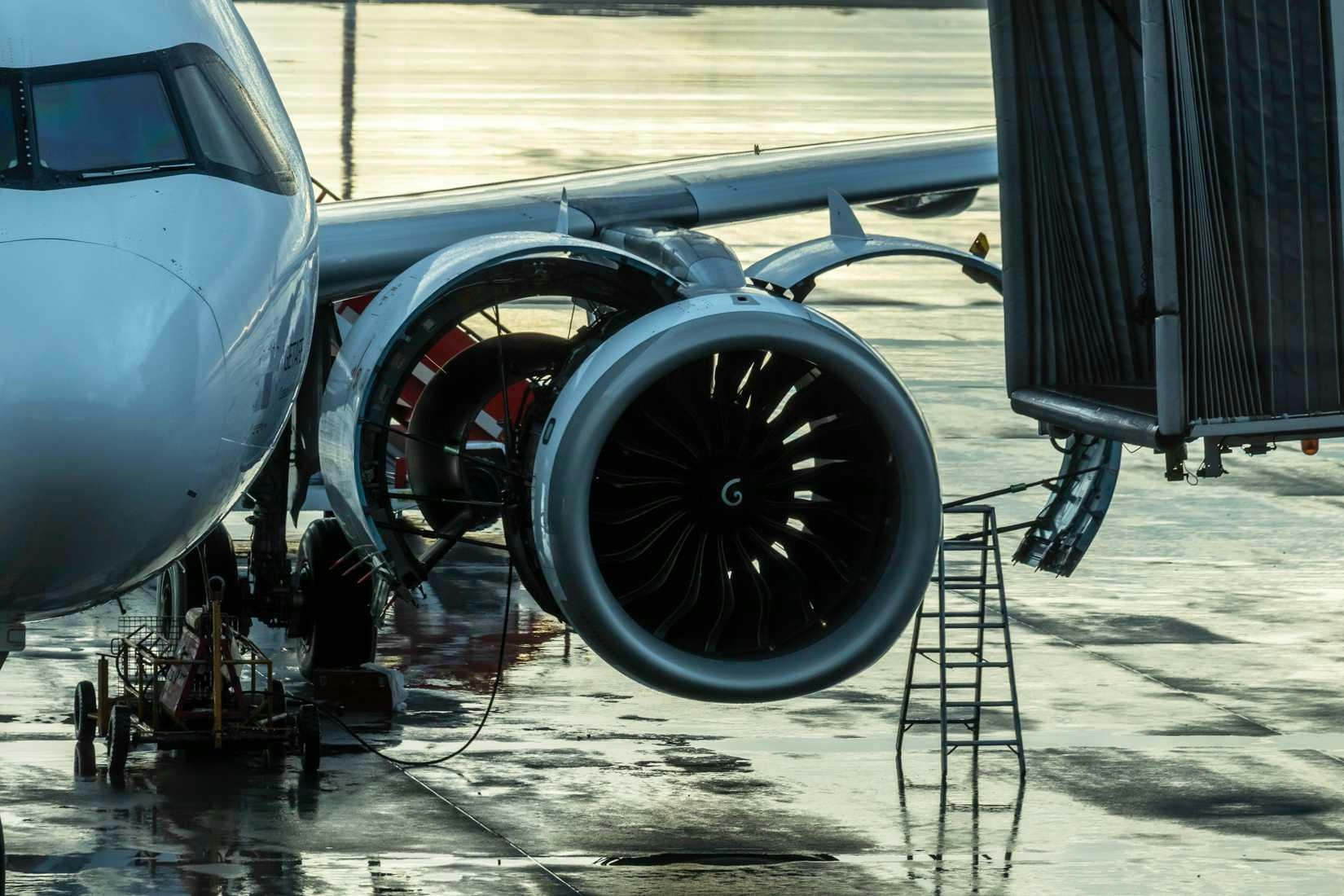
CFM Turbine Upgrade Doubles LEAP Engine Service Life in Harsh Conditions
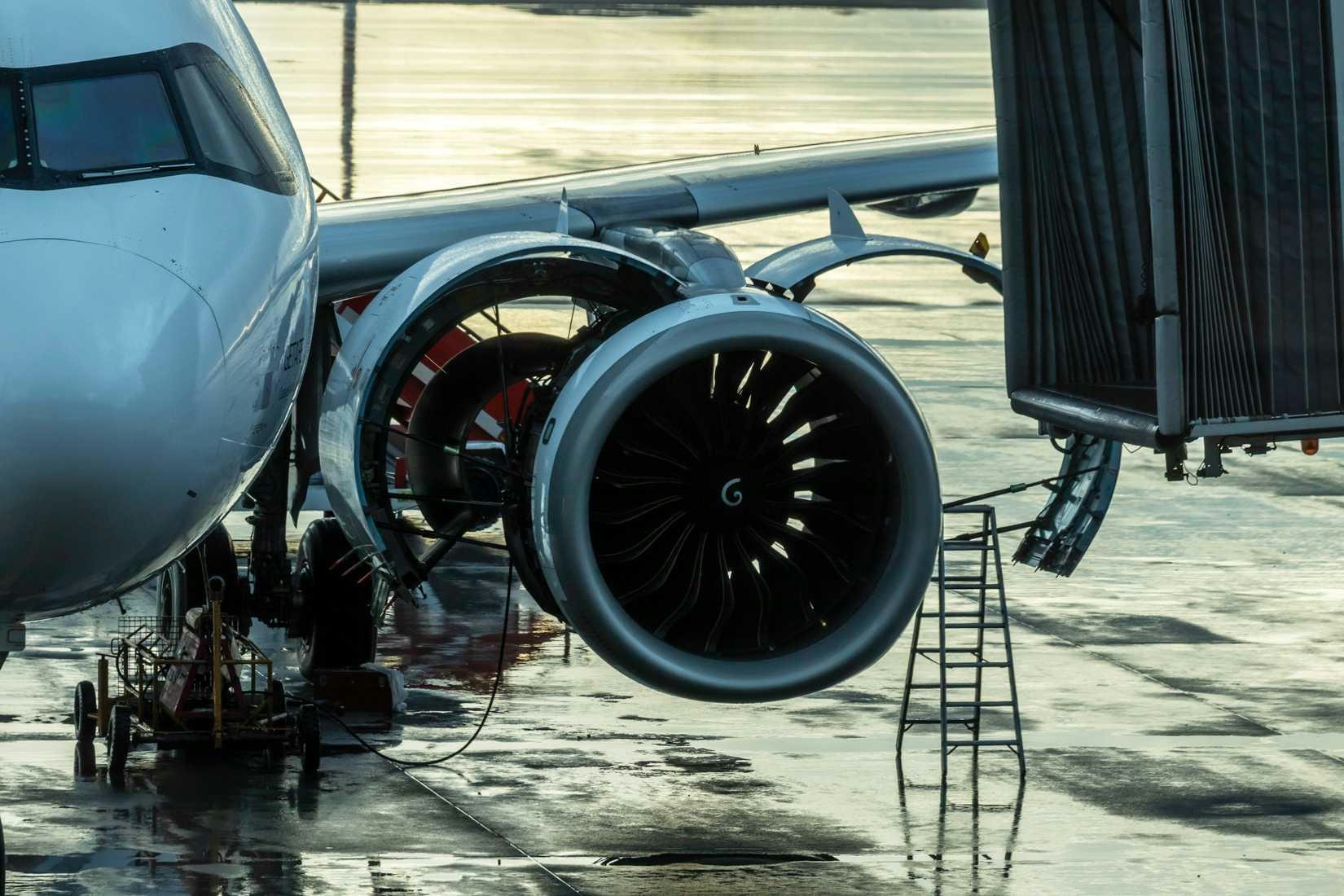
CFM Upgrade Doubles LEAP Engine Lifespan in Harsh Climates
