
Zet AI‑inzichten om in gerichte actie

Trending
Categories
7 advanced aircraft designs that could transform aviation
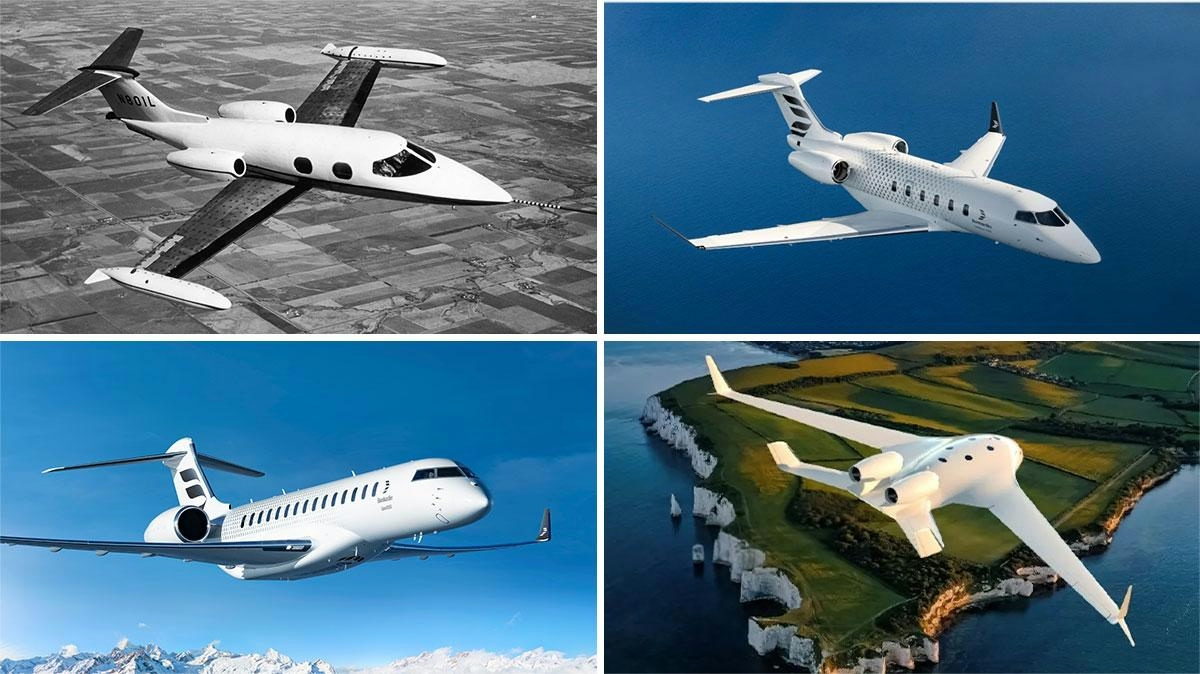
Seven Advanced Aircraft Designs Poised to Transform Aviation
Aviation stands at the threshold of a significant transformation. For decades, commercial aircraft have adhered to the conventional tube-and-wing design, but a new generation of innovative concepts—ranging from radical airframe shapes to alternative propulsion systems—signals a profound shift in the future of flight. While some of these designs are already undergoing advanced testing, others remain in early development stages. Each faces distinct technical, regulatory, and market challenges, yet collectively they point toward a more efficient and sustainable era for air travel.
Boeing X-66A Truss-Braced Wing
Developed in collaboration with NASA, Boeing’s X-66A serves as a demonstrator for the Transonic Truss-Braced Wing concept. This design features ultra-long, slender wings supported by diagonal trusses, which aim to reduce aerodynamic drag and decrease fuel consumption by 8 to 10 percent compared to current single-aisle aircraft. The X-66A is scheduled for its maiden flight in 2028 and could influence the design of next-generation aircraft seating between 130 and 210 passengers by the early to mid-2030s. The project is closely monitored by industry competitors, who may accelerate their own efficiency initiatives in response.
Heart Aerospace ES-30
The ES-30 is a 30-seat hybrid-electric regional aircraft designed for short-haul routes. Operating solely on battery power, it can achieve a zero-emission range of up to 124 miles (200 kilometers). In hybrid mode, its range extends to 249 miles (400 kilometers) with a full passenger load, and up to 497 miles (800 kilometers) with fewer occupants. Airlines such as Air Canada and United have already placed orders, underscoring strong market interest in sustainable regional aviation. As battery technology continues to improve, it is expected that competitors will intensify their own electric flight development programs.
JetZero Pathfinder / Z4
JetZero’s Z4 introduces a bold blended-wing-body design that integrates the wings and fuselage into a single lifting surface. This configuration has the potential to reduce fuel consumption and emissions by as much as 50 percent compared to conventional aircraft. The Z4 is projected to carry 250 passengers over a range of approximately 5,754 miles (9,260 kilometers). Despite the certification and integration challenges posed by its radical shape, the aircraft’s efficiency potential is prompting established manufacturers to explore similar concepts.
Airbus ZEROe Hydrogen Aircraft
Airbus’s ZEROe program represents one of the most ambitious efforts to introduce hydrogen propulsion into commercial aviation. Initially targeting entry into service by 2035, the development timeline remains fluid as the company addresses the complexities of hydrogen storage, infrastructure, and certification. The progress of the ZEROe program is closely observed by regulators and competitors alike, many of whom are evaluating their own hydrogen strategies.
Helios Horizon Solid-State Battery Demonstrator
The Helios Horizon project aims to demonstrate the viability of solid-state batteries for aviation applications. While significant challenges remain in scaling production and meeting stringent safety standards, investor enthusiasm is strong. The demonstrator’s advancement is expected to accelerate research and development efforts among rival firms pursuing electric propulsion technologies.
Supernal eVTOL Partnership
Supernal, reinvigorated through a partnership with Korea Aerospace Industries (KAI) and new leadership, is advancing its electric vertical takeoff and landing (eVTOL) ambitions. Although regulatory and integration hurdles persist, the market response remains cautiously optimistic. As Supernal progresses, competitors are anticipated to intensify their eVTOL development efforts to secure positions within the emerging urban air mobility sector.
Piaggio Aero P.180 Avanti NX and Aura Aero Family
Piaggio Aero’s upgraded P.180 Avanti NX faces potential delays related to supply chain constraints and certification processes, yet demand for advanced business jets remains robust. Concurrently, Aura Aero’s family of trainer and regional aircraft is gaining attention in regions with expanding aviation needs, despite ongoing challenges related to funding and regulatory approval. The activities of both companies are prompting competitors to enhance their own product offerings to maintain market share.
As these advanced aircraft designs continue to evolve, the aviation industry is responding with a blend of enthusiasm and caution. Each new model promises improvements in efficiency and sustainability but must navigate the realities of certification, infrastructure development, and market acceptance. The race to transform aviation is well underway, with the coming decade poised to bring unprecedented changes to the skies.

Etihad Airways Suspends Airbus A380 Flights on Key Route

Aditya Birla Group Seeks Approval for Aircraft Leasing in GIFT City

Qatar Airways Highlights Innovation and Connectivity at Arabian Travel Market 2026

Hong Kong's Five-Year Plan Includes Andrew Fan's Aircraft Parts Processing Hub Proposal

ACIA Aero Leasing Delivers ATR72-600 to Air Nostrum

RTX Appoints Jill Albertelli as Head of Pratt & Whitney

TAT Technologies Joins Beyond Aero Hydrogen Aircraft Program

AURAK Study Highlights Barriers to Air Taxi Adoption in Emerging Economies

Xiamen Air Selects Altitude for 787 Maintenance at Heathrow

Etihad and Swissport Extend Global Partnership
