
Zet AI‑inzichten om in gerichte actie

Trending
Categories
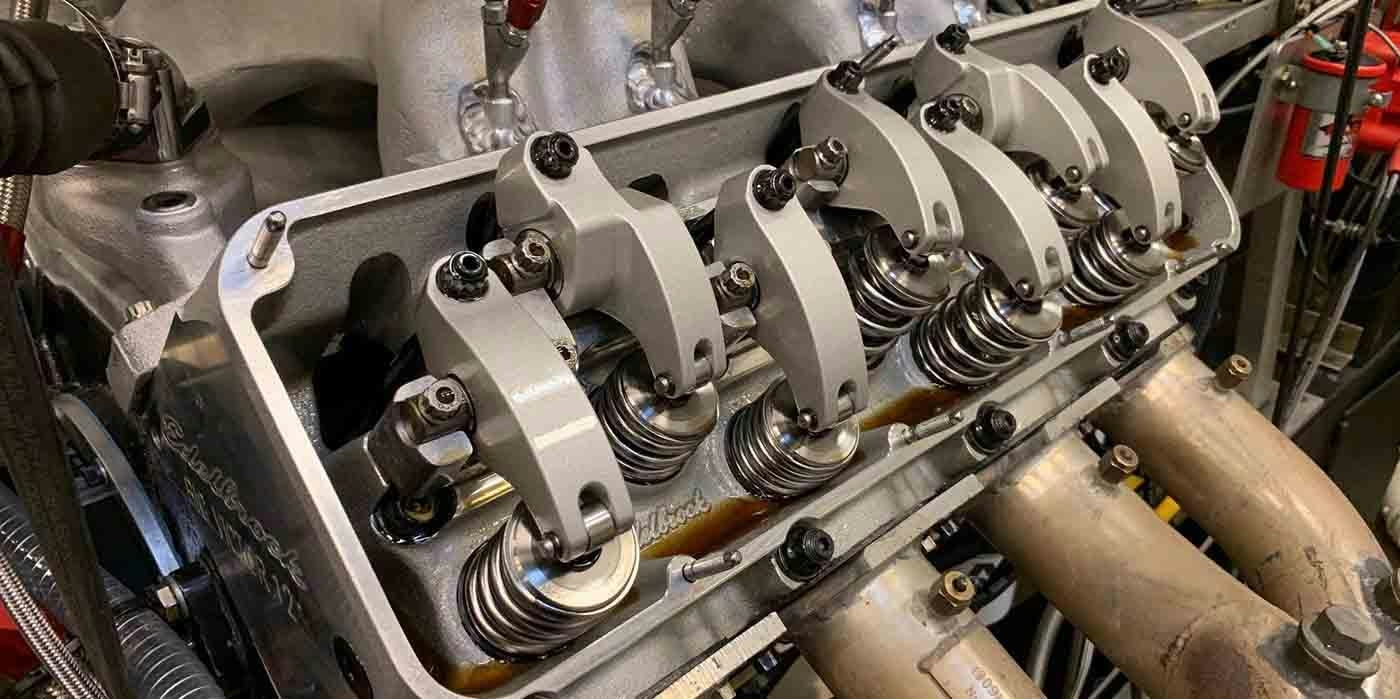
A More Efficient Method for Timing Piston Engines
A More Efficient Method for Timing Piston Engines
Innovative Solution for Magneto Timing
The Aerosync Timer, a newly introduced tool, offers aircraft mechanics and owners a more precise and convenient method for timing magnetos on piston-powered aircraft. Traditionally, this process has involved securing timing instruments to the propeller using tape or adhesives, which often results in sticky residue and potential damage to the aircraft’s finish. The Aerosync Timer eliminates these issues with a custom-engineered, 3D-printed case that slides onto the propeller blade and fastens securely with a Velcro strap. After timing is completed, the device can be swiftly removed, leaving the aircraft’s surface unblemished.
David Lowry, who developed the tool alongside his son Jason, explained the motivation behind the design: “We wanted to simplify the timing process while increasing the reliability of the results. By combining a high-quality digital inclinometer with a custom-fit housing, we’ve created a tool that stays exactly where you put it without the need for tape.” The device incorporates a digital angle finder within its proprietary casing, providing a precise and repeatable method for engine timing.
Industry Context and Broader Implications
The launch of the Aerosync Timer aligns with a wider industry trend focused on enhancing the efficiency and accuracy of piston engine maintenance. However, achieving substantial improvements in engine performance often demands significant technological innovation. For instance, recent advancements such as Geely’s hybrid powertrain, which achieves a thermal efficiency of 48.4 percent, exemplify the level of progress required to push the boundaries of piston engine capabilities.
Market responses to such innovations can be varied. Established engine manufacturers may approach new tools and methodologies with caution, as these often require adjustments to long-standing production processes and technologies. In turn, competitors may respond by increasing investment in research and development or pursuing strategic partnerships to maintain their market position. These competitive dynamics are not confined to aviation; similar patterns are observable in other sectors, including maritime, where the adoption of dual-fuel engines has spurred calls for enhanced regulatory frameworks to encourage the use of cleaner fuels.
Economic and regulatory challenges also significantly influence the adoption of new technologies. The maritime industry’s experience demonstrates that overcoming these barriers typically necessitates coordinated efforts among manufacturers, regulators, and industry stakeholders to ensure that innovations are both practical and sustainable.
The Aerosync Timer is currently priced at $159 and is available for purchase on eBay. As the aviation sector continues to pursue more efficient and reliable engine maintenance solutions, tools like the Aerosync Timer may contribute to setting new industry standards, contingent upon the willingness of manufacturers and regulators to embrace evolving technologies.
For more information, visit eBay.com.

Etihad Airways Suspends Airbus A380 Flights on Key Route

Aditya Birla Group Seeks Approval for Aircraft Leasing in GIFT City

Qatar Airways Highlights Innovation and Connectivity at Arabian Travel Market 2026

Hong Kong's Five-Year Plan Includes Andrew Fan's Aircraft Parts Processing Hub Proposal

ACIA Aero Leasing Delivers ATR72-600 to Air Nostrum

RTX Appoints Jill Albertelli as Head of Pratt & Whitney

TAT Technologies Joins Beyond Aero Hydrogen Aircraft Program

AURAK Study Highlights Barriers to Air Taxi Adoption in Emerging Economies

Xiamen Air Selects Altitude for 787 Maintenance at Heathrow

Etihad and Swissport Extend Global Partnership
