
Zet AI‑inzichten om in gerichte actie

Trending
Categories
Advances in Biometrics and Risk Analysis Transform Aviation Security by 2026
Advances in Biometrics and Risk Analysis Transform Aviation Security by 2026
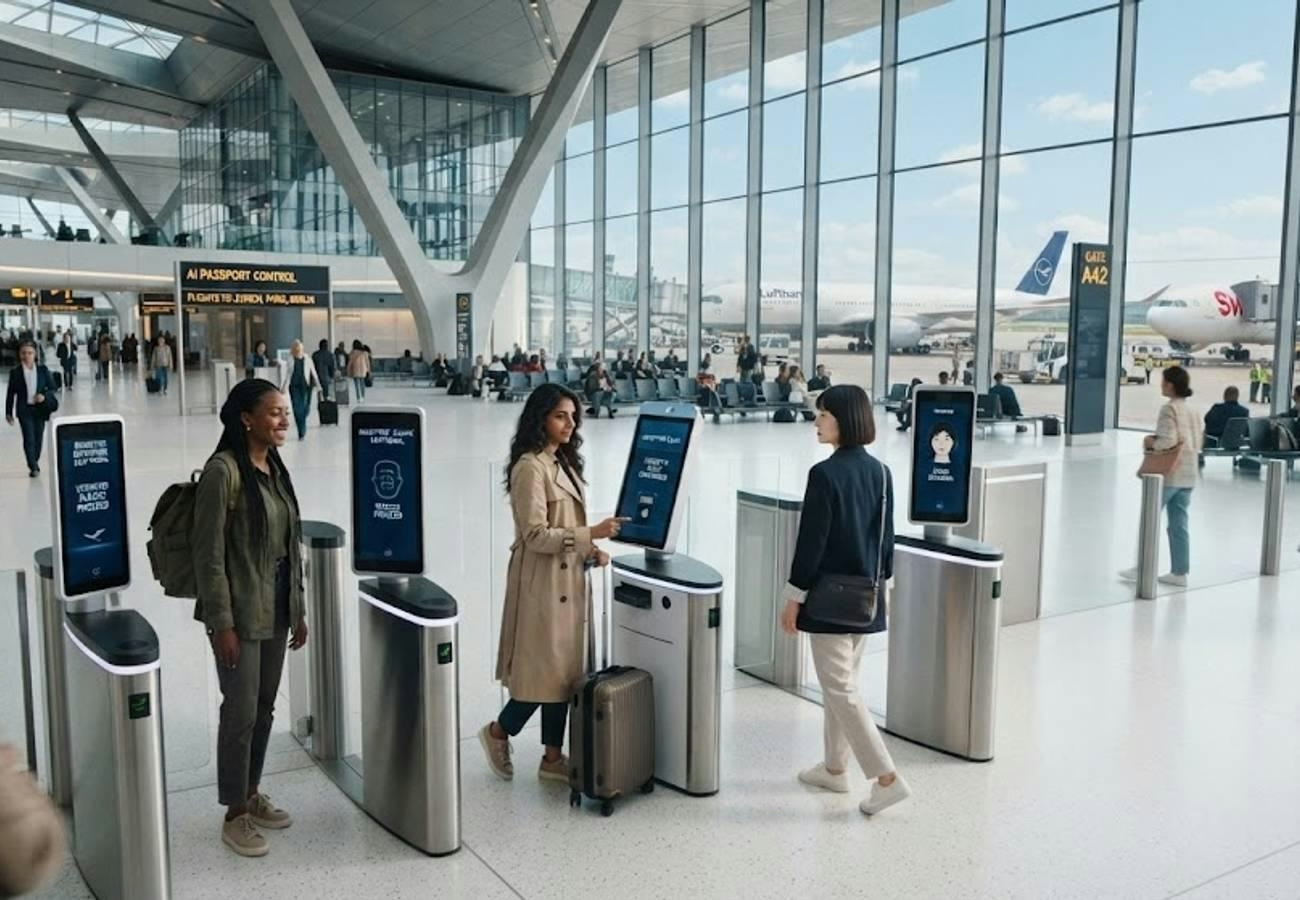
The global travel industry is experiencing a profound transformation in security protocols, propelled by rapid advancements in biometrics, artificial intelligence (AI), and risk analysis. From facial recognition gates implemented across Europe to AI-driven risk prediction systems in the United States, and the widespread adoption of digital identity wallets throughout the Asia-Pacific region, technology is fundamentally redefining how millions of travelers navigate international borders. This evolution represents more than incremental improvements; it signifies a comprehensive reimagining of the equilibrium between traveler safety, operational efficiency, and personal convenience.
Artificial Intelligence: Revolutionizing Border Security
Artificial intelligence has transitioned from theoretical application to a cornerstone of modern aviation security. Airports and border agencies now employ sophisticated AI platforms capable of analyzing extensive data streams in real time, including weather conditions, geopolitical developments, transportation disruptions, and historical incident patterns. Unlike traditional security systems that applied uniform scrutiny to all travelers, AI-driven models allocate resources more strategically, enabling low-risk passengers to pass through checkpoints swiftly while focusing attention on potential threats at an earlier stage.
Predictive analytics have empowered agencies to identify vulnerabilities before they escalate into critical incidents. This proactive approach marks a fundamental shift in security paradigms, moving from reactive responses to preventive measures that enhance overall safety and operational continuity.
Biometrics and Digital Identity: Enhancing Traveler Experience and Security
Biometric technologies such as facial recognition, iris scanning, and contactless fingerprint systems are rapidly becoming standard components of aviation security. These innovations transform biometrics from a perceived surveillance tool into a mechanism that significantly enhances traveler convenience. A single biometric scan now establishes a verified identity record that accompanies passengers seamlessly from airport entry to aircraft boarding, eliminating repetitive document checks and reducing friction for frequent international travelers and digital nomads alike. By verifying the individual rather than merely their documents, these systems improve both processing speed and fraud detection capabilities.
Complementing biometrics, the emergence of secure digital identity wallets—encrypted repositories stored on personal devices—grants travelers unprecedented control over their personal credentials. Instead of relying on physical documents, individuals can selectively share verified information with border officials and airlines, thereby enhancing privacy and security. Adoption of these digital identity solutions is accelerating globally: Europe advances under the EU Digital Identity Framework, the United States pilots digital credentials within trusted traveler programs, and Asia-Pacific countries integrate digital identity into national mobility infrastructures.
Cybersecurity and Emerging Challenges in Aviation
The increasing digitization of aviation—encompassing mobile boarding passes, cloud-based reservation systems, and biometric verification—has expanded the sector’s vulnerability to cyberattacks. This risk is particularly pronounced in business aviation, where smaller operators often lack the resources to implement comprehensive cybersecurity measures. Regulatory frameworks such as the European Union Aviation Safety Agency’s (EASA) Part-IS, which incorporates information security into aviation safety oversight, underscore the critical need for multidisciplinary expertise, a resource that remains scarce.
The rise of AI-powered cyberattacks presents additional challenges, as security teams contend with alert fatigue and the difficulty of distinguishing genuine threats from false positives. To counter these risks, advanced encryption methods, multi-factor authentication, and behavioral analytics have become essential components of defense strategies. Nonetheless, the rapidly evolving threat landscape demands continuous vigilance and adaptation.
The transition toward sustainable aviation fuels introduces further complexities, particularly in sectors such as agriculture, where competition for feedstocks may intensify. As aviation security becomes increasingly reliant on advanced technologies, the industry faces the imperative to balance innovation with stringent cybersecurity measures and regulatory compliance, ensuring that gains in convenience and efficiency do not compromise safety.
By 2026, the integration of biometrics, AI, and digital identity is poised to deliver a faster, safer, and more seamless travel experience. However, this progress necessitates a sustained focus on cybersecurity and cross-sector collaboration to effectively address the emerging challenges inherent in this technological evolution.

Etihad and Swissport Extend Global Partnership

Sepehran Airlines B737 Returns to Mashhad After Tyre and Engine Issues

Etihad Deploys Widebody Fleet to Meet Strong Demand

Korean Air Finalizes $36.2 Billion Deal with Boeing

Australia’s RFDS Queensland Section Orders Six King Air 260Cs

Korean Air Finalizes Order for 103 Boeing Jets and Engines

Embraer E195-E2 Features Distinctive Engine Placement Among Regional Jets

What Passengers Can Expect on Boeing’s New 777X Jet

How Ethiopian Airlines Became Africa’s Leading Carrier Amid Gulf Competition

Joby Aviation Extends Autonomous Flight Capabilities with Cross-Country Tour
