
Zet AI‑inzichten om in gerichte actie

Trending
Categories
AI Data Centers’ Growing Energy Demand Strains Aircraft Engine Manufacturers
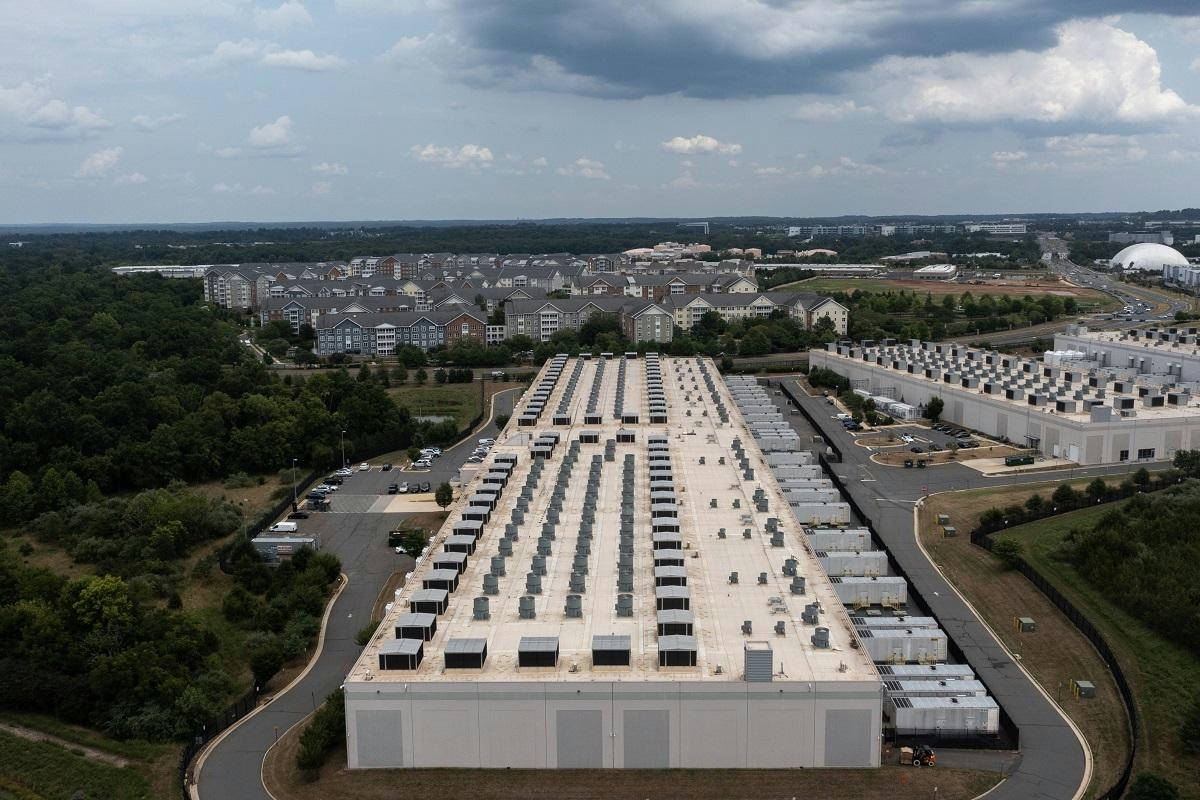
AI Data Centers’ Growing Energy Demand Strains Aircraft Engine Manufacturers
Rising Energy Needs and the Shift to Aero-Derivative Turbines
The rapid expansion of artificial intelligence is profoundly transforming the energy landscape, placing significant pressure on aircraft engine manufacturers. As technology giants race to construct increasingly large data centers, their escalating electricity demands have overwhelmed traditional power grids. This has compelled companies to explore alternative energy solutions, creating both challenges and opportunities within the aerospace sector.
Throughout 2025, major tech firms encountered multi-year delays in securing grid interconnections, threatening to impede the deployment of new AI infrastructure. In response, hyperscalers have turned to on-site power generation, circumventing utility constraints and driving a surge in demand for aero-derivative gas turbines. These turbines, originally adapted from jet engines for ground-based electricity production, have become a preferred solution due to their rapid deployment capabilities and high reliability.
Manufacturers such as GE Vernova, Rolls-Royce Power Systems, and Mitsubishi Power are now supplying turbines derived from flight engines—including models like the LM6000, RB211, Trent, FT8, and FT4000—to data center operators. This shift has fostered a burgeoning secondary market within the Aerospace & Defence industry, as these units meet the urgent power needs of AI data centers.
Manufacturing Capacity and Industry Implications
The growing demand for aero-derivative turbines is intensifying competition for manufacturing capacity within the aerospace sector. Both these ground-based turbines and commercial jet engines depend on the same specialized components—such as high-temperature alloys, complex castings, and precision forgings—produced in shared facilities. Although the total number of aero-derivative turbines remains relatively low compared to flight engines (with GE’s LM6000 having shipped just over 1,300 units globally), the high profit margins and urgent orders from technology companies are compelling manufacturers to carefully balance production priorities.
In 2025, the U.S. Department of Energy projected that data center power consumption could account for between 6.7% and 12% of total U.S. electricity use by 2028. Annual consumption is expected to rise sharply from 176 terawatt-hours (TWh) in 2023 to as much as 580 TWh within five years. This dramatic increase is not only straining the electrical grid but also raising concerns about potential supply shortfalls. Local communities and regulators have begun scrutinizing new data center projects more closely, citing issues related to rising energy costs, noise pollution, water usage, and potential job displacement.
For aircraft engine manufacturers, the stakes are considerable. Lucrative contracts with technology firms—offering EBITDA margins of 16 to 18 percent on products like GE Vernova’s turbines—are diverting resources from the already backlogged commercial aviation sector. In 2025, GE Aerospace delivered 2,386 engines, yet the competition for limited manufacturing capacity has emerged as a significant disruption for commercial aircraft original equipment manufacturers (OEMs). Backlogs at Boeing and Airbus have extended to multi-year delays as engine producers struggle to reconcile the competing demands of the technology and aerospace industries.
As AI data centers continue to expand, the competition for manufacturing resources is expected to intensify further. Engine manufacturers and policymakers will need to navigate a complex environment shaped by technological ambition, supply chain constraints, and growing community concerns.

Etihad Airways Suspends Airbus A380 Flights on Key Route

Aditya Birla Group Seeks Approval for Aircraft Leasing in GIFT City

Qatar Airways Highlights Innovation and Connectivity at Arabian Travel Market 2026

Hong Kong's Five-Year Plan Includes Andrew Fan's Aircraft Parts Processing Hub Proposal

ACIA Aero Leasing Delivers ATR72-600 to Air Nostrum

RTX Appoints Jill Albertelli as Head of Pratt & Whitney

TAT Technologies Joins Beyond Aero Hydrogen Aircraft Program

AURAK Study Highlights Barriers to Air Taxi Adoption in Emerging Economies

Xiamen Air Selects Altitude for 787 Maintenance at Heathrow

Etihad and Swissport Extend Global Partnership
