
Zet AI‑inzichten om in gerichte actie

Trending
Categories
AI in Aerospace: Opportunities and Governance Challenges for Governments
AI in Aerospace: Opportunities and Governance Challenges for Governments
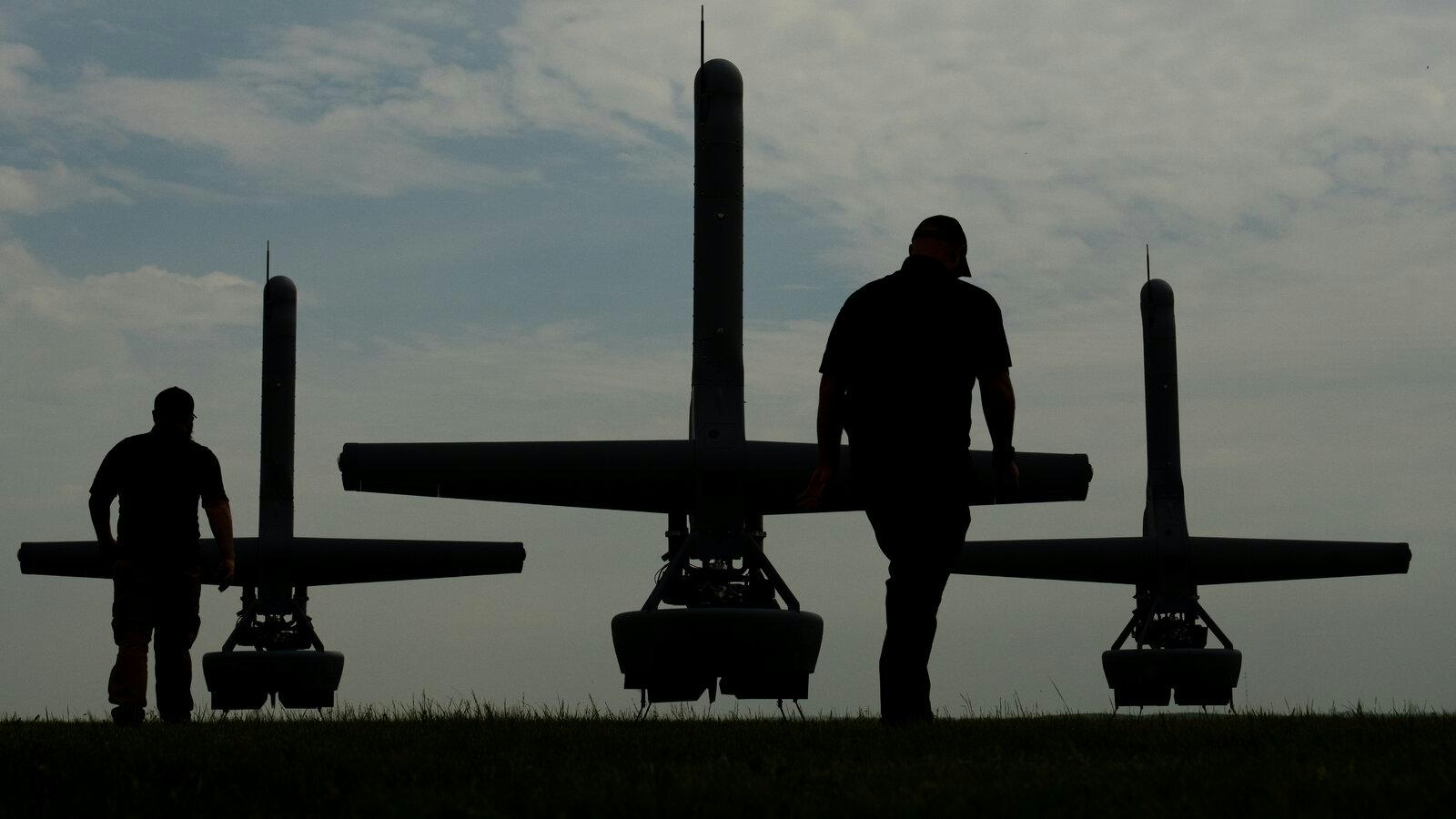
Artificial intelligence is rapidly revolutionizing the aerospace industry, permeating diverse areas such as autonomous flight systems, predictive maintenance, air traffic management, and satellite intelligence. This technological transformation is reshaping the design, operation, and maintenance of aircraft, presenting governments with a complex strategic challenge: how to leverage AI’s advantages while effectively managing the associated technical, regulatory, and ethical risks.
Expanding Market and Strategic Importance
The global aerospace AI market, valued at £1.7 billion in 2024, is expected to surge to over £42 billion within the next decade, driven by a compound annual growth rate of 43% between 2026 and 2033. This rapid expansion highlights AI’s growing significance for industrial competitiveness, national security, and sovereign capability. Countries that adopt AI decisively stand to enhance productivity, resilience, sustainability, and defense readiness. Conversely, those that delay risk becoming dependent on foreign technologies, facing regulatory fragmentation and strategic vulnerabilities.
Aerospace is particularly well-positioned for AI integration due to the vast volumes of operational and engineering data it generates. However, as one of the most safety-critical sectors globally, aerospace must carefully balance innovation with assurance. Regulators are tasked with navigating this delicate equilibrium to ensure that technological progress does not compromise safety standards.
Operational Efficiency and National Interests
AI-driven improvements in operational efficiency are already evident across airlines, airports, and air navigation service providers. Machine learning applications optimize fuel consumption, predict component failures, and enhance traffic flow management. Predictive maintenance powered by AI can reduce costs by 12 to 18 percent and decrease unplanned downtime by 15 to 20 percent, thereby increasing aircraft availability and lowering operating expenses. Governments have a vested interest in supporting these advancements, as aviation remains a cornerstone of economic growth and global connectivity.
For instance, AI-enhanced air traffic management systems can reduce delays, improve airspace utilization, and lower emissions. EUROCONTROL data underscores the substantial economic impact of flight delays, demonstrating that even marginal improvements can generate significant operational and environmental benefits. Singapore’s investment in AI-enabled smart air traffic management exemplifies a national commitment to harnessing these technologies for enhanced efficiency and sustainability.
Dual-Use Innovation and Defence Applications
The increasing interconnectivity of aerospace systems offers governments opportunities to integrate civil and military innovations, fostering dual-use technological development. In the defense sector, AI is transforming intelligence analysis, mission planning, autonomous surveillance, and logistics. Air forces worldwide are exploring human-machine teaming and AI-supported command systems, with NATO recognizing AI as a strategic enabling technology. This modernization not only strengthens defense capabilities but also stimulates domestic high-value manufacturing industries.
Governance Challenges and Security Concerns
Despite its promise, the rapid adoption of AI in aerospace introduces significant governance challenges. Cybersecurity vulnerabilities are a growing concern, as AI agents may gain access to critical systems, potentially exposing them to malicious interference. The U.S. Department of Defense’s collaborations with technology firms to deploy AI for warfighter decision-making illustrate both the potential benefits and inherent risks of these technologies. Meanwhile, the White House has expressed caution regarding the proliferation of powerful AI models, such as those developed by Anthropic, citing concerns over computing power and control.
Market responses to AI integration remain mixed. A Grant Thornton report highlights that insurers face compliance and performance challenges in AI projects, while regulatory scrutiny and societal resistance—including protests against data centers and labor strikes—pose risks to AI development. In response to these concerns, the Trump administration is contemplating stringent regulations on advanced AI models to mitigate risks such as cyberattacks, reflecting growing apprehension about AI’s broader societal impact.
As AI continues to reshape the aerospace sector, governments must carefully balance the imperative to accelerate innovation and maintain competitiveness with the need to ensure robust governance, security, and public trust.

Etihad Airways Suspends Airbus A380 Flights on Key Route

Aditya Birla Group Seeks Approval for Aircraft Leasing in GIFT City

Qatar Airways Highlights Innovation and Connectivity at Arabian Travel Market 2026

Hong Kong's Five-Year Plan Includes Andrew Fan's Aircraft Parts Processing Hub Proposal

ACIA Aero Leasing Delivers ATR72-600 to Air Nostrum

RTX Appoints Jill Albertelli as Head of Pratt & Whitney

TAT Technologies Joins Beyond Aero Hydrogen Aircraft Program

AURAK Study Highlights Barriers to Air Taxi Adoption in Emerging Economies

Xiamen Air Selects Altitude for 787 Maintenance at Heathrow

Etihad and Swissport Extend Global Partnership
