
Zet AI‑inzichten om in gerichte actie

Trending
Categories
AI Platforms Help Airlines Reduce Airport Turnaround Times
AI Platforms Help Airlines Reduce Airport Turnaround Times
Advancements in Reducing Turn Times
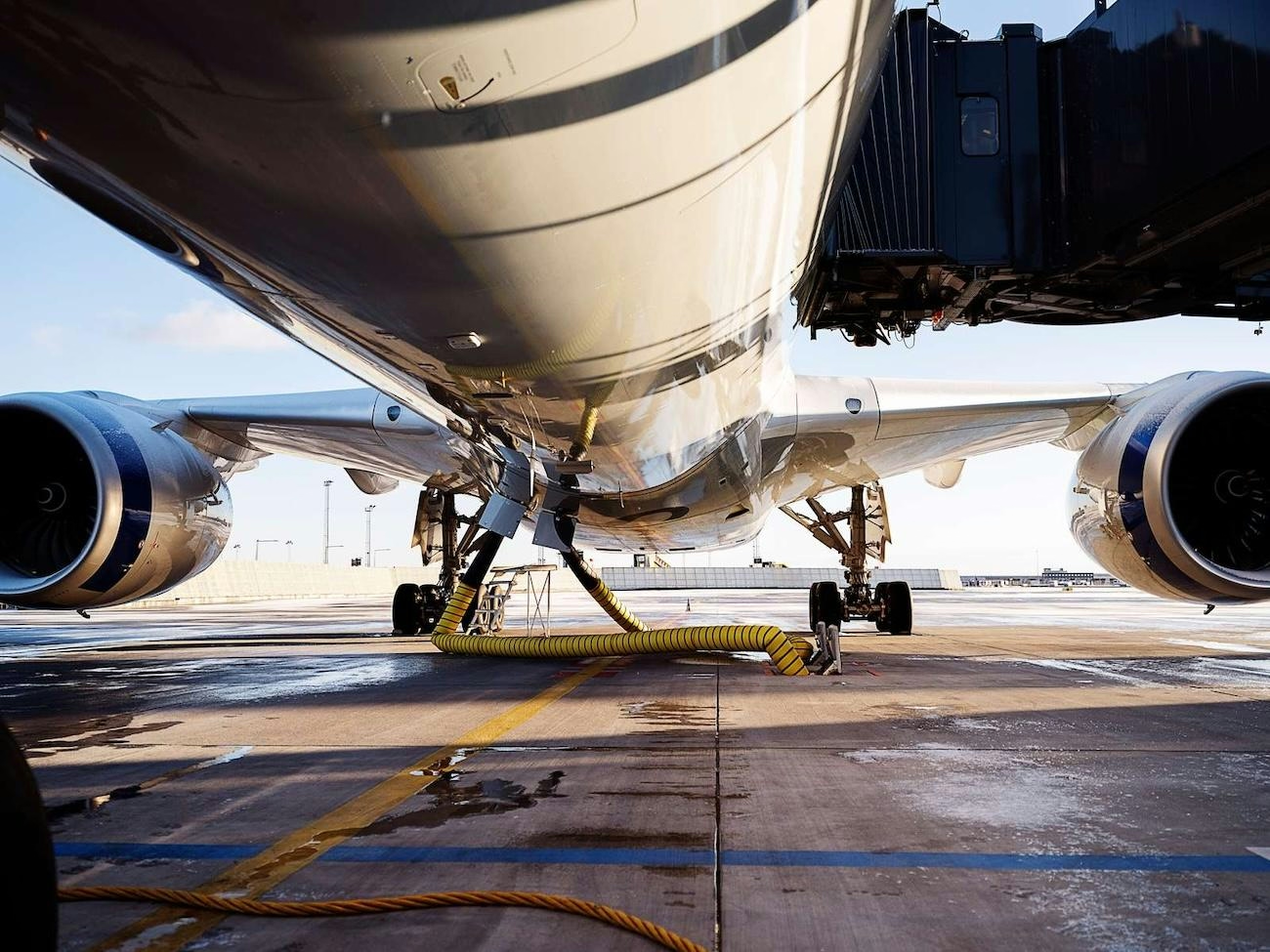
Airlines and airports have long pursued strategies to minimize the interval between an aircraft’s arrival and its subsequent departure, aiming to reduce costs and enhance on-time performance. Recently, a new generation of AI-driven platforms, often integrated with existing video camera systems, has begun delivering significant improvements in these so-called “turn times”—the period an aircraft spends at the gate.
Three leading technology providers are at the forefront of this emerging market, reporting strong results from deployments at major airports including Los Angeles, Toronto, New York JFK, Seattle, and Amsterdam. Their airline clients include prominent carriers such as United, American, Alaska, and Spirit.
Zurich-based Assaia has implemented its AI solution at approximately 1,500 gates worldwide. At Seattle-Tacoma International Airport, Alaska Airlines has reported a 12% reduction in aircraft turn times using Assaia’s technology, equating to nearly four minutes saved per departure. Alaska Airlines noted that this improvement not only enhances the passenger experience but also enables the identification of operational patterns to continuously improve safety.
Miami-based Synaptic Aviation operates its platform at around 1,000 gates globally. According to Sal Salman, Synaptic’s president and chief technology officer, the system has helped Spirit Airlines reduce the frequency of flights waiting near gates before docking by 75%. The technology identifies 32 types of ramp equipment—including belt loaders and baggage carts—transforming camera feeds into real-time data. AI algorithms then analyze this information to track and predict the progress of critical turnaround tasks.
The third major player, Royal Schiphol Group, which manages Amsterdam Schiphol Airport, has developed an in-house predictive solution. The company asserts that its system can reduce last-minute gate changes by 25%, thereby improving overall on-time performance by one percentage point.
Operational Impact and Challenges
These AI platforms utilize existing gate cameras, operated by airports or airlines, to monitor aircraft arrivals and the completion of numerous essential turnaround activities such as refueling, catering, and cleaning. The systems provide real-time alerts for delays and estimate potential pushback times, enabling airlines and airports to reassign gates, reduce waiting periods, and optimize operational workflows. At Seattle, Assaia’s technology contributed to a 17% reduction in excess hold time, according to Tim Toerber, Assaia’s president of the Americas.
Despite these technological advances, integrating AI platforms with legacy airline systems remains a significant challenge. The industry continues to grapple with concerns over data privacy and security, as well as the substantial costs associated with AI adoption. Nonetheless, investor interest in AI-driven efficiency solutions is growing, and competitors are either adopting similar technologies or enhancing their operational strategies to remain competitive.
The momentum toward AI adoption is accelerating, with American Airlines recently emphasizing AI as a critical tool for revenue management. As airlines increasingly leverage AI for operational improvements, this technology is set to play a pivotal role in shaping the future of airport efficiency.

Etihad Airways Suspends Airbus A380 Flights on Key Route

Aditya Birla Group Seeks Approval for Aircraft Leasing in GIFT City

Qatar Airways Highlights Innovation and Connectivity at Arabian Travel Market 2026

Hong Kong's Five-Year Plan Includes Andrew Fan's Aircraft Parts Processing Hub Proposal

ACIA Aero Leasing Delivers ATR72-600 to Air Nostrum

RTX Appoints Jill Albertelli as Head of Pratt & Whitney

TAT Technologies Joins Beyond Aero Hydrogen Aircraft Program

AURAK Study Highlights Barriers to Air Taxi Adoption in Emerging Economies

Xiamen Air Selects Altitude for 787 Maintenance at Heathrow

Etihad and Swissport Extend Global Partnership
