Afbeelding

AeroGenie — Uw intelligente copiloot.

Vraag wat je wilt. Analyseer alles. Handel onmiddellijk.

Trending

Categories

Air India Announces Delivery Schedule for A321neo, A350-1000, and 787-9 Aircraft
April 13, 2025By ePlane AI
Air India Announces Delivery Schedule for A321neo, A350-1000, and 787-9 Aircraft
0
0
Air India
A321neo
A350-1000

Air India Announces Delivery Schedule for A321neo, A350-1000, and 787-9 Aircraft

Major Fleet Modernization Underway

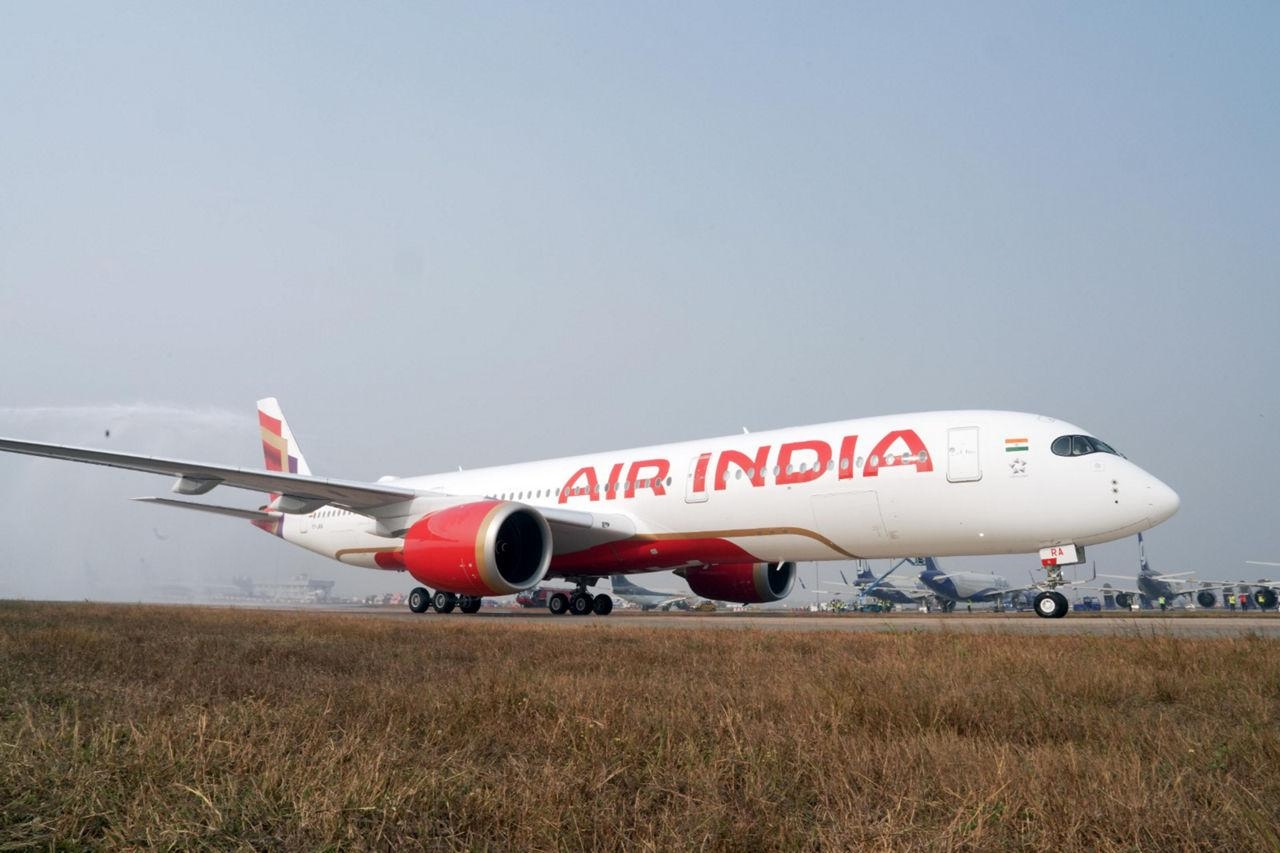
Air India Group, now under the ownership of the Tata Group, is advancing a landmark fleet renewal initiative that promises to transform its operational capabilities and competitive positioning within the Indian aviation sector. Central to this effort is an unprecedented order of 570 aircraft, among the largest in the history of commercial aviation. This extensive acquisition includes the latest models from Airbus and Boeing, notably the A321neo, A350-1000, 787-9 Dreamliner, and 777-9. These additions are expected to significantly expand Air India’s capacity and modernize its fleet.

Delivery Timeline and Deployment Plans

To date, the Air India Group—which comprises both Air India (AI) and Air India Express (IX)—has taken delivery of six Airbus A350-900s alongside more than 40 Boeing 737 MAX aircraft. The next phase of this fleet expansion is scheduled to commence in mid-2025, with the introduction of the first A321neo, A350-1000, and 787-9 Dreamliner aircraft. This phase represents a critical step in the airline’s strategy to increase capacity and enhance service offerings.

Air India Express will be the initial operator of the new A321neo, launching scheduled services from April 15, 2025. The inaugural routes will connect Delhi (DEL) with Bengaluru (BLR) and Srinagar (SXR), with subsequent expansions on April 20 to include Ayodhya (AYJ) and Jaipur (JAI). The A321neo will be configured with 180 economy seats and 12 business class seats, providing improved passenger options on key domestic routes. Currently, Air India operates two A321neos (registrations VT-RTC and VT-RTD) in a 192-seat dual-class layout.

Supply Chain Challenges and Operational Adjustments

Despite the progress, Air India continues to grapple with significant supply chain disruptions. CEO Campbell Wilson has acknowledged ongoing difficulties in procuring essential components such as engines, fuselages, and premium cabin seats. These challenges are expected to cause delivery delays from both Airbus and Boeing, potentially affecting the airline’s growth trajectory for the next four to five years. In response, Air India is extending the operational lifespan of older aircraft, which entails increased maintenance costs, and is facing obstacles in leasing additional planes due to global shortages. The airline is also exercising prudence regarding further Boeing orders amid manufacturing and regulatory constraints.

Widebody Fleet Expansion: A350-1000 and 787-9

The first A350-1000 destined for Air India is nearing completion at Airbus’s Toulouse facility and is anticipated to be delivered in 2026. Currently registered as F-WZFI, the aircraft will soon be re-registered under the VT-series for Indian operations. Concurrently, the initial Boeing 787-9 Dreamliners from the 2023 order are expected to arrive by the end of 2025. Three 787-9s are presently in production at Boeing’s Charleston, South Carolina plant, equipped with General Electric GEnx-1B engines.

Order Composition and Market Implications

Air India’s comprehensive 570-aircraft order includes 20 A350-900s, 20 A350-1000s, 140 A320neos, and 70 A321neos from Airbus, alongside 20 787-9 Dreamliners, 10 777X, and 190 737-8 MAX aircraft from Boeing. Additionally, a 2024 order comprises 10 more A350s and 90 A320 Family aircraft. This sweeping modernization is anticipated to provoke strategic responses from rival carriers, who may reassess their fleet plans in light of Air India’s expanded capacity. Industry analysts expect this development to intensify competition and elevate passenger service standards across the Indian aviation market.

Commitment to Sustainability and Efficiency

Air India’s investment in next-generation aircraft reflects a strong commitment to operational efficiency, passenger comfort, and environmental stewardship. The new A350 and 787-9 models offer substantial fuel savings and reduced emissions, aligning with global efforts to promote sustainable aviation. As these aircraft enter service from mid-2025 onward, Air India is positioned to lead the industry’s transition toward eco-friendly, high-capacity air travel.

Comments

  • A

    Anonymous

    Air india shame on you with so many poor people in your country.

More news
Business Aviation Market Expected to Grow with Rising Wealth

Business Aviation Market Expected to Grow with Rising Wealth

Business Aviation Market Expected to Grow with Rising Wealth Rapid Expansion Amid Economic Growth Vietnam’s business aviation sector, though still nascent, has witnessed significant growth over the past few years. Industry experts note that meaningful expansion began only three to four years ago, with the number of business jets based in the country increasing from virtually none before the pandemic to nearly a dozen today. This upward trend is expected to continue, with an additional three to four aircraft anticipated to enter service within the year. Despite the market’s relatively small size, this growth rate underscores the sector’s emerging importance. The surge in business aviation is closely linked to Vietnam’s robust economic development, particularly in manufacturing, real estate, and services. Expanding industrial zones and large-scale construction projects in major cities such as Hanoi and Ho Chi Minh City reflect rising corporate and individual wealth. As Vietnamese companies deepen their integration into global supply chains, frequent international travel has become essential. Destinations including China, Southeast Asia, the Middle East, Europe, and North America are now regularly accessed by business travelers. Business aviation provides these companies with the flexibility and connectivity that commercial airlines often cannot offer, mirroring patterns observed in more mature markets like North America, where business travel dominates jet utilization. Regulatory Challenges and Market Competition Vietnam’s business aviation industry faces distinct regulatory hurdles. All aircraft operating domestically must be locally registered, and foreign-registered jets are prohibited from domestic operations. This requirement extends to maintenance providers, who must obtain Vietnamese regulatory approval to service business jets. For instance, ExecuJet recently completed a year-long certification process to offer maintenance services for Vietnamese-registered aircraft. The company’s decision to enter the Vietnamese market was driven by existing customer demand, its expertise with Gulfstream and Dassault aircraft—which constitute the majority of the local fleet—and Vietnam’s strategic location near major Asian hubs. The regional business aviation landscape is becoming increasingly competitive. Leading global manufacturers such as Gulfstream, Textron Aviation, and Airbus are reporting strong sales and expanding their presence across Southeast Asia. Gulfstream plans to deliver 158 business jets in 2025, up from 136 in 2024, while Textron Aviation has achieved record revenues, including a 53% increase in fourth-quarter jet deliveries. Airbus is innovating with its A321XLR model, aiming to transform traditional production processes, and Embraer is focusing on E2 sales rather than developing new airliners. Regulatory uncertainties further complicate the market environment. Recent calls for the revocation of certificates for Bombardier Global aircraft could affect the adoption of new models in the region, potentially influencing fleet composition and operator decisions. Outlook for Vietnam’s Business Aviation Sector Despite these challenges, Vietnam’s business aviation market is on a steep growth trajectory. While it remains smaller than more established regional peers, the rapid expansion, increasing international business activity, and the entry of major industry players indicate a promising future. As wealth continues to rise and regulatory frameworks evolve, Vietnam is poised to become a significant player in Southeast Asia’s dynamic business aviation landscape.
Global Airlines Increasingly Use Hainan as Maintenance Hub

Global Airlines Increasingly Use Hainan as Maintenance Hub

Global Airlines Increasingly Use Hainan as Maintenance Hub Hainan Emerges as a Strategic Center for Aircraft Maintenance HAIKOU — A Boeing 787-8 operated by a Jordanian airline recently underwent an extensive heavy maintenance check at the Hainan Free Trade Port (FTP) in South China, highlighting the region’s growing prominence as a global aircraft repair hub. The widebody jet arrived at Haikou Meilan International Airport this week and swiftly cleared customs through a pre-approval system before entering the FTP’s integrated maintenance facility for a 66-day overhaul and cabin refurbishment. This one-stop maintenance base is managed by Grand China Aviation Maintenance Co, a subsidiary of HNA Technic Co Ltd. As China accelerates the development of the Hainan FTP, industry experts emphasize that a combination of tax incentives, regulatory openness, and a comprehensive industrial ecosystem—from airframe and engine overhauls to component repairs and material supply—is positioning Haikou as a vital node in the global maintenance, repair, and overhaul (MRO) network. Aircraft from Qatar, Thailand, Vietnam, and South Korea are currently lined up inside the hangars, reflecting the increasing international demand for the facility’s services. Policy Incentives and Operational Efficiency Drive Growth Yang Wenbo, deputy director of the maintenance base, noted a significant rise in overseas business, stating that the number of foreign-registered aircraft serviced in the first half of last year nearly matched the total for the entire year of 2024. The Jordanian Boeing 787-8 alone is scheduled for over 400 maintenance tasks, including a 12-year heavy check, landing gear replacement, cabin refurbishment, installation of in-flight internet systems, and a complete repaint. Central to Hainan’s appeal are its FTP policies, which exempt aircraft brought in for maintenance from customs deposits and allow imported spare parts used in repairs to qualify for zero tariffs. An official from the Haikou Jiangdong New Area estimated that these policies can reduce overall maintenance costs by approximately 10 to 15 percent, a substantial saving for airlines operating on narrow profit margins. Time efficiency is another critical advantage. The facility’s one-stop model enables heavy checks, modifications, and painting to be completed within the same complex, eliminating the need to transport aircraft between multiple locations. Yang emphasized that every additional day an aircraft spends on the ground represents lost revenue for airlines. By integrating inspection, modification, and painting services under one roof, the maintenance base helps clients convert operational efficiency directly into financial gain. He likened the facility to a comprehensive auto service center, with specialized divisions for deep servicing, component repair, and full aircraft painting. Expanding Capabilities Amid Industry Challenges Since its opening in 2022, the maintenance base has completed over 2,400 aircraft maintenance visits and served nearly 50 domestic and international airlines. Hainan is also expanding into higher-value engine maintenance, with a joint venture engine facility in the airport bonded zone now operating a high-thrust engine test cell for large civil turbofan engines. However, the rapid expansion of Hainan’s MRO sector occurs against a backdrop of broader industry challenges. Geopolitical tensions and global supply chain disruptions have complicated maintenance operations worldwide, prompting airlines to seek more resilient and cost-effective solutions. This has intensified competition among MRO hubs, with some carriers considering relocating their maintenance bases to locations like Hainan to reduce costs and operational risks. Despite these challenges, Hainan’s combination of favorable policies and integrated services continues to attract global airlines, reinforcing its position as an emerging center in the international aircraft maintenance landscape.
Frontier Airlines Returns 24 Jets and Delays Deliveries, Affecting US Travel in 2026

Frontier Airlines Returns 24 Jets and Delays Deliveries, Affecting US Travel in 2026

Frontier Airlines Returns 24 Jets and Delays Deliveries, Affecting US Travel in 2026 Frontier Airlines, a prominent U.S. low-cost carrier headquartered in Denver, has announced a significant revision of its fleet strategy by returning 24 Airbus A320neo aircraft and deferring the delivery of 69 additional jets. This decision forms part of a comprehensive fleet optimization plan following the airline’s reported $137 million loss for 2025 and ongoing financial challenges. Cost Savings and Operational Adjustments By returning 24 A320neo aircraft early to lessor AerCap Holdings, Frontier anticipates annual savings of approximately $200 million by 2027. Additionally, the airline is postponing the delivery of 69 new Airbus jets, originally scheduled between 2027 and 2030, to a later period spanning 2031 to 2033. This strategic adjustment aims to reduce lease expenses, enhance aircraft utilization, and better align capacity with prevailing market demand. This cautious approach reflects the broader economic pressures confronting U.S. low-cost carriers, including rising fuel costs, labor shortages, and fluctuating travel patterns. In response, Frontier is focusing on streamlining operations and maximizing the efficiency of its existing fleet to preserve cash flow and improve operational reliability amid an uncertain environment. Industry Implications and Competitive Challenges Frontier’s announcement has raised concerns among investors and industry analysts regarding the airline’s financial stability and its capacity to maintain competitiveness. A reduced fleet size may hinder Frontier’s ability to sustain profitability and defend its market share, especially as rival carriers seek to exploit potential opportunities within the low-cost segment. The airline’s ongoing struggles with negative operating margins suggest that this retrenchment could invite increased competition on key routes. This development also highlights the broader difficulties faced by U.S. low-cost carriers, which continue to lag behind more profitable international airlines despite a gradual recovery in global travel. Frontier’s fleet reduction underscores the delicate balance that carriers must maintain between pursuing growth and ensuring financial resilience in a challenging market. Impact on Aircraft Manufacturers The deferral of new aircraft deliveries presents additional challenges for manufacturers such as Airbus and Boeing, who are already contending with variable order volumes and evolving airline strategies. Delays in delivery schedules may disrupt production planning and affect revenue projections, illustrating the wider ripple effects of volatility within the aviation industry in 2026. Outlook As Frontier recalibrates its fleet and operational approach, the airline is betting on a more sustainable and flexible business model to navigate ongoing market uncertainties. While the effectiveness of this strategy in restoring profitability and securing Frontier’s position in the competitive U.S. airline sector remains uncertain, it represents a notable shift in how the carrier—and the industry at large—approaches growth in the post-pandemic era.
Boeing Reports Improvements in Supply Chain Quality

Boeing Reports Improvements in Supply Chain Quality

Boeing Reports Progress in Supply Chain Quality Amid Ongoing Challenges Boeing has announced notable advancements in the quality of its commercial airplane supply chain over the past two years, according to senior executives at a recent industry supplier conference near Seattle. Ihssane Mounir, Boeing’s senior vice president for global supply chain and fabrication, highlighted that the company now spends significantly less time addressing supplier-related issues. The time required to resolve supply chain problems has decreased by approximately 40% compared to 2024, reflecting substantial operational improvements. Enhanced Quality Control and Strategic Acquisition A major factor driving these improvements has been the implementation of enhanced quality control inspections, particularly in collaboration with Spirit AeroSystems, the manufacturer of 737 fuselages and other aerostructures. Defects associated with Spirit have declined by around 60% since Boeing introduced additional inspection protocols, Mounir reported, referencing data shared with Reuters. Spirit AeroSystems had been responsible for the manufacture and installation of a 737 MAX door plug involved in an in-flight failure on an Alaska Airlines aircraft in early 2024. This high-profile incident prompted the Federal Aviation Administration to impose production limits on Boeing. In response to these challenges, Boeing reacquired Spirit AeroSystems, based in Wichita, Kansas—a move Mounir described as “probably the best thing that’s happened in my career.” This acquisition, which brings Spirit back under Boeing’s direct oversight after nearly two decades as an independent supplier, is expected to enhance Boeing’s control over its aerostructures supply chain. Spirit AeroSystems was originally formed in 2005 following Boeing’s divestiture of parts of its aerostructures business. Ongoing Challenges and Industry Context These supply chain improvements come as Boeing and the wider aerospace industry continue to recover from disruptions caused by the COVID-19 pandemic. Previously, quality issues among suppliers had impeded efforts to increase jetliner production rates. While Boeing’s intensified inspections and closer integration with key suppliers have produced measurable gains, the company still confronts persistent challenges, including workforce shortages and ongoing component supply constraints. Adapting to advanced aircraft models and integrating emerging technologies such as automation and robotics present additional complexities for Boeing’s supply chain management. Despite these hurdles, market responses have been favorable: Boeing’s stock has risen approximately 16% year to date, supported by production gains and increased aircraft deliveries. Competitors are also investing in supply chain enhancements to maintain competitiveness as the aerospace aftermarket recovers from recent pressures. Boeing executives emphasize that sustaining these quality improvements will require ongoing vigilance and adaptability as the company navigates evolving industry demands and technological advancements.
Aviation Experts Respond to Italian Newspaper’s Claims on AI-171 Crash Investigation

Aviation Experts Respond to Italian Newspaper’s Claims on AI-171 Crash Investigation

Aviation Experts Challenge Italian Newspaper’s Allegations in AI-171 Crash Investigation Aviation specialists have voiced strong objections to recent assertions made by an Italian newspaper concerning the investigation into the Air India AI-171 crash. The newspaper’s report, which centers on a purported defect in the aircraft’s fuel control switch, has intensified scrutiny of the investigative process and raised broader concerns about regulatory oversight within the aviation sector. Criticism of Investigation Focus and Industry Implications Captain Randhawa, a seasoned pilot and industry analyst, sharply criticized the investigation’s approach, highlighting a lack of attention to the aircraft’s electrical systems. He remarked, “After reiterating the fact that the aircraft should be checked for electrical systems, neither the Aircraft Investigation Bureau (AIB) nor the Directorate General of Civil Aviation (DGCA) has ever done it. That is quite evident, because even if you see the 737 MAX crashes in Indonesia and Ethiopia, they tried to put the blame on the pilot, because there are billions at stake by these companies. And to safeguard themselves, they want to put the blame on the pilots, so that they are totally scot-free.” His comments underscore a perceived tendency within the industry to deflect responsibility away from manufacturers and regulatory bodies. The Italian newspaper’s allegations have also triggered increased market vigilance regarding Boeing 787 operations. Industry analysts caution that if systemic faults are substantiated, it could lead to widespread groundings of the aircraft model. In response, rival airlines and manufacturers have reportedly launched their own inspections and safety audits to reassure both regulators and the traveling public of their commitment to safety. Broader Safety Concerns and Regulatory Pressure Recent fatal crashes, including incidents in Maine and Colombia, have further highlighted the critical need for thorough investigations and transparent regulatory oversight. These tragedies emphasize ongoing safety challenges within the aviation industry and the imperative to address technical malfunctions with urgency and precision. As the inquiry into the AI-171 crash progresses, aviation authorities are under increasing pressure to conduct a comprehensive examination of all potential causes, including mechanical and electrical system failures. Experts stress that only an impartial and exhaustive investigation can restore public trust and maintain the highest standards of aviation safety worldwide.
Video Shows Plane Flying with Damaged Engine

Video Shows Plane Flying with Damaged Engine

Passenger Plane Flies with Severely Damaged Engine After Midair Explosion Dramatic footage has surfaced showing an Arik Air Boeing 737 continuing to fly with a shredded and charred engine following a midair explosion. The incident occurred on Wednesday during a domestic flight in Nigeria, en route from Lagos to Port Harcourt, when the aircraft’s left engine was destroyed. Passengers captured the alarming scene from their windows as the plane maintained altitude despite the extensive damage. Carrying 80 passengers, the flight was forced to divert and make an emergency landing in Benin, a neighboring city. Remarkably, the aircraft landed safely on a single engine, and no injuries were reported, according to airline officials. Passengers recounted hearing a loud bang emanating from the left side of the plane during its descent. Investigation Underway and Industry Implications The Nigerian Safety Investigation Board has confirmed that the cause of the explosion remains under investigation. A preliminary assessment team is en route to Benin to secure the aircraft, collect evidence, interview personnel and witnesses, and recover flight data and cockpit voice recordings. The agency emphasized the importance of a thorough inquiry to determine the factors leading to the engine failure. In response, Arik Air issued an apology to affected passengers, acknowledging the disruption and reaffirming its commitment to safety as investigations proceed. The incident has reignited concerns over aircraft safety and reliability, particularly for major manufacturers such as Boeing and Airbus. Both companies continue to face challenges related to increased production demands and strategic decisions regarding future aircraft models. Such events tend to intensify public scrutiny and may influence consumer confidence in air travel. Competitors within the aviation industry are likely to emphasize their own safety records and technological innovations in an effort to reassure passengers and preserve market share. As the investigation unfolds, airlines and manufacturers will confront heightened expectations for transparency and stringent safety standards.
GA Telesis MRO Services Completes Integration of Landing Systems Unit Ahead of Schedule

GA Telesis MRO Services Completes Integration of Landing Systems Unit Ahead of Schedule

GA Telesis MRO Services Completes Integration of Landing Systems Unit Ahead of Schedule Early Integration Surpasses Performance Expectations GA Telesis, LLC has announced the successful and early integration of its Landing Gear Services (LGS) division into the GA Telesis Ecosystem™, a milestone that significantly advances the company’s operational strategy and growth objectives. Completed ahead of schedule, this integration has already exceeded initial performance targets, establishing GA Telesis as the largest independent provider of landing gear services in the Americas. The LGS division is now fully embedded within GA Telesis’ operating, commercial, and quality frameworks. This includes the implementation of standardized processes, unified leadership, and coordinated performance management systems. The integration has accelerated synergy realization across the platform, resulting in a 33% improvement in average delivery times for commercial customers and a 27% improvement for government clients. These enhancements have increased throughput, asset velocity, and predictability for both airline and government partners. Operational Excellence Amid Integration Challenges Despite the complexities typically associated with integrating a major business unit—such as maintaining operational efficiency and managing stakeholder concerns—GA Telesis reports that the process strengthened execution rather than impeding it. Employees from both organizations played a pivotal role in ensuring a seamless transition, maintaining uninterrupted and enhanced service levels throughout the integration period. The successful consolidation has also led to the securing of multiple new long-term contracts across widebody, narrowbody, and regional aircraft platforms. These agreements serve as third-party validation of the combined enterprise’s capabilities, enhancing revenue visibility and reinforcing confidence in the scalability of GA Telesis’ business model. Pastor Lopez, President of the MRO Services Group, stated, “The integration of LGS has been a total success. Through disciplined execution and close collaboration, we not only met our objectives but surpassed them. Securing new long-term agreements during this period is a clear endorsement of our capabilities and commitment to delivering measurable value.” Strategic Benefits and Market Impact By merging the volume and expertise of GA Telesis’ existing landing gear operations with those of the acquired business, the company has realized significant benefits from streamlined processes, shared best practices, and expanded technical depth. This scale and capability expansion materially enhances the value proposition of the GA Telesis Ecosystem™ by increasing internal supply availability, improving turnaround predictability, and enabling tighter coordination across repair, leasing, and asset management activities. Market response to the early and effective integration has been positive, with increased investor confidence reflecting the company’s ability to execute complex integrations efficiently. Competitors in the global aviation MRO sector may respond by intensifying acquisition efforts or adjusting merger strategies to maintain their competitive positions. With the integration now complete, GA Telesis is focused on accelerating growth, expanding capabilities across platforms, and continuing to deliver industry-leading service, reliability, and long-term customer partnerships. About GA Telesis GA Telesis is a global leader in aerospace solutions, providing aftermarket services, lifecycle management, parts distribution, logistics, inventory management, leasing, engine overhaul, and MRO services. The GA Telesis Ecosystem™ operates across 54 locations in 30 countries, supporting sustainability through advanced technologies and digital transformation. Its MRO network and 24/7 AOG support ensure reliability and efficiency for customers worldwide.
SAF Certification and ISCC Rules Reshape Aviation Supply Chains

SAF Certification and ISCC Rules Reshape Aviation Supply Chains

SAF Certification and ISCC Rules Reshape Aviation Supply Chains Sustainable Aviation Fuel (SAF) certification and adherence to ASTM and International Sustainability and Carbon Certification (ISCC) standards have emerged as pivotal factors in aviation fuel procurement, fundamentally transforming supply chains within the industry. Airlines and original equipment manufacturers (OEMs) now mandate that SAF complies with ASTM D7566 specifications and holds recognized ISCC certification prior to acceptance. This evolution has shifted certification from a mere environmental formality to a critical logistical requirement. Certification as a Supply Chain Bottleneck This regulatory shift is compelling carriers and freight forwarders to revise procurement contracts, refueling strategies, and fleet deployment plans to ensure consistent availability, quality assurance, and accurate carbon-intensity (CI) reporting aligned with ISCC CORSIA and regional frameworks such as the European Union’s Renewable Energy Directive III (RED III). Consequently, the supply chain has become more intricate, with certification processes emerging as potential bottlenecks that can delay fuel deliveries and disrupt operational continuity. Industry Alignment and Market Response Following the International Air Transport Association’s (IATA) commitment to achieving net-zero emissions by 2050, refiners, engine manufacturers, and airlines have coordinated investments and testing initiatives. Refiners and technology companies are scaling SAF production from a variety of feedstocks, while engine OEMs are conducting tests on higher SAF blend ratios and full 100% SAF compatibility. Logistics teams now face stringent requirements, including verifying ISCC chain-of-custody documentation before fuel is introduced into airport storage tanks, integrating CI data into fuel-cost models, and ensuring compliance within interline and third-party handling agreements. The market is responding dynamically to these pressures. With projections estimating the global SAF market to reach $50 billion by 2036 and a significant growth inflection point anticipated after 2030, industry players are expanding supply networks and establishing new partnerships. Noteworthy developments include AEG Fuels’ agreement to supply four high-volume locations and the Jetex-Azzera collaboration aimed at enhancing SAF traceability in the Middle East. Regulatory initiatives, such as the Federal Aviation Administration’s (FAA) draft framework for transitioning to unleaded aviation gasoline (avgas), further emphasize the sector’s commitment to sustainability and regulatory compliance. Quality Control and Operational Implications Airlines maintain stringent fuel quality standards, requiring SAF to meet the same rigorous criteria as conventional jet fuel under ASTM D1655, alongside additional ASTM D7566 specifications for alternative blendstocks. Certification now functions as a dual checkpoint: technical approval by OEMs and sustainability validation through ISCC. This dual certification determines supplier access to airports and the eligibility of fuel batches for commercial flight operations. Feedstock, Cost, and Decarbonization Trade-offs The choice of feedstock significantly influences both carbon-intensity reduction and production costs. Transitioning from palm oil to alternatives such as municipal waste or recycled carbon gases can markedly reduce life-cycle emissions but often introduces greater production complexity and higher prices. Cargo planners must carefully balance increased fuel costs against contractual emissions targets and customer expectations. Palm oil, while offering a typical CI reduction of approximately 20–40%, benefits from relatively straightforward supply chains but faces growing sustainability scrutiny and regulatory challenges. Sugarcane provides a higher CI reduction range of 40–60%, though its seasonal variability affects shipment schedules and storage logistics. Municipal waste feedstocks can achieve CI reductions between 60–90%, but require the establishment of local collection networks and new transportation flows. Recycled carbon gases offer the most substantial reductions, ranging from 70–95%, yet involve high-technology processing and centralized production facilities that impact long-haul distribution logistics. Certification Schemes and Operational Impact The ISCC framework comprises three variants—ISCC PLUS (voluntary), ISCC EU (compliant with RED III), and ISCC CORSIA (aligned with international aviation standards)—each imposing distinct documentation, auditing, and traceability obligations. For logistics operations, these requirements translate into increased administrative workload, new audit schedules for fuel storage facilities, and potential delays if chain-of-custody documentation cannot be satisfactorily demonstrated. Practical Steps and Innovation To address these challenges, logistics teams are adopting electronic traceability systems to expedite ISCC audits, securing contingency fuel contracts to mitigate risks associated with single-source suppliers, and redesigning airport storage infrastructure to segregate certified SAF, blended fuels, and conventional jet fuel. As SAF certification and ISCC regulations become more stringent, innovation and collaboration within supply chains are proving essential for maintaining market access, ensuring regulatory compliance, and advancing the aviation industry’s broader decarbonization objectives.
AAIB Continues Investigation into AI-171 Crash, No Conclusions Yet

AAIB Continues Investigation into AI-171 Crash, No Conclusions Yet

AAIB Continues Investigation into AI-171 Crash, No Conclusions Yet Ongoing Inquiry Amid Speculation The Aircraft Accident Investigation Bureau (AAIB) has confirmed that its investigation into the June 12, 2025, crash of Air India Flight AI-171 in Ahmedabad remains active, with no definitive conclusions reached to date. In a statement released on February 12, 2026, the bureau dismissed recent media reports claiming the inquiry had concluded, describing such assertions as “incorrect and speculative.” These clarifications follow a report by the Italian newspaper *Corriere della Sera*, which suggested that Indian investigators might attribute the crash to pilot error, specifically alleging that one of the pilots intentionally shut off the engines by manipulating the fuel control switches. The report, citing unnamed aviation sources, indicated that this hypothesis was drawn from flight data and cockpit voice recordings, with the pilot-in-command potentially under scrutiny. However, the article acknowledged uncertainty over whether formal responsibility would be assigned in the final report. The Italian publication also noted the absence of evidence pointing to mechanical or technical failure, while highlighting cockpit indications that the fuel controls were moved “almost certainly intentionally.” The AAIB, however, stressed that all aspects of the incident remain under thorough evaluation, including whether the fuel switch movements were deliberate or accidental. Safety Concerns and Industry Reactions The investigation has intensified focus on the reliability of Boeing 787 fuel control switches, especially following a recent incident involving an Air India pilot who reported a malfunction of the fuel switch on a Boeing 787-8 flight from London to Bengaluru. The tragic crash, which claimed 269 lives, has raised concerns about potential failures in fuel control systems that could lead to engine shutdowns. In response, the Directorate General of Civil Aviation (DGCA) mandated post-crash inspections and temporarily grounded affected aircraft models. These measures have prompted questions regarding their adequacy and the broader implications for both Air India and Boeing. Industry analysts suggest that the incident may trigger heightened scrutiny of Boeing’s safety protocols and could undermine passenger confidence. Meanwhile, competing airlines may leverage the situation to highlight their own safety records. Calls for Comprehensive Examination Indian pilots’ associations and the family of the late pilot-in-command, Sumeet Sabharwal, have voiced strong criticism of what they describe as premature attempts to assign blame to the flight crew. They have urged for a more exhaustive investigation encompassing the aircraft manufacturer, the airline, and other potential contributing factors. The AAIB reiterated that the investigation remains ongoing, emphasizing that no final conclusions or determinations of responsibility have yet been made. Authorities continue to evaluate all possible causes as the inquiry progresses.
BlueFive Capital Launches Aircraft Leasing Firm

BlueFive Capital Launches Aircraft Leasing Firm

BlueFive Capital Enters Aircraft Leasing Market with New Platform Abu Dhabi-based alternative asset manager BlueFive Capital has announced the launch of BlueFive Leasing, a new aircraft leasing platform aimed at serving both regional and international airlines. Unveiled on Thursday, the platform will focus on leasing narrow- and wide-body aircraft across all age ranges, according to an official company statement. Founded earlier this year, BlueFive Capital is simultaneously initiating fundraising efforts for its inaugural investment vehicle, BlueFive Wings Fund I, targeting $1 billion to invest in commercial aircraft assets. This strategic move positions the firm within a global aircraft leasing market projected to double to $400 billion by the 2030s. Currently, Middle Eastern companies hold less than 4 percent of this market, highlighting significant growth potential for BlueFive. Strategic Vision and Market Context Founder and CEO Hazem Ben-Gacem emphasized the company’s ambition to cultivate “a diverse mix of flag carriers and low-cost airlines globally,” noting that BlueFive Leasing already has “a robust pipeline of transactions” under negotiation. He highlighted the opportunity presented by the current supply-demand imbalance in the aviation sector, coupled with rising demand for aircraft leasing and shifting capital-market dynamics, as a compelling entry point for the new platform. The company anticipates announcing its first deal in the near future. BlueFive’s market entry coincides with heightened activity and competition within the aircraft leasing industry. Established firms such as AerCap have recently reassured investors about the sector’s resilience despite ongoing geopolitical uncertainties. The industry has also benefited from extended delivery delays at major manufacturers Boeing and Airbus, which have increased demand for leased aircraft. Willie Walsh, director general of the International Air Transport Association (IATA), remarked last year that leasing companies in the Gulf region are “in a fantastic position” as airlines seek additional capacity amid challenges in acquiring new aircraft. Competitive Challenges and Expansion into Insurance Despite promising prospects, BlueFive faces a competitive landscape. According to JetLoan Capital, maintaining attractive financing terms is becoming increasingly difficult amid strong borrower interest in business jets and a robust preowned aircraft market. Competitors may respond to BlueFive’s market entry by adjusting their leasing and financing strategies to safeguard their market share. Furthermore, the aviation insurance sector is expected to experience rate increases in 2026, which could affect leasing costs and risk management approaches. In addition to its aircraft leasing ambitions, BlueFive Capital is expanding into the insurance sector. The firm launched BlueFive Insurance in November with the goal of becoming a leading player in the Gulf Cooperation Council (GCC) insurance market. It plans to pursue acquisitions in what it describes as a fragmented market ripe for consolidation. As BlueFive Capital seeks to establish itself in both aircraft leasing and insurance, it will need to navigate a complex financial environment shaped by strong demand, evolving capital markets, and ongoing debates over aviation taxes in various regions. The company’s ability to offer competitive terms and adapt to industry shifts will be critical as it challenges established players in the global aviation finance sector.
line










