
Zet AI‑inzichten om in gerichte actie

Trending
Categories
Air taxis may become the quickest way to the airport
Air Taxis Poised to Revolutionize Airport Commutes
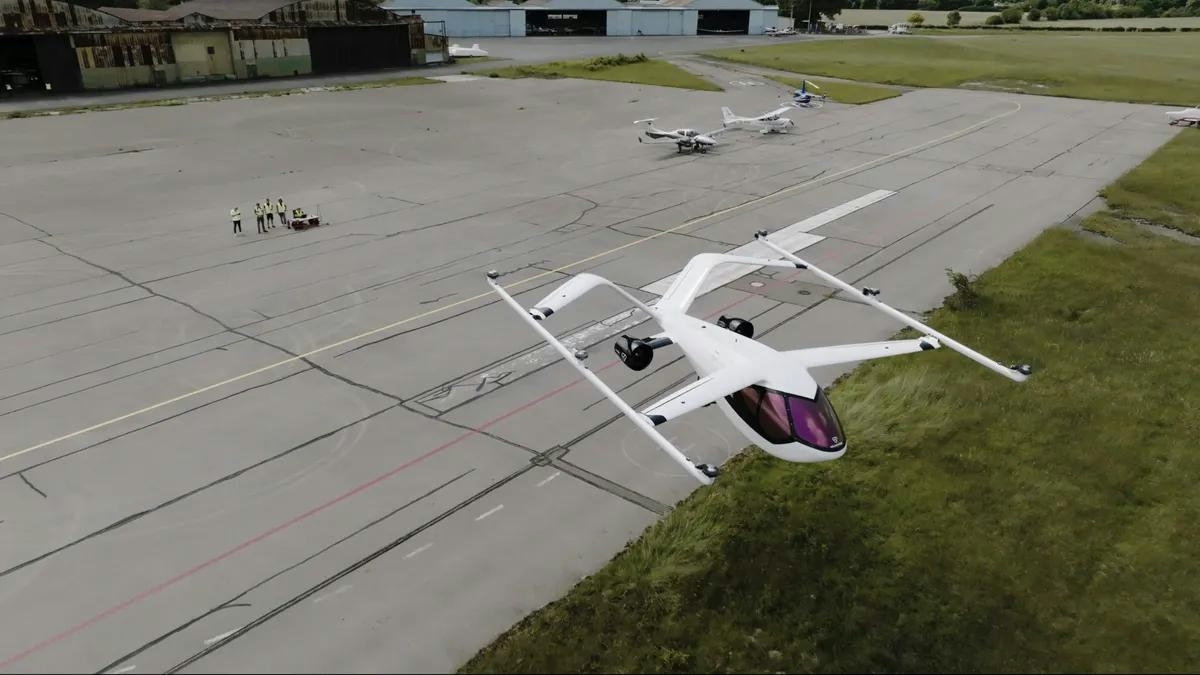
The future of urban transportation may soon take to the skies with the advent of air taxis—electric vertical takeoff and landing (eVTOL) aircraft designed to bypass ground traffic and reduce travel times dramatically. These fully electric vehicles, which resemble large drones but operate similarly to helicopters, are set to transform the way passengers travel to and from airports, offering a swift alternative to congested roads and crowded public transit.
Regulatory Advances and Industry Progress
In a significant move forward, the U.S. Department of Transportation approved eight pilot programs spanning 26 states in March, underscoring growing governmental support for eVTOL technology. Typically accommodating up to four passengers alongside a pilot, some air taxi models are also being developed for autonomous operation. Joby Aviation, a prominent company in this sector, recently completed demonstration flights between Manhattan and JFK Airport, reducing a journey that often exceeds an hour by car to a mere 10 minutes by air.
Air taxis could become operational in select American cities as early as this year, with Los Angeles aiming to launch a comprehensive program ahead of the 2028 Olympic Games. The Federal Aviation Administration (FAA) is actively working to expedite the industry’s introduction, with Deputy Administrator Chris Rocheleau emphasizing the agency’s dedication to facilitating the rapid deployment of air taxi services. Internationally, cities such as Guangzhou and Shenzhen in China have already initiated air taxi operations, signaling a global trend toward urban aerial mobility.
Challenges to Mainstream Adoption
Despite the promising outlook, several obstacles must be addressed before air taxis can become a widespread transportation option. Infrastructure development remains a critical challenge, as the establishment of dedicated heliports and vertiports within urban areas is essential for efficient operations. Additionally, existing FAA regulations, including outdated rules related to supersonic air travel over land, may impede progress. The industry also faces internal competition and legal disputes, notably between companies like Joby Aviation and Electra, involving allegations of trade secret theft and corporate espionage. These conflicts have the potential to delay regulatory approvals and slow the pace of commercial rollout.
Market Potential and Future Outlook
Consumer interest in faster, on-demand mobility solutions continues to drive market enthusiasm. Initial pricing for air taxi rides is expected to be comparable to premium ground transportation services, with fares to JFK Airport potentially reaching $150. However, as the sector matures and scales, prices could decrease substantially, with projections suggesting fares might fall to around $25 by 2030.
As companies accelerate efforts to secure regulatory clearance and develop the necessary infrastructure, air taxis are rapidly transitioning from a futuristic concept to an imminent reality. This emerging mode of transport promises to offer travelers a novel, efficient alternative for airport commutes, reshaping urban mobility in the years ahead.

Etihad Airways Suspends Airbus A380 Flights on Key Route

Aditya Birla Group Seeks Approval for Aircraft Leasing in GIFT City

Qatar Airways Highlights Innovation and Connectivity at Arabian Travel Market 2026

Hong Kong's Five-Year Plan Includes Andrew Fan's Aircraft Parts Processing Hub Proposal

ACIA Aero Leasing Delivers ATR72-600 to Air Nostrum

RTX Appoints Jill Albertelli as Head of Pratt & Whitney

TAT Technologies Joins Beyond Aero Hydrogen Aircraft Program

AURAK Study Highlights Barriers to Air Taxi Adoption in Emerging Economies

Xiamen Air Selects Altitude for 787 Maintenance at Heathrow

Etihad and Swissport Extend Global Partnership
