
Zet AI‑inzichten om in gerichte actie

Trending
Categories
Air Transat to Implement AI for Disruption Recovery
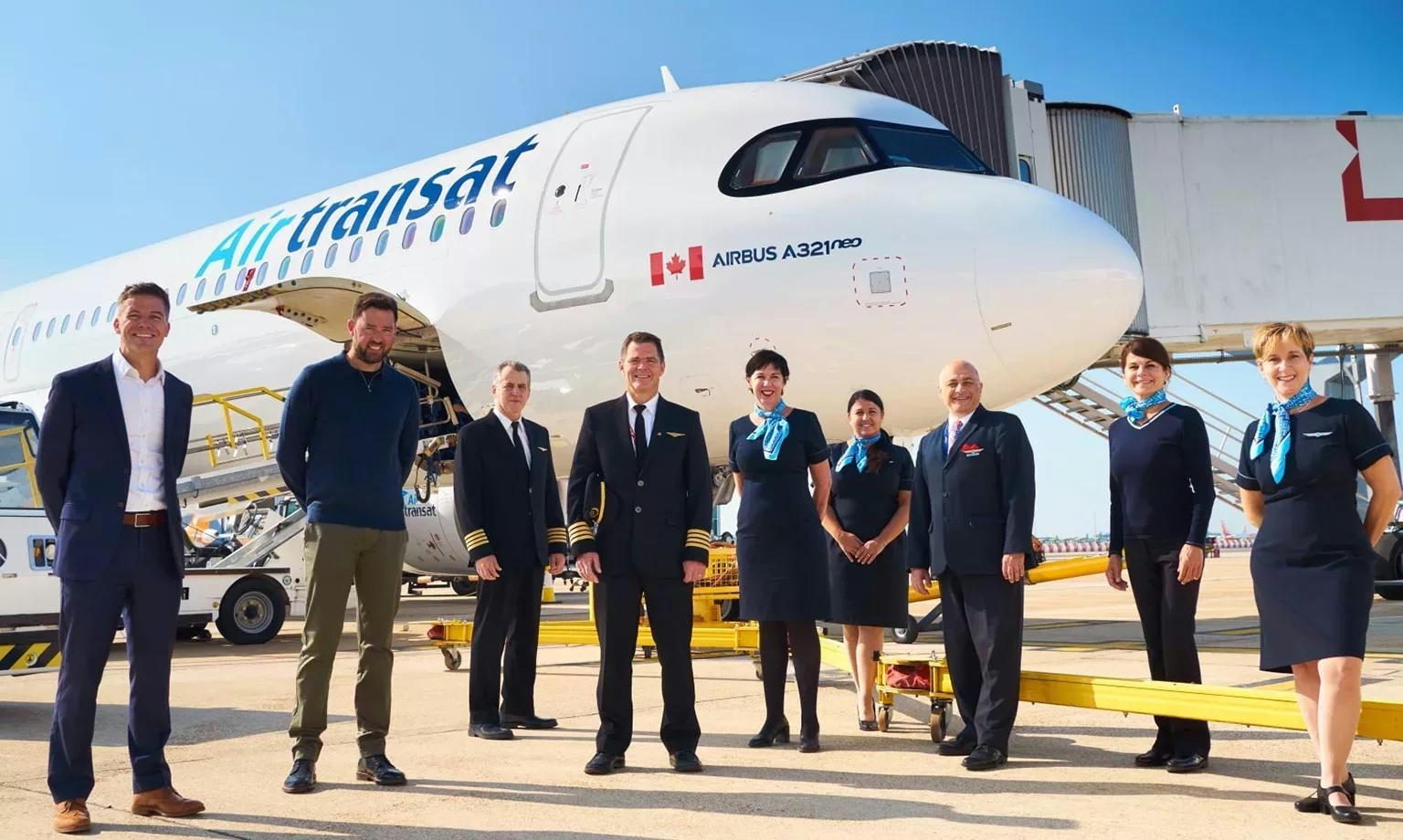
Air Transat to Implement AI for Flight Disruption Recovery
Canadian carrier Air Transat has announced a strategic partnership with Montreal-based technology firm stratosX to deploy an artificial intelligence (AI) platform aimed at enhancing its management of flight disruptions. The system, named X360, is designed to streamline the airline’s response to delays, cancellations, and schedule changes by consolidating flight data and delivering real-time decision support to operational teams.
Advancing Disruption Management with AI
Following a successful proof of concept, Air Transat will become the launch airline for one of the first integrated recovery orchestration platforms to be deployed in live airline operations. Marc-Philippe Lumpé, Air Transat’s Chief Operating Officer, emphasized the importance of speed and clarity during irregular operations. He noted that X360 will empower the airline’s teams with improved visibility, enabling them to act with greater confidence and consistency while safeguarding the passenger experience.
The X360 platform integrates seamlessly with existing operational systems, providing a unified and structured overview of flight data accessible to multiple departments. By identifying emerging risks and operational pressure points early, the system facilitates proactive decision-making. It recommends actions that optimize the allocation of aircraft and crew resources, thereby minimizing delays, reducing costs, and mitigating passenger inconvenience.
Ghislain Gagné, CEO of stratosX, highlighted the transformative potential of the platform, describing disruption recovery as evolving from a reactive process into a structured and repeatable one. He expressed optimism about the partnership’s progress and the opportunity to demonstrate tangible improvements in operational resilience.
Industry Context and Future Implications
StratosX estimates that flight disruptions cost the global airline industry more than $60 billion annually. Their AI-driven solution aims to help carriers better anticipate, absorb, and adapt to operational challenges. However, the broader adoption of AI technologies in aviation remains subject to uncertainties. Fitch Ratings has pointed to the unclear long-term revenue potential of AI applications, while recent market responses—such as the mixed reception to Anthropic’s initial public offering—reflect investor caution regarding the sector’s challenges.
Despite these reservations, Air Transat’s initiative may set a precedent as airlines increasingly explore AI to enhance operational efficiency. While competitor reactions are yet to be seen, the integration of advanced platforms like X360 could influence wider industry trends.
Founded in 1986 and also headquartered in Montreal, Air Transat has earned significant recognition in recent years. The airline was named the World’s Best Leisure Airline at the 2025 Skytrax World Airline Awards for the third consecutive year and seventh time overall. In the same awards, Air Canada was honored as the Best Airline in North America for the ninth time. The Skytrax awards are widely regarded as the aviation industry’s most prestigious accolades.
As the aviation sector navigates the evolving landscape of AI adoption, Air Transat’s deployment of X360 will be closely observed as a potential model for smarter and more resilient disruption recovery.

Etihad Airways Suspends Airbus A380 Flights on Key Route

Aditya Birla Group Seeks Approval for Aircraft Leasing in GIFT City

Qatar Airways Highlights Innovation and Connectivity at Arabian Travel Market 2026

Hong Kong's Five-Year Plan Includes Andrew Fan's Aircraft Parts Processing Hub Proposal

ACIA Aero Leasing Delivers ATR72-600 to Air Nostrum

RTX Appoints Jill Albertelli as Head of Pratt & Whitney

TAT Technologies Joins Beyond Aero Hydrogen Aircraft Program

AURAK Study Highlights Barriers to Air Taxi Adoption in Emerging Economies

Xiamen Air Selects Altitude for 787 Maintenance at Heathrow

Etihad and Swissport Extend Global Partnership
