
Zet AI‑inzichten om in gerichte actie

Trending
Categories
Airbus Addresses A350 Cracking Issue Without Grounding Fleet
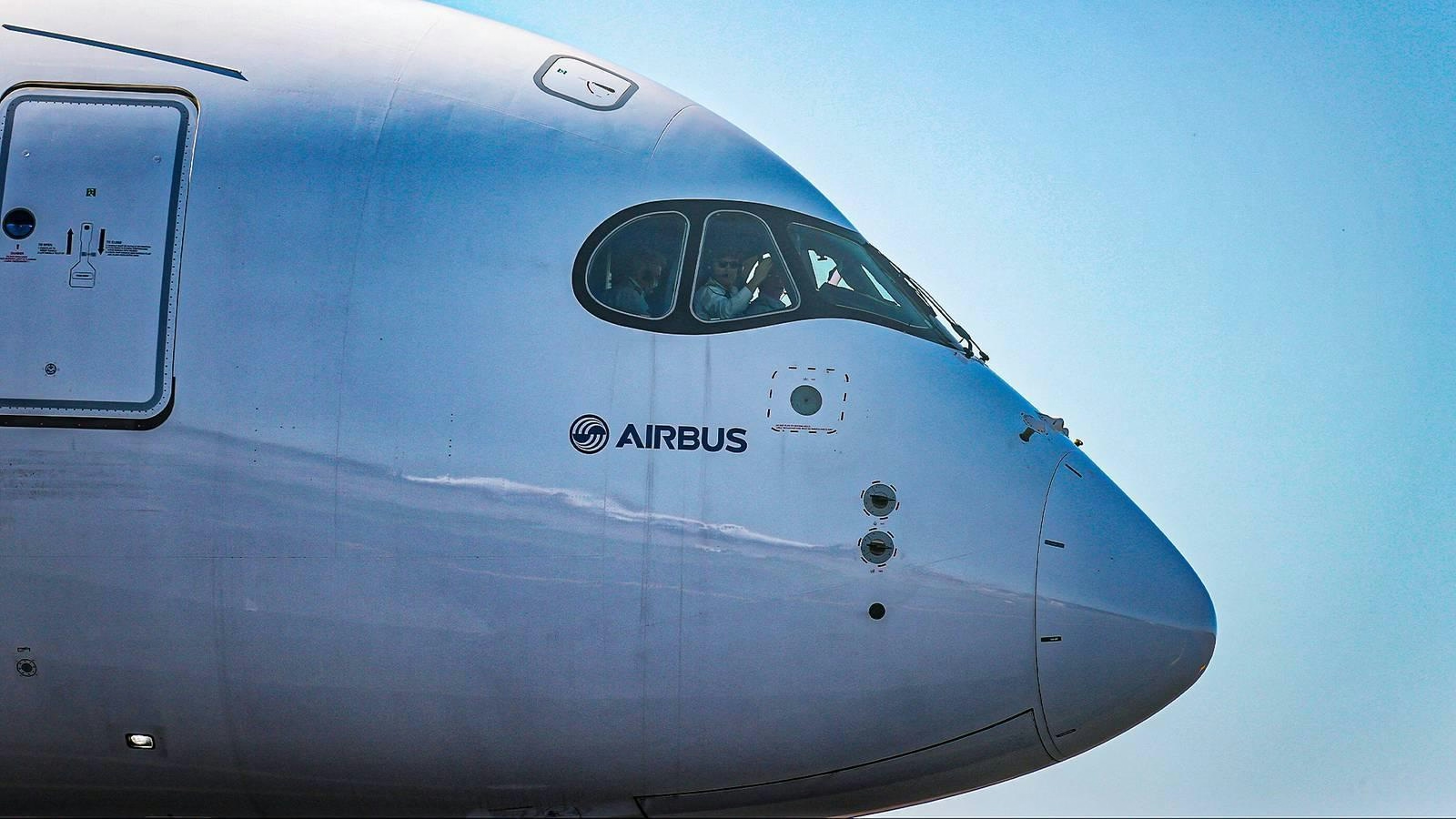
Airbus Addresses A350 Cracking Issue Without Grounding Fleet
Technical Challenges and Material Complexities
Airbus has recently confronted a significant technical challenge with its A350 widebody aircraft following reports of localized surface cracking and paint degradation. This issue has sparked public debate and legal disputes, focusing attention on the long-term airworthiness of composite commercial aircraft—a relatively novel area in aviation engineering. Unlike traditional aluminum airliners, the A350 extensively employs carbon fiber-reinforced polymer (CFRP) to reduce weight and enhance fuel efficiency on long-haul flights. However, the use of CFRP introduces new complexities, particularly in the interaction between exterior coatings and lightning-protection layers applied to the composite structure.
The root cause of the surface cracking lies in the differing thermal expansion properties of these materials. While CFRP remains dimensionally stable across a wide temperature range, the outer paint and expanded copper foil used for lightning protection expand and contract more significantly. When the aircraft transitions rapidly from the heat of a runway to the cold temperatures at cruising altitude, mechanical stress develops at the interface between these layers. This stress results in fine cracks, flakes, and blisters in the paint, especially along fuselage joints. Although these blemishes are visible to passengers and maintenance personnel, non-destructive testing has confirmed that the damage is confined to superficial exterior layers, leaving the underlying carbon-fiber structure intact and structurally sound.
Regulatory Response and Airbus’s Mitigation Strategy
Despite calls from Qatar Airways for an immediate global grounding of the A350 fleet, aviation regulators including the European Union Aviation Safety Agency (EASA) and the Federal Aviation Administration (FAA) adopted a measured, data-driven approach. Comprehensive technical assessments concluded that the paint degradation did not compromise the aircraft’s structural integrity or flight safety. Rather than grounding the entire fleet, regulators mandated targeted inspections of the lightning protection mesh on specific early-production aircraft.
Airbus responded by implementing material adjustments and localized repairs, enabling the manufacturer to address the issue without the operational and financial disruption associated with a fleet-wide grounding. Nevertheless, the incident has intensified scrutiny from regulators and airline operators, raising broader concerns about the long-term durability and maintenance requirements of composite airframes.
Broader Industry Implications and Market Reactions
This challenge comes amid additional technical and financial pressures for Airbus, including the need for further inspections and repairs on A380 wing spars, which could result in substantial costs and operational disruptions. Meanwhile, competitors such as Boeing are leveraging the situation to emphasize the reliability of their own wide-body aircraft, potentially influencing airline purchasing decisions.
Market responses are already emerging. For instance, Qantas is reportedly considering an order for 20 wide-body jets, evaluating options from both Airbus and Boeing. The outcome of such procurement decisions may signal a shift in airline strategies as operators reassess the structural integrity and long-term maintenance demands of their fleets.
While Airbus has managed to contain the A350 surface cracking issue without grounding its fleet, the episode highlights the evolving challenges associated with advanced aircraft materials and the heightened scrutiny manufacturers face from regulators and the global marketplace.

Etihad and Swissport Extend Global Partnership

Sepehran Airlines B737 Returns to Mashhad After Tyre and Engine Issues

Etihad Deploys Widebody Fleet to Meet Strong Demand

Korean Air Finalizes $36.2 Billion Deal with Boeing

Australia’s RFDS Queensland Section Orders Six King Air 260Cs

Korean Air Finalizes Order for 103 Boeing Jets and Engines

Embraer E195-E2 Features Distinctive Engine Placement Among Regional Jets

What Passengers Can Expect on Boeing’s New 777X Jet

How Ethiopian Airlines Became Africa’s Leading Carrier Amid Gulf Competition

Joby Aviation Extends Autonomous Flight Capabilities with Cross-Country Tour
