
Zet AI‑inzichten om in gerichte actie

Trending
Categories
Aircraft Sensors Drive Advances in Japan’s Aviation Technology
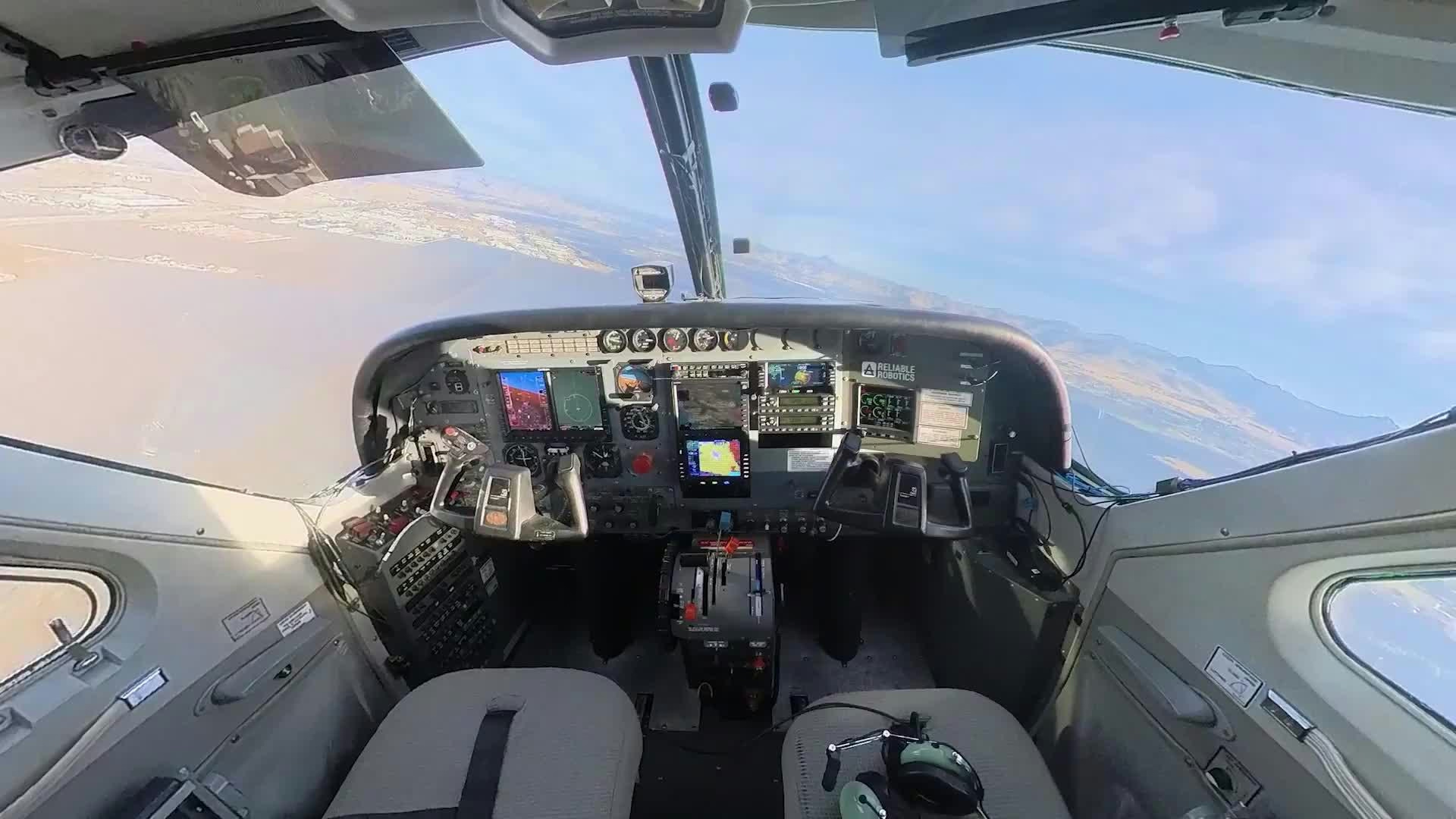
Aircraft Sensors Drive Advances in Japan’s Aviation Technology
Aircraft sensors play a critical role in modern aviation by continuously monitoring essential parameters such as pressure, temperature, speed, altitude, position, and vibration. These technologies underpin flight safety, operational efficiency, and performance optimization. In Japan, the aircraft sensors market is bolstered by the country’s strong aerospace engineering sector and a pronounced focus on technological innovation.
As aviation systems evolve to become more sophisticated and data-centric, the demand for high-precision sensors is intensifying. Aircraft manufacturers and maintenance providers are increasingly incorporating advanced sensor technologies to enhance safety protocols, enable predictive maintenance, and streamline operational workflows. The Japanese aircraft sensors market was valued at approximately USD 318 million in 2025 and is projected to reach around USD 452.6 million by 2034, representing a compound annual growth rate (CAGR) of 4.0% from 2026 to 2034. This expansion is driven by advancements in avionics, growing air travel demand, and the imperative for reliable monitoring systems.
Innovation and Market Development
Japanese manufacturers are prioritizing the development of smart, miniaturized sensors that combine compactness with high accuracy and reliability. The miniaturization of sensors is particularly important for reducing aircraft weight, thereby improving fuel efficiency and overall performance. Furthermore, these sensors are increasingly integrated within sophisticated digital avionics systems, enabling real-time data processing and analysis. This integration supports automated flight operations and enhances both safety and system responsiveness.
The continuous flow of sensor data also facilitates predictive maintenance strategies, allowing operators to identify potential issues before they escalate, thereby minimizing downtime and improving maintenance efficiency. However, as noted in SITA’s 2025 Air Transport IT Insights report, the growing complexity of sensor-driven systems presents challenges, especially in achieving seamless data coordination across diverse platforms and stakeholders. Addressing these integration challenges is becoming a key focus for industry participants.
Industry Trends and Market Dynamics
The growth of air travel in Japan is a significant driver behind the increasing demand for advanced aircraft systems and high-performance sensors. Concurrently, the expansion of the aerospace manufacturing sector is fostering investment in next-generation sensor technologies. Stringent safety regulations and compliance requirements further reinforce the need for reliable, high-quality sensor solutions.
In response to these trends, there has been a notable increase in investment in physical artificial intelligence and robotics within the sector. This shift is partly influenced by Japan’s cultural acceptance of automation and the ongoing challenges posed by labor shortages, which together encourage the adoption of automated and sensor-driven technologies.
Market Segmentation and Competitive Landscape
The Japanese aircraft sensors market is segmented by sensor type, application, aircraft type, end user, and region. Sensor categories include pressure, temperature, position and displacement, speed sensors, among others. Applications span engine systems, flight control, environmental control, navigation, and additional areas. The market serves commercial, military, and general aviation sectors, with end users comprising original equipment manufacturers (OEMs) and aftermarket providers. Geographically, the market covers key regions such as Kanto, Kansai/Kinki, Chubu, Kyushu–Okinawa, Tohoku, Chugoku, Hokkaido, and Shikoku, reflecting the diverse operational needs across Japan’s aviation landscape.
Competition within the market involves aerospace component manufacturers, electronics firms, and technology providers, with a strong emphasis on precision, reliability, innovation, and adherence to regulatory standards. On the global stage, competitive dynamics are intensifying. For instance, in the United States, Joby Aviation is currently under investigation by the US International Trade Commission following a complaint by rival Archer Aviation concerning potential import violations. Such developments underscore the increasingly competitive and regulated environment in which Japanese firms operate.
As Japan continues to advance its aviation technology, the integration of cutting-edge sensor systems, alongside efforts to overcome data coordination and workforce challenges, will remain central to sustaining the industry’s growth and enhancing its global competitiveness.

Etihad Airways Suspends Airbus A380 Flights on Key Route

Aditya Birla Group Seeks Approval for Aircraft Leasing in GIFT City

Qatar Airways Highlights Innovation and Connectivity at Arabian Travel Market 2026

Hong Kong's Five-Year Plan Includes Andrew Fan's Aircraft Parts Processing Hub Proposal

ACIA Aero Leasing Delivers ATR72-600 to Air Nostrum

RTX Appoints Jill Albertelli as Head of Pratt & Whitney

TAT Technologies Joins Beyond Aero Hydrogen Aircraft Program

AURAK Study Highlights Barriers to Air Taxi Adoption in Emerging Economies

Xiamen Air Selects Altitude for 787 Maintenance at Heathrow

Etihad and Swissport Extend Global Partnership
