
Zet AI‑inzichten om in gerichte actie

Trending
Categories
Airlines Confront Engine Maintenance Delays Amid Global MRO Shortages
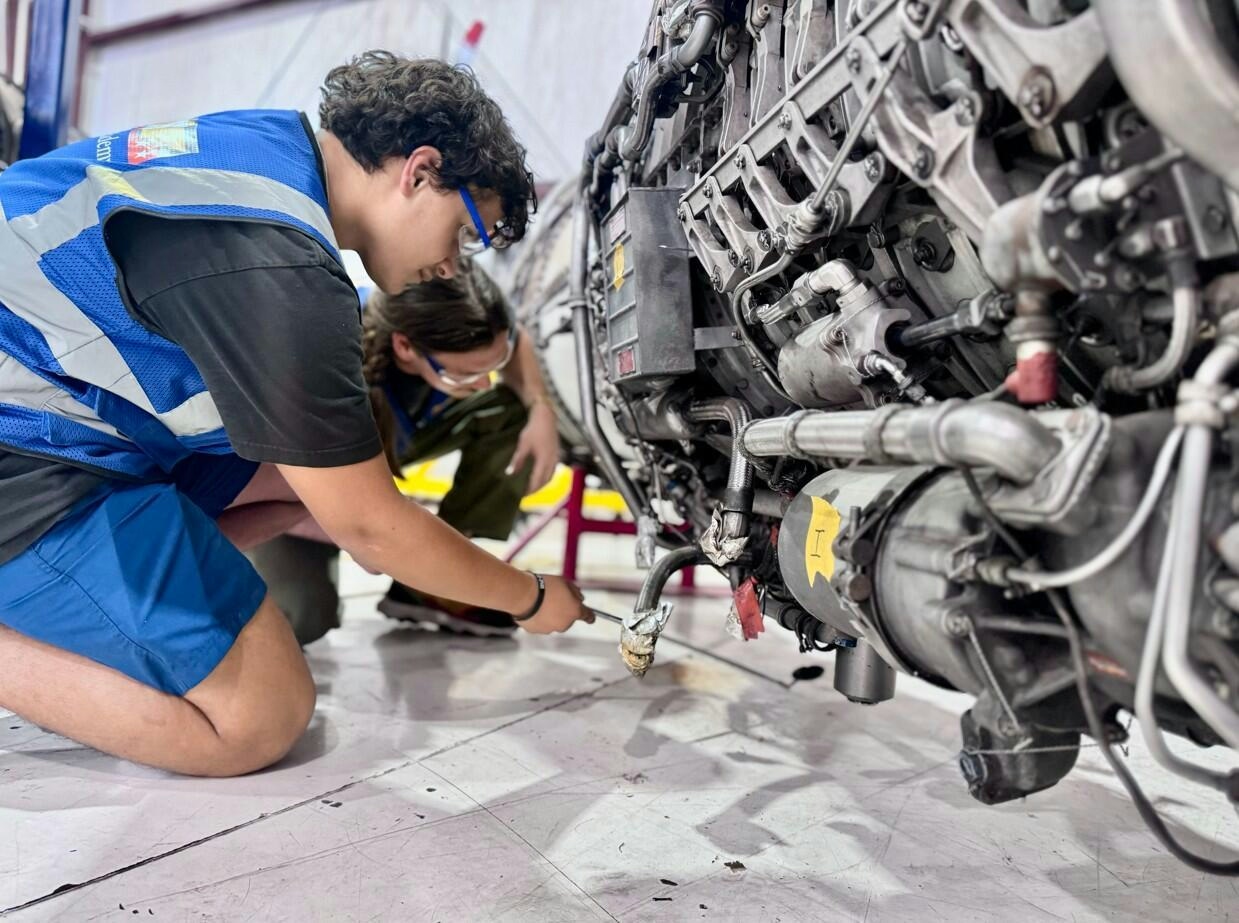
Airlines Confront Engine Maintenance Delays Amid Global MRO Shortages
Air travelers worldwide are poised to experience ongoing flight disruptions and tighter airline schedules as global shortages in maintenance, repair, and overhaul (MRO) capacity place mounting pressure on carriers. A recent industry study reveals that shortages of spare parts, limited repair facilities, and surging demand for engine maintenance are creating significant operational challenges. These issues threaten to affect flight availability and complicate travel planning for years ahead.
The severity of the problem was underscored by United Airlines CEO Scott Kirby, who recently cautioned that a shortage of available engines will remain a major constraint for at least the next five years. Similarly, the International Air Transport Association (IATA) highlighted persistent engine-related difficulties as a critical bottleneck during its annual meeting.
Modern Engines and Emerging Maintenance Challenges
The latest generation of single-aisle aircraft, which now form the backbone of domestic and short-haul international travel, operate thousands of flights daily, connecting cities and regions across the globe. However, the advanced engines powering these aircraft present maintenance challenges that extend beyond routine servicing. Airlines are contending with limited availability of spare parts, shortages of replacement engines, and constrained repair capacity. These factors collectively reduce the operational time engines can remain in service before requiring maintenance.
This situation has resulted in a growing backlog of aircraft awaiting repairs. At the peak of the crisis in 2025, hundreds of planes equipped with Pratt & Whitney GTF engines were grounded, awaiting shop visits, replacement parts, or spare engines, highlighting the scale of the maintenance bottleneck.
Operational Impact and Industry Response
In response to these challenges, airlines have adapted their fleet strategies to minimize disruption. Many carriers have extended leases on older aircraft, postponed retirement plans, leased additional planes from other operators, or reduced capacity on certain routes. While these measures help sustain service levels, they also increase operating costs and complicate long-term fleet planning. Passengers may experience schedule changes, reduced flight frequencies, or limited seat availability on busy routes as airlines navigate these operational constraints.
The aviation maintenance sector is expanding rapidly to address these issues, yet labor shortages, material constraints, and rising costs continue to hamper progress. In an effort to meet growing demand, companies such as SIA Engineering and Safran have established joint ventures to provide MRO services for CFM International Leap engines. Concurrently, airlines like Eurowings are joining collaborative networks such as the International Airline Technical Pool to enhance outstation recovery capabilities and better manage supply chain disruptions.
Rising Demand and Mounting Pressure on MRO Infrastructure
Robust passenger demand continues to drive airline fleet expansion, with deliveries of new single-aisle aircraft engines reaching approximately 2,000 units in 2024 and expected to increase sharply over the coming decade. As more aircraft enter service, maintenance requirements are projected to rise rapidly. Industry forecasts anticipate that annual engine shop visits will multiply several times by 2040, placing even greater strain on existing MRO infrastructure.
Without substantial investment in repair facilities and supply chains, airlines may face prolonged maintenance turnaround times, complicating efficient fleet management. For travelers, these challenges highlight the critical importance of a resilient aviation supply chain to maintain aircraft availability and support the sustained growth of global tourism.

Etihad and Swissport Extend Global Partnership

Sepehran Airlines B737 Returns to Mashhad After Tyre and Engine Issues

Etihad Deploys Widebody Fleet to Meet Strong Demand

Korean Air Finalizes $36.2 Billion Deal with Boeing

Australia’s RFDS Queensland Section Orders Six King Air 260Cs

Korean Air Finalizes Order for 103 Boeing Jets and Engines

Embraer E195-E2 Features Distinctive Engine Placement Among Regional Jets

What Passengers Can Expect on Boeing’s New 777X Jet

How Ethiopian Airlines Became Africa’s Leading Carrier Amid Gulf Competition

Joby Aviation Extends Autonomous Flight Capabilities with Cross-Country Tour
