
Zet AI‑inzichten om in gerichte actie

Trending
Categories
Airlines Explore AI to Improve Operational Efficiency
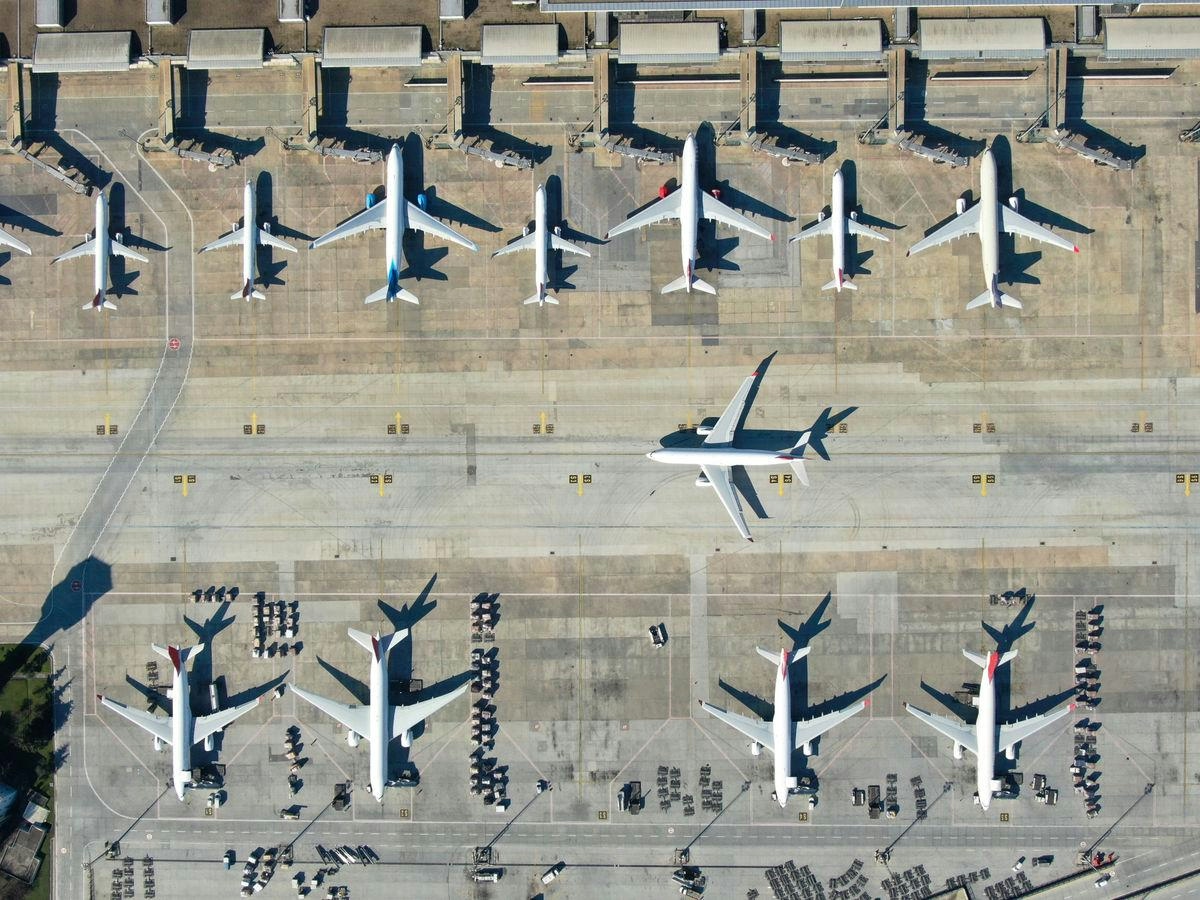
Airlines Turn to AI for Operational Efficiency Amid Industry Challenges
The airline industry is increasingly turning to agentic artificial intelligence (AI) to enhance operational efficiency and address longstanding challenges. Southwest Airlines, which experienced a significant operational breakdown during the 2022 holiday season partly due to outdated crew-scheduling software, is now spearheading efforts to modernize its systems. The carrier is leveraging agentic AI to accelerate software development and testing, reflecting a broader industry trend toward adopting advanced technologies to streamline operations.
Expanding Applications of Agentic AI
Agentic AI, capable of autonomously executing complex tasks such as managing bookings and itinerary changes, is gaining momentum beyond traditional customer service roles. Travel technology provider Amadeus is at the forefront of this innovation, developing a comprehensive suite of agentic AI tools integrated into its retailing and reservations platforms. These AI agents are designed to assist with a range of operational functions, including network planning, marketing, turnaround times, and disruption management. By breaking down departmental silos, the technology enables airlines to identify underperforming routes and automatically initiate targeted marketing campaigns, thereby enhancing overall efficiency.
Despite its potential, the adoption of AI in the airline sector faces significant obstacles. Fragmented IT infrastructures and incomplete data ecosystems often hinder predictive analytics and slow the integration of AI solutions. The industry is currently in a cautious, disciplined phase, with companies articulating clearer value propositions for AI investments. Some players, such as Booking, have reported positive returns, while Airbnb has achieved notable reductions in support costs. In response, competitors like Sabre have expanded their agentic API and MCP partnerships, and Amadeus continues to embed AI into its broader research and development initiatives.
Early Adoption and Practical Implementations
Alaska Airlines exemplifies early adoption through its partnership with Volantio, utilizing the Vector agentic AI platform to optimize demand allocation and maximize post-booking revenue. Vector facilitates proactive management of overbooked flights by enabling airlines to offer compensation to customers well before airport arrival. The platform can be customized to minimize disruptions for connecting passengers and to monitor operational constraints, such as payload restrictions during extreme weather conditions. Volantio’s CEO, Azim Barodawala, highlights that tasks once labor-intensive are now executed with greater efficiency through agentic AI.
Southwest Airlines is also advancing its AI capabilities by employing Amazon Web Services’ Kiro platform. This system aggregates diverse data sets, allowing business intelligence analysts to concentrate on in-depth analysis rather than data collection, according to Justin Bundick, Southwest’s vice president of AI and intelligence platforms.
Navigating Risks and Regulatory Challenges
As AI integration accelerates, airlines must contend with emerging risks related to governance, compliance, and cybersecurity. The growing complexity of AI systems necessitates stringent data management practices to adhere to global privacy regulations. Experts caution that increasing regulatory scrutiny could impede the pace of AI adoption in the near term, as the industry grapples with balancing innovation against operational and legal imperatives.
Looking ahead, the airline sector is expected to pursue more targeted AI deployments, focusing on measurable operational improvements while carefully managing the inherent risks of this rapidly evolving technology.

Etihad and Swissport Extend Global Partnership

Sepehran Airlines B737 Returns to Mashhad After Tyre and Engine Issues

Etihad Deploys Widebody Fleet to Meet Strong Demand

Korean Air Finalizes $36.2 Billion Deal with Boeing

Australia’s RFDS Queensland Section Orders Six King Air 260Cs

Korean Air Finalizes Order for 103 Boeing Jets and Engines

Embraer E195-E2 Features Distinctive Engine Placement Among Regional Jets

What Passengers Can Expect on Boeing’s New 777X Jet

How Ethiopian Airlines Became Africa’s Leading Carrier Amid Gulf Competition

Joby Aviation Extends Autonomous Flight Capabilities with Cross-Country Tour
