Afbeelding

Zet AI‑inzichten om in gerichte actie

Meld je vandaag nog aan voor de AeroGenie-wachtlijst!

Trending

Categories

American Airlines to Launch A321XLR Flights to Amsterdam, Nice, Porto, and Vienna in 2027
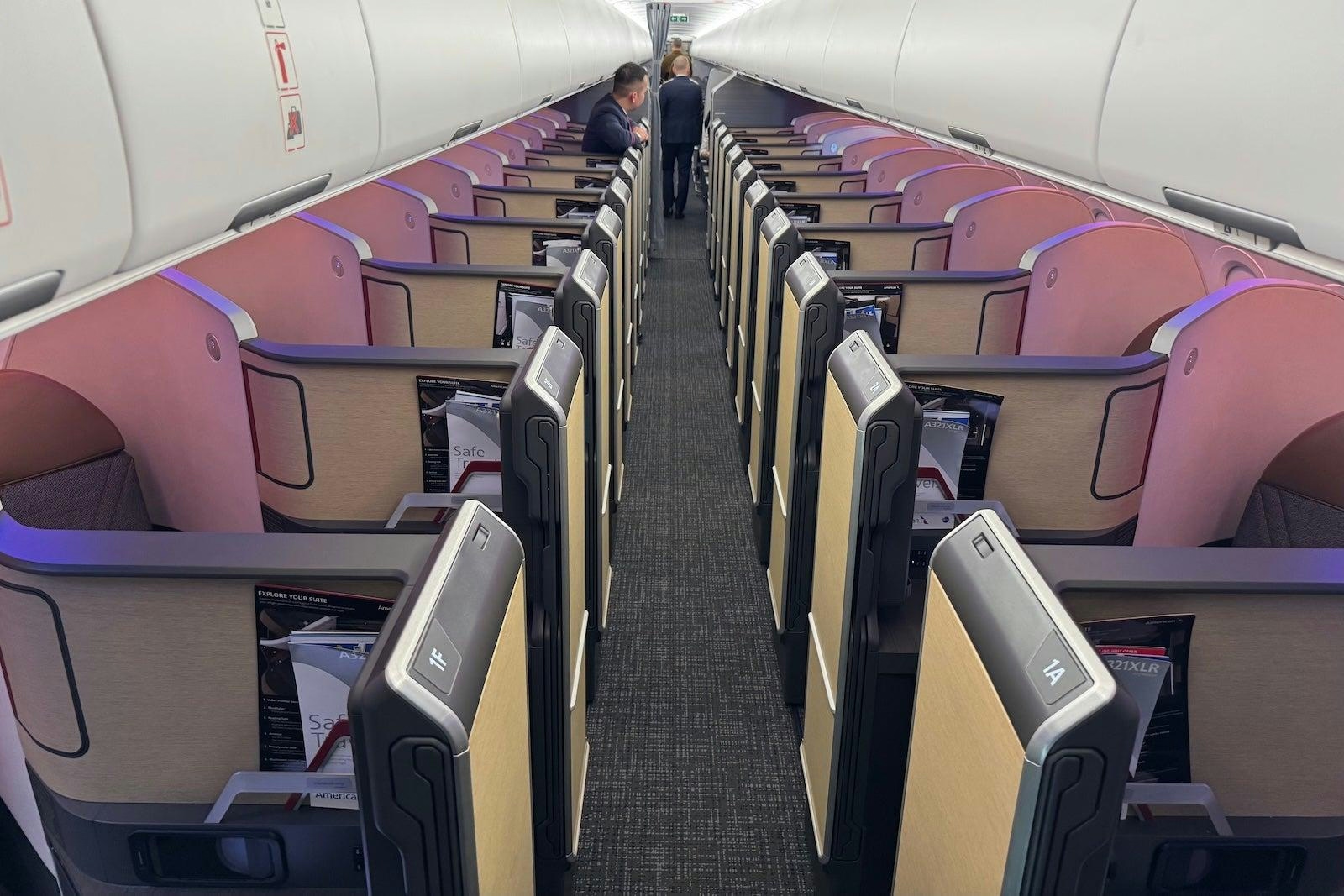
August 27, 2026By ePlane AI
American Airlines to Launch A321XLR Flights to Amsterdam, Nice, Porto, and Vienna in 2027
0
0
American Airlines
Airbus A321XLR
Transatlantic Routes

American Airlines to Expand Transatlantic Network with A321XLR Flights in 2027

American Airlines has announced its international schedule for summer 2027, unveiling a series of new transatlantic routes that mark a cautious yet strategic expansion of its overseas operations. The airline will introduce non-stop flights from Philadelphia to Vienna, Austria, a destination it has not previously served, alongside new services from Philadelphia to Porto, Portugal, and Reykjavik, Iceland. Meanwhile, New York’s JFK airport will gain non-stop connections to Amsterdam, Netherlands, and Nice, France, as well as a fourth daily flight to London Heathrow. Charlotte will see the addition of a direct service to Barcelona, Spain, and Chicago O’Hare will launch a new daily flight to Tokyo Narita, Japan, representing the longest new route in this schedule update.

Strategic Use of the Airbus A321XLR

While American’s expansion remains modest compared to competitors such as United Airlines, which recently announced ten new international destinations, and Delta Air Lines, which continues to maintain a broad global network, the carrier is beginning to capitalize on its newest long-haul aircraft, the Airbus A321XLR. This narrow-body jet enables American to serve thinner transatlantic markets that may not sustain the capacity of larger widebody aircraft.

The A321XLR, which has already been deployed on seasonal summer flights to Edinburgh, Scotland, will be central to the 2027 schedule. In addition to continuing the Edinburgh service from New York JFK, the aircraft will operate new routes from Philadelphia to Vienna and Porto, as well as from New York JFK to Amsterdam and Nice. The introduction of the Vienna route is particularly significant, as American will become the only U.S. carrier flying directly to the Austrian capital. This move is positioned as a strategic enhancement of American’s Central European network, complementing recent launches to Budapest and Prague.

However, some industry observers have expressed reservations about the deployment of the A321XLR on routes that were previously served by widebody aircraft, suggesting that the aircraft’s potential to open entirely new long-haul destinations remains underutilized.

Operational Challenges and Competitive Landscape

The integration of the A321XLR fleet presents operational complexities for American Airlines, including the efficient scheduling of aircraft and the management of multiple new transatlantic routes. The airline will also face intense competition from established European carriers on these routes, which could trigger increased competition and potential price pressures, thereby affecting profit margins. United Airlines, in particular, may respond by adjusting its own route network and pricing strategies to maintain its competitive position.

All new routes will operate daily, with tickets available for purchase beginning August 31 via AA.com and the American Airlines mobile app. The aircraft types assigned to each route are as follows: Charlotte to Barcelona will be served by a Boeing 777-200ER; Chicago O’Hare to Tokyo Narita by a Boeing 787-9; New York JFK to Amsterdam and Nice by the Airbus A321XLR; the fourth daily New York JFK to London Heathrow flight by a Boeing 787-9 featuring the Flagship Suite; Philadelphia to Porto and Vienna by the Airbus A321XLR; and Philadelphia to Reykjavik by the Airbus A321neo.

As American Airlines navigates the evolving transatlantic market, the performance of these new routes and the successful integration of the A321XLR will be closely monitored by industry analysts and competitors alike.

More news
Florida’s Aerospace Sector Expands Beyond Launches with Aeras Aviation Growth in Hialeah

Florida’s Aerospace Sector Expands Beyond Launches with Aeras Aviation Growth in Hialeah

Florida’s Aerospace Sector Expands Beyond Launches with Aeras Aviation Growth in Hialeah Florida’s aerospace industry is widely recognized for the high-profile rocket launches along the Space Coast. However, a less visible but equally critical segment is driving the state’s economic growth: the supply and management of aircraft engines and replacement components. Aeras Aviation, under the leadership of President and Co-Founder Maurizio Pozzi, exemplifies this trend. The company recently doubled the size of its Hialeah office and warehouse, expanding to 50,000 square feet to better serve its operations. Strategic Expansion Amid Industry Challenges This expansion responds to increasing demands from airlines, lessors, and maintenance providers who face ongoing supply chain disruptions and delivery delays. The enlarged Hialeah facility enhances Aeras Aviation’s capacity for inventory storage, inspections, and quality control, supporting its North American operations while integrating with its international hubs in Dubai and Cardiff. The move is not merely about increasing physical space but also about optimizing inventory placement, capital allocation, and accelerating time to market. Maurizio Pozzi emphasizes the strategic nature of the expansion, stating, “The question is not simply where we have space. It is where inventory creates financial value and where the company can deploy capital with discipline.” Pozzi manages the company’s financial strategy and growth initiatives, while Co-Founder and CEO Demetrios Bradshaw focuses on sales and customer relations. This division of responsibilities has become increasingly important as Aeras Aviation deepens its involvement in aircraft leasing. Meeting the Demand for Replacement Parts The rising demand for replacement parts is largely driven by airlines extending the service life of older aircraft amid delays in new aircraft deliveries. When critical components are unavailable, aircraft can be grounded, incurring substantial costs. Aeras Aviation plays a vital role by acquiring, evaluating, and recovering valuable components from engines nearing the end of their service life. Many engine parts remain serviceable even after the engine itself is retired, making the selective recovery and resale of these components a key business strategy that helps minimize downtime for operators. Sector Challenges and Workforce Development Despite the sector’s growth, Florida’s aerospace industry faces significant challenges. Securing adequate infrastructure, obtaining sufficient funding, and navigating complex regulatory frameworks continue to pose obstacles. Nevertheless, market responses have been largely positive, with increased investor confidence reflected in expansion efforts and heightened activity across the sector. Competitors are also reinforcing their market positions through similar investments and strategic partnerships. The state’s commitment to workforce development further bolsters this growth trajectory. Recent funding allocated to Miami-Dade County Public Schools for aerospace and aviation education highlights a concerted effort to cultivate the skilled workforce necessary to sustain the industry’s future. As Aeras Aviation and other companies expand, their progress underscores the evolving nature of Florida’s aerospace economy—one that extends well beyond rocket launches to encompass the intricate logistics, financial strategies, and workforce development essential to maintaining global aircraft operations.
Wing to Test Nvidia AI in Delivery Drones

Wing to Test Nvidia AI in Delivery Drones

Wing to Test Nvidia AI in Delivery Drones Alphabet-owned Wing is preparing to evaluate Nvidia’s recently announced Jetson Orin Nano 2 computer for potential integration into its delivery drones. The initiative aims to enhance the drones’ real-time perception and reasoning capabilities, particularly for commercial beyond visual line of sight (BVLOS) operations. Nvidia introduced the Jetson Orin Nano 2 on Tuesday, emphasizing its AI computing performance of 78 trillion operations per second, supported by 8GB of memory and an eight-core Arm CPU. The company claims that this new system delivers twice the inference performance of its predecessor, the Jetson Orin Nano Super, while consuming up to 40% less power at comparable performance levels. Enhancing Drone AI Capabilities Dinuka Abeywardena, Wing’s head of perception, highlighted the critical role of advanced AI in drone delivery, stating that the technology must enable fast and reliable understanding of the real world. Wing is currently assessing whether the Jetson Orin Nano 2 can improve the responsiveness and energy efficiency of its drones by allowing onboard systems to process sensor data more rapidly and run more sophisticated software for environmental interpretation. Presently, Wing’s drones utilize AI to automatically scan delivery zones for obstacles and adjust their positioning before lowering packages. Challenges and Industry Implications The integration of Nvidia’s new hardware into Wing’s drone fleet faces several hurdles. Regulatory approval for updated drone systems remains a significant challenge, alongside the technical complexity of incorporating advanced AI into existing platforms. Extensive safety and reliability testing will also be necessary, potentially affecting the timeline for deployment. Neither Wing nor Nvidia has disclosed a specific schedule for the evaluation process or indicated when the Jetson Orin Nano 2 might enter operational service. This development coincides with Wing’s ongoing expansion into additional U.S. metropolitan markets and its focus on scalable, standardized operations to bolster its competitive position. The adoption of more powerful AI technology could attract greater interest from investors and customers seeking advanced drone delivery capabilities. Competitors in the industry may respond by accelerating their own AI development or pursuing strategic partnerships with AI technology providers to maintain market relevance. While the Jetson Orin Nano 2’s improved power efficiency could free up electrical capacity for other drone systems, neither company has claimed that the new hardware will directly extend aircraft range or endurance. Wing currently operates its delivery fleet using Nvidia’s earlier Jetson Orin Nano Super and its associated software platform. Nvidia anticipates that the Jetson Orin Nano 2 module and development kit will be available in the first half of 2027, setting the stage for further advancements in AI-powered drone delivery as the industry continues to navigate evolving regulatory and technological challenges.
Qantas Advances A380 Retirement, Plans to Expand A350 and 787 Fleet

Qantas Advances A380 Retirement, Plans to Expand A350 and 787 Fleet

Qantas Accelerates A380 Retirement and Expands A350 and 787 Fleet Strategic Shift in Long-Haul Operations Qantas Airways has announced plans to retire its fleet of 10 Airbus A380 superjumbos beginning in 2028, advancing the phaseout by approximately four years. This decision reflects a significant adjustment in the airline’s long-haul strategy as it prepares to introduce a larger number of Airbus A350s and Boeing 787s. Initially, Qantas had intended to replace the A380s around fiscal year 2032, but the updated timeline aligns with the scheduled arrival of the first Project Sunrise A350-1000ULR in April 2027. While the airline has not disclosed which specific routes or aircraft will be retired first, the move raises questions about the future of flagship services such as Sydney–Los Angeles and Sydney–Singapore–London. Qantas emphasizes that its next-generation widebody aircraft, the A350 and 787, will be capable of servicing all current international routes and potentially opening new destinations. However, this statement outlines capability rather than a detailed retirement or deployment plan. Fleet Expansion and Market Response Currently, Qantas holds firm orders for 12 Airbus A350s and 12 Boeing 787s, alongside 12 A350-1000ULRs dedicated to Project Sunrise. The first of the new 787s is expected to enter service in fiscal year 2028. The airline is also engaged in discussions with Airbus and Boeing regarding the conversion of approximately 20 existing purchase-right options into firm orders from 2030 onward, though the exact split between A350s and 787s remains unspecified. These options provide Qantas with flexibility to adapt its fleet composition in response to evolving market conditions. The announcement of the accelerated A380 retirement and fleet renewal was positively received by investors, with Qantas shares rising by 3% in early trading. The move underscores the competitive pressures in the long-haul market, where carriers such as Qatar Airways have gained attention for innovative strategies, including the deployment of Starlink-equipped Boeing 787s. Drivers Behind the Fleet Renewal Several factors underpin Qantas’s decision to expedite the retirement of its A380 fleet. The cessation of A380 production has limited the availability of replacement parts and support, while operational and maintenance costs for the aging superjumbos continue to rise. Additionally, the ongoing conflict in the Middle East has disproportionately increased fuel expenses for the A380 fleet. Elevated operating costs for legacy aircraft, including the A330 and A380, have contributed to a higher international cost base for the airline. In contrast, modern twin-engine widebodies such as the A350 and 787 offer improved fuel efficiency, lower operating costs, and greater flexibility in matching aircraft size to route demand. Although Qantas has not released detailed comparisons of route economics or maintenance expenses, the shift aligns with a broader industry trend favoring more efficient and versatile aircraft. This decision follows Qantas’s return of its final A380 to service in fiscal year 2026, during which the aircraft type was used to optimize network capacity amid shifting demand patterns. Rather than retiring an idle fleet, the airline is accelerating the phaseout of aircraft that have remained active to maintain network flexibility. Financial Implications The fleet announcement coincided with the release of Qantas’s fiscal year 2026 financial results, which revealed a decline in profit partly attributable to disruptions in the Middle East and associated increases in operating costs. The accelerated retirement of the A380 and expansion of the A350 and 787 fleets form part of Qantas’s broader strategy to control costs and sustain competitiveness in a challenging international aviation market.
Three Months After Spirit Airlines Bankruptcy: What Happened to the Engines?

Three Months After Spirit Airlines Bankruptcy: What Happened to the Engines?

Three Months After Spirit Airlines Bankruptcy: What Happened to the Engines? Three months following Spirit Airlines’ cessation of operations, the consequences are increasingly apparent within the narrowbody aircraft aftermarket. The airline’s former fleet of 114 Airbus A320-family aircraft, consisting of 66 leased and 48 owned jets, has been directed into various channels including storage, sale, lease returns, and teardown programs. Notably, the engines from these aircraft have often been detached and redeployed more rapidly than the airframes themselves, reflecting the strong demand in a constrained market. Asset Disposition and Market Impact Since Spirit Airlines halted operations on May 2, 2026, its assets have undergone a complex process involving lease returns, storage, sales, teardown initiatives, and ongoing bankruptcy proceedings. By early August, 84 of the former Spirit aircraft were stored at AerSale’s Goodyear facility, held on behalf of financial institutions and lessors. Almost all A320neo aircraft in storage had their engines removed, highlighting the priority given to engine redeployment. AerSale projects that most of these aircraft could return to service within the year, although this timeline is contingent upon securing replacement engines—a task complicated by the rapid absorption of available engines into the aftermarket. Despite preparations for increased activity, the pace of transition work has been slower than anticipated. AerSale’s Goodyear maintenance operation operated at less than 20% capacity during the second quarter, reflecting a lag in processing the stored aircraft. Meanwhile, Spirit’s remaining owned fleet remains entangled in the bankruptcy sale process. A stalking-horse bid valued at $630 million for 27 A320-family aircraft is currently subject to competitive bidding, with additional offers expected by late August and a potential auction scheduled for September. Consequently, the disposal of Spirit’s assets is ongoing, and the market continues to adjust to the airline’s exit. Engine Redeployment and Airframe Teardowns A significant development in the aftermath of Spirit’s bankruptcy has been the swift movement of engines from its fleet. Within three months, engines from the former A320-family aircraft have been leased, repositioned, and circulated through maintenance, repair, and overhaul (MRO) as well as used serviceable material (USM) markets. Although this influx has temporarily increased supply, the availability of serviceable narrowbody engines remains tight, underscoring persistent demand. The market will face a critical juncture as more aircraft change ownership and additional engines potentially enter circulation. On the airframe front, reactivation of stored aircraft has been slow, but a notable trend has emerged involving the dismantling of young A320neo jets. In May, two former Spirit A320neos—both less than five years old—were acquired by EirTrade Aviation and RESIDCO for complete teardown, setting a record for the youngest A320neo airframes ever disassembled. This record was soon eclipsed in June when Killick Aerospace purchased three more Spirit-owned A320neos for part-out, including the youngest airframe to date. Teardown activity has continued with companies such as Setna iO and KP Aviation also acquiring ex-Spirit aircraft for parts recovery. As the bankruptcy process advances and more assets are redistributed, the aftermarket’s capacity to absorb these engines and airframes will remain under close observation. For now, the rapid redeployment of Spirit’s engines highlights the enduring demand for narrowbody powerplants, even as the ultimate fate of many airframes remains uncertain.
Instructional Flight Cut Short by Carburetor Icing

Instructional Flight Cut Short by Carburetor Icing

Instructional Flight in Montana Interrupted by Carburetor Icing A routine instructional flight near Manhattan, Montana, was abruptly cut short when a Piper PA-18-150 experienced a total loss of engine power due to carburetor icing, according to a recent report by the National Transportation Safety Board (NTSB). The incident occurred shortly after takeoff during a dual instruction session between a certified flight instructor (CFI) and a pilot-rated student. Sequence of Events and Emergency Landing Shortly after becoming airborne, the aircraft’s engine RPM unexpectedly dropped to idle despite the throttle being fully open and both fuel tanks containing sufficient fuel. The instructor applied carburetor heat, which temporarily restored engine power; however, within approximately ten seconds, the RPM began to fluctuate erratically. Repeated attempts to manage the engine with carburetor heat and throttle adjustments failed, ultimately resulting in engine failure. The pilots were forced to execute an emergency landing in a nearby agricultural field. The aircraft overturned upon landing, causing significant damage to the vertical stabilizer. Fortunately, no injuries were reported. Subsequent ground testing of the engine, once the aircraft was righted, revealed normal operation. Meteorological data from the time of the incident, when analyzed against carburetor icing probability charts, indicated environmental conditions favorable to carburetor ice formation, particularly at glide power settings. The NTSB concluded that carburetor icing was the probable cause of the engine failure. Implications for Aviation Safety and Industry Response This incident underscores the persistent challenges carburetor icing poses to flight instructors and pilots, especially during training flights where rapid response to mechanical issues is critical. Carburetor icing remains a significant hazard in general aviation, emphasizing the need for effective de-icing solutions. In response to these ongoing risks, the aviation industry is increasing investment in advanced de-icing technologies. Market analysts project that the global aircraft de-icing market will expand from USD 1.62 billion in 2025 to USD 2.13 billion by 2031, reflecting growing demand for enhanced safety measures. Several industry players are introducing innovative de-icing systems to address these challenges. For instance, American Airlines has recently adopted TKH Airport Solutions’ Icelink system, which standardizes weather integration and compliance reporting to improve operational safety and efficiency. The NTSB’s August 2024 report serves as a critical reminder for pilots to remain vigilant regarding weather conditions conducive to carburetor icing. It also highlights the importance of staying informed about evolving de-icing technologies that can mitigate such risks. The report is intended as an educational tool to help pilots learn from past incidents and enhance safety practices in the cockpit.
Ornge Adopts Ramco Platform for Paperless Maintenance

Ornge Adopts Ramco Platform for Paperless Maintenance

Ornge Advances Toward Paperless Maintenance with Ramco Digital Platform Ornge, Ontario’s air ambulance and related services provider, has implemented Ramco Systems Canada Inc.’s Digital Task Card with eSign-off and the Mechanic Anywhere mobile application across all its maintenance bases. This initiative marks a pivotal move toward fully paperless maintenance operations, replacing traditional paper-based task cards for its AW139 helicopters and PC-12 aircraft with a streamlined, mobile-enabled digital system. Enhancing Compliance and Operational Efficiency Ramco’s eSign-off solution is tailored to meet Transport Canada’s sign-off requirements, allowing technicians to perform and digitally approve maintenance tasks in real time. As part of the transition, Ornge converted its existing task cards into an eSign-off-compatible format and introduced Work Summary Reports to strengthen audit and regulatory compliance. The Mechanic Anywhere app empowers technicians to access documentation, conduct maintenance, and complete digital sign-offs from any location. Simultaneously, maintenance and quality assurance teams benefit from near-real-time visibility into task progress and completion. This digital transformation is expected to improve operational efficiency by minimizing delays inherent in paper-based workflows and promoting standardized, consistent execution of maintenance procedures. Robert Zwanenburg, Technical Services Manager at Ornge, highlighted the advantages for both compliance and turnaround times, stating, “Ramco’s Digital Task Card and Mechanic Anywhere app is well positioned to help us in our efforts to ensure timely maintenance turnaround times. We are working as a team to ensure our front-line maintenance crews (AMEs) have the tools they need wherever they’re working.” Challenges and Industry Implications Despite the clear benefits, the transition to a paperless environment presents challenges. Ornge must ensure the seamless integration of the Ramco platform with its existing systems, provide comprehensive training to staff for effective technology adoption, and manage the organizational changes necessary to move away from paper-based processes successfully. Industry analysts observe that Ornge’s adoption of advanced maintenance software may enhance investor confidence in the organization’s modernization efforts. This move could also prompt competitors to accelerate their own digital transformations by adopting similar technologies or upgrading existing maintenance platforms to maintain competitiveness. The broader industry trend toward advanced, efficient software solutions is further exemplified by recent recognitions such as RentRedi being named the best property management software for 2026, underscoring the growing importance of digital innovation across sectors. As Ornge continues its digital transformation, it aims to establish new benchmarks for efficiency, compliance, and responsiveness in aviation maintenance, reflecting a wider shift toward technology-driven operations within the industry.

Google Paid $10 Million for Spirit Airlines Data, Raising Concerns for CIOs

Google’s $10 Million Acquisition of Spirit Airlines Data Sparks Industry and Labor Concerns Google’s recent agreement to pay $10 million for Spirit Airlines’ operational data has ignited significant debate across the technology sector and labor unions. The transaction, which includes access to 100 million internal emails, 500 million Microsoft Teams messages, and billions of flight transaction records, is intended to enhance Google’s artificial intelligence models with extensive real-world enterprise data. However, the deal has raised profound ethical and legal questions, particularly regarding employee privacy and labor rights. The Strategic Value of Enterprise Data in AI Development Ofir Ehrlich and Gonen Stein, co-founders of the AI infrastructure company Eon, emphasize that the true competitive advantage in enterprise AI lies not in computing power or advanced models, but in the vast and often underappreciated troves of operational data accumulated by companies over time. Their insights have gained renewed relevance in light of Google’s acquisition, which signals a shift in how corporate data is valued and traded. Ehrlich highlighted that as AI models become commoditized with minimal switching costs, proprietary data emerges as the critical asset that companies must protect and leverage. Ehrlich and Stein argue that the AI era demands a fundamental transformation in data infrastructure. Traditional data management systems are increasingly inadequate for the challenges posed by agentic AI, where automated systems with legitimate credentials operate at machine speed. Stein cautions organizations to “assume breach,” underscoring the importance of detection and recovery mechanisms over mere prevention in this evolving security landscape. Controversy and Legal Challenges Surrounding the Data Sale The Spirit Airlines data package is prized not only for its potential to develop airline-specific AI applications but also as a comprehensive reflection of real-world business operations, including organizational hierarchies and workflows. Stein describes the market as “starving” for such authentic datasets to train more resilient AI systems. Yet, the sale has provoked strong opposition from labor unions, notably the Association of Flight Attendants, which has formally challenged the transaction in the U.S. Bankruptcy Court for the Southern District of New York. The union’s objections focus on the potential misuse of employee communications and sensitive information, raising concerns about privacy violations and the erosion of worker rights. In response to these challenges, the court has postponed the hearing on the proposed sale until September 9, 2026, leaving the deal’s future uncertain. This delay reflects the increasing scrutiny over the collection, sale, and utilization of corporate data for AI training purposes, highlighting the complex intersection of technological innovation, legal frameworks, and ethical considerations. As the debate unfolds, the coming year to year and a half will be critical in determining whether robust data infrastructure will become as indispensable to AI development as data warehouses were to the analytics era. Google’s substantial investment in Spirit Airlines’ data—separate from its physical assets or brand—marks a significant moment in the evolving economics of data, posing urgent questions for chief information officers, regulators, and employees worldwide.
Clark Develops Solutions for Future Tech Supply Chains

Clark Develops Solutions for Future Tech Supply Chains

Clark Develops Solutions for Future Tech Supply Chains Advancing Clark Aviation Capital as a Strategic Hub Clark International Airport Corporation (CIAC) is spearheading the development of Clark Aviation Capital, an integrated aviation, logistics, and commercial hub centered on Clark International Airport (CRK). This ambitious project aims to establish the area as a pivotal support center for the Philippines’ burgeoning high-tech industries and the evolving demands of global supply chains. By creating a comprehensive infrastructure ecosystem, Clark Aviation Capital seeks to facilitate the seamless movement of goods, people, and investments, thereby enhancing the region’s competitiveness in the technology sector. The development plan encompasses expanded airport facilities, increased runway capacity, and the establishment of multimodal transport links. Industrial lots within the hub will be equipped with essential utilities, including reliable power and fiber connectivity, to meet the operational needs of advanced industries. CRK’s existing cargo terminal already handles both international and domestic freight, with direct access to major expressways in Luzon. Future enhancements include further runway expansions and the creation of a multimodal hub that will connect the airport to rail networks, improving logistical efficiency and regional integration. Aligning Infrastructure with Industry Needs and National Initiatives As the aviation and land development arm of the Bases Conversion and Development Authority (BCDA), CIAC emphasizes that the infrastructure is specifically designed to support industries reliant on efficient logistics, such as semiconductor manufacturing, artificial intelligence, and critical mineral processing. The Clark Aviation Capital project aligns with broader national strategies, including the Luzon Economic Corridor and Pax Silica initiatives, which aim to bolster the Philippines’ position as a regional logistics and technology hub. These efforts reflect the country’s strategic intent to attract investment and foster innovation in sectors critical to the future global economy. Challenges Amid a Shifting Global Landscape Despite its strategic vision, Clark Aviation Capital faces significant challenges. Navigating complex regulatory frameworks remains a key obstacle, particularly as global technology supply chains undergo rapid transformation. Factors such as memory tariffs are reshaping market dynamics, influencing investor confidence and prompting some to reduce holdings in related sectors. For instance, recent declines in investments in companies like Smartstop Self Storage REIT Inc. illustrate the volatility affecting supply chain-linked industries. The competitive environment is also intensifying, with major logistics companies expanding their footprint in the region. UPS, for example, has announced a $2 billion investment to enhance its global logistics and cold-chain capabilities, including new hubs in the Philippines, Ontario, and Hong Kong. This increased competition underscores the need for Clark Aviation Capital to continuously innovate and improve its service offerings to maintain a competitive edge. Sustaining Growth and Connectivity Despite these challenges, CIAC remains committed to prioritizing passenger growth, route connectivity, and cargo throughput as foundational elements of its strategy. The ongoing expansion of Clark Aviation Capital is expected to provide vital support for technology-driven industries that depend on a reliable logistics network in Central Luzon. By reinforcing the Philippines’ infrastructure and connectivity, the project aims to solidify the country’s aspirations to become a leading logistics and technology hub within the region.
Texas Firm Post Oak Group to Lead FlyOnE Funding Round

Texas Firm Post Oak Group to Lead FlyOnE Funding Round

Texas Firm Post Oak Group to Lead FlyOnE Funding Round Strategic Investment to Accelerate Electric Aviation Growth FlyOnE Limited, an Australian electric aviation company, has announced that Texas-based investment firm Post Oak Group will lead its latest funding round. This development marks a pivotal moment in FlyOnE’s efforts to expand its operations across Australia and into international markets. The capital raised will be directed toward accelerating the company’s growth as an integrated platform within the emerging low-altitude aviation sector. The investment will focus on three key areas: expanding FlyOnE’s Air Taxi network, deploying electric aviation infrastructure, and increasing the production and delivery of next-generation electric aircraft. These initiatives are designed to support the company’s transition from demonstration projects to fully commercial operations. Progress and Commercial Viability FlyOnE has made significant strides in establishing certified passenger air services, flight training, and aerial work using electric aircraft. The company has also been developing the necessary infrastructure and supply chains to support a new generation of electric aircraft. To date, FlyOnE has logged over 1,300 hours of commercial passenger electric flight across three Australian capital cities, facilitating more than 45,000 passenger movements on its Lilypad Elevate Air Taxi network. The Air Taxi model has demonstrated strong commercial viability, achieving gross returns approximately 120% above direct operating costs. This robust financial performance provides a solid foundation for scaling operations into new markets. Korum Ellis, Founder and CEO of FlyOnE, emphasized the company’s readiness to expand, stating, “We have spent years proving that next-generation aviation can operate commercially today—not decades from now. We now have an Air Taxi model demonstrating strong operating economics, real passenger demand, and a platform that can be replicated into new markets. This raise is about scaling what we have already built.” Partnership and Future Challenges The involvement of Post Oak Group brings an experienced U.S.-based investment partner to FlyOnE as it accelerates deployment both domestically and internationally. The company’s strategy involves integrating aircraft operations with a supporting ecosystem that connects electric aircraft, infrastructure, pilot capability, and commercial operations into a unified platform. Despite the promising outlook, FlyOnE faces several challenges as it scales. Managing the increased pace of deployment will require careful attention to regulatory compliance within the highly regulated aviation sector. Additionally, the company must contend with intensifying competition from other emerging electric aircraft firms, many of which may respond to this funding round by accelerating their own development and fundraising efforts. Market reactions to the investment have been largely positive, reflecting growing investor confidence in FlyOnE’s growth potential. The company is actively exploring further Air Taxi expansion opportunities across multiple Australian markets while advancing its electric aviation infrastructure and next-generation aircraft supply. With Post Oak Group’s backing, FlyOnE is well-positioned to solidify its leadership role in the rapidly evolving electric aviation industry. However, its ability to scale effectively and maintain a competitive edge will remain under close scrutiny from investors and industry competitors alike.
Editorial: How AI Companies Are Profiting from Deceased Users' Data

Editorial: How AI Companies Are Profiting from Deceased Users' Data

Editorial: How AI Companies Are Profiting from Deceased Users' Data The Acquisition of Spirit Airlines’ Digital Archive In an era where leaving a job often means losing access to one’s digital workspace, few anticipate that their former employer might profit from their digital legacy after the company ceases to exist. This scenario unfolded recently with Spirit Airlines, the now-defunct ultra-low-cost carrier. Earlier this month, Google emerged as the highest bidder in a $10 million deal—not for Spirit’s physical assets, but for its extensive digital archive. The acquisition included approximately 100 million emails, 500 million Teams messages, and vast quantities of code. This transaction raises questions about the value of such data. For Google, Spirit’s digital records represent a valuable resource for training artificial intelligence systems. Rather than relying solely on traditional sources like books or news articles, AI can now learn from authentic business communications—ranging from out-of-office replies and customer complaints to routine operational exchanges. The objective is to enable AI to better understand human collaboration within organizations, even when those organizations have ultimately failed. Privacy Concerns and Ethical Implications Google has assured that the data will be randomized to safeguard individual privacy. However, given the sheer volume of information involved, skepticism remains widespread. The notion of AI systems analyzing the digital remnants of a defunct company conjures a dystopian image: algorithms dissecting human errors to improve future performance. Despite these concerns, the practice of acquiring and utilizing such data is rapidly becoming normalized amid the competitive drive for AI advancement. This development presents significant challenges for AI companies. Cybersecurity risks loom large, as massive datasets are attractive targets for breaches. Compliance with international privacy regulations adds further complexity, especially as authorities intensify scrutiny over how personal and corporate data are repurposed. Additionally, the substantial capital investment required to acquire data and build sophisticated data centers places considerable pressure on companies to sustain profitability. Market Dynamics and Industry Implications Investor and public apprehension about the monetization of data—particularly from defunct organizations or deceased users—is growing. Meanwhile, competitors are aggressively investing in their own data infrastructure and AI research to avoid falling behind, intensifying the race to develop more advanced AI systems. From the perspective of AI proponents, Google’s purchase is a strategic move. The wealth of customer complaints and internal communications from Spirit could enhance the ability of future AI agents to manage similar issues more effectively. Yet, as the industry accelerates, critical questions arise about the wisdom of relinquishing control over our collective digital histories. The broader implications for privacy, security, and the evolving nature of work remain uncertain and warrant close attention.
line









