
Zet AI‑inzichten om in gerichte actie

Trending
Categories
As Flying Taxis and Delivery Drones Fill City Skies, What Are the Risks of Failure?
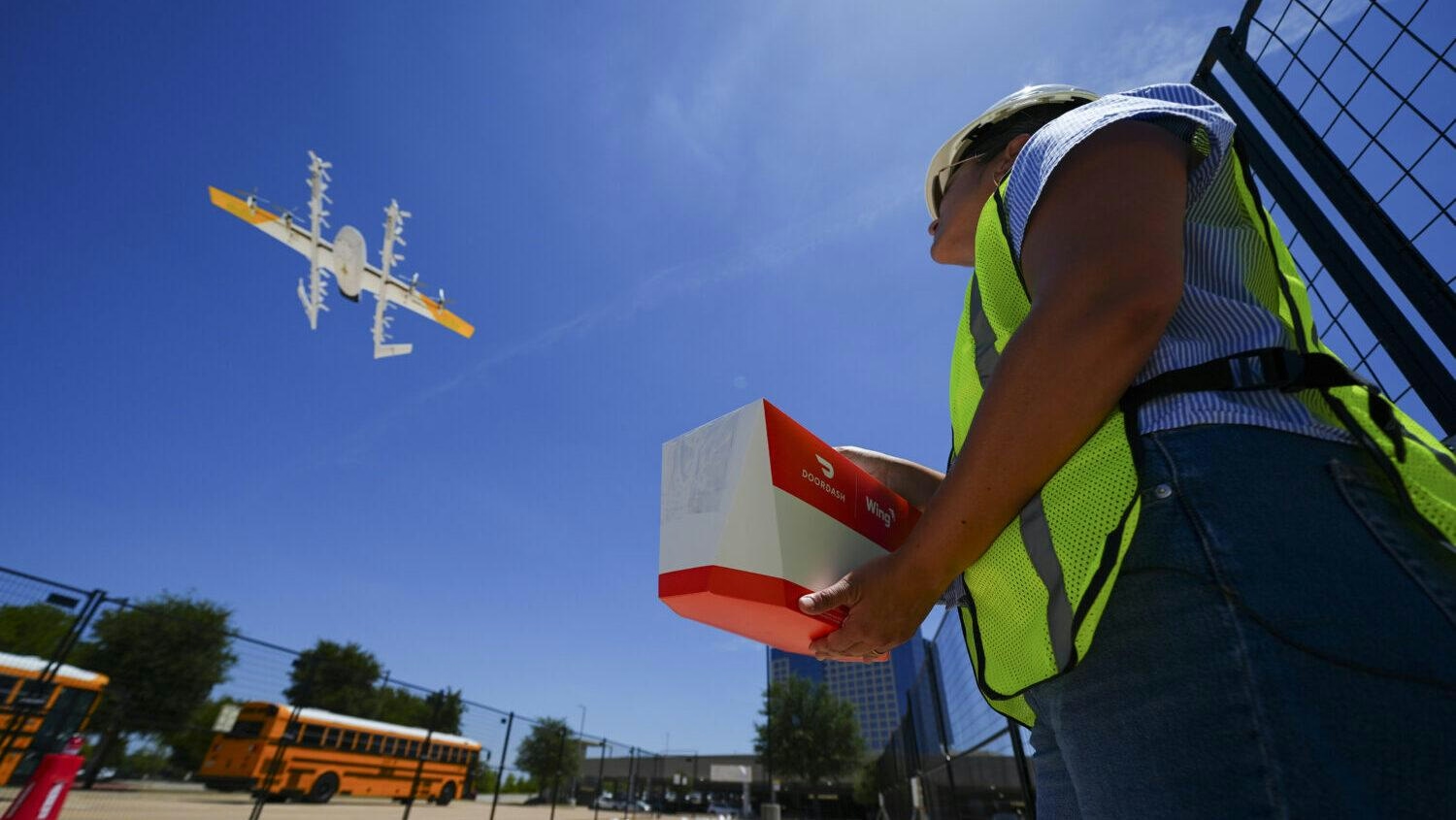
As Flying Taxis and Delivery Drones Fill City Skies, What Are the Risks of Failure?
Last month, a significant incident occurred above Sydney’s Darling Harbour during the Vivid Sydney festival, when nearly 90 drones from a swarm of a thousand lost formation and crashed into the water. The failure, attributed to radio interference, resulted in no injuries but highlighted a critical concern: as autonomous aircraft become increasingly prevalent, what are the consequences when systems fail?
This question is becoming more urgent as urban centers prepare for a future where autonomous air taxis transport passengers above congested streets and drones deliver packages across cityscapes. In the United States, drone delivery company Wing is expanding its partnership with Walmart to seven additional cities. Simultaneously, leading air taxi manufacturers such as Joby Aviation and Archer Aviation are accelerating efforts to bring electric vertical takeoff and landing (eVTOL) vehicles to market. These companies face significant legal disputes and regulatory challenges that threaten certification timelines and investor confidence. Reflecting this uncertainty, shares of major air taxi firms have declined this year, even as Joby secures Federal Aviation Administration (FAA) approval for flights in multiple states and Archer aims for a commercial launch by 2026. Other competitors, including Beta Technologies, remain several years away from entering commercial service.
Despite varying timelines for adoption, the fundamental challenge remains unchanged: unlike ground vehicles, aircraft cannot simply pull over in the event of a malfunction. Ensuring safety depends not only on preventing failures but also on the ability of autonomous systems to respond effectively when failures occur.
Built for Resilience, But Not Invincible
Modern autonomous aircraft incorporate multiple layers of redundancy, including distributed propulsion systems, backup flight computers, and fault-tolerant software, designed to prevent a single failure from causing catastrophe. Nevertheless, even the most advanced systems are vulnerable to unexpected failures. Minor software glitches, faulty sensors, or sudden environmental changes can combine to create significant hazards, particularly in complex urban environments where shifting winds, signal interference, and crowded airspace complicate emergency responses.
Traditionally, human pilots manage emergencies by relying on training and experience to assess situations and guide aircraft to safety. In autonomous aircraft, this responsibility shifts to onboard systems, which must rapidly detect malfunctions, evaluate possible responses, and make critical decisions—such as identifying the safest landing site that minimizes risk to people and property.
Decision-Making in Real Time
For autonomous aircraft to handle emergencies safely, they must quickly perceive their environment, identifying potential landing sites while accounting for people, vehicles, buildings, and other hazards, often with incomplete or rapidly changing information. They must then assess risks to determine which option minimizes harm, recognizing that the nearest landing site may not always be the safest. Finally, these systems must act decisively, executing emergency procedures in real time while balancing technical constraints with public safety considerations.
These challenges extend beyond technical complexity; they involve decisions with profound real-world consequences. As urban airspace becomes increasingly crowded with flying taxis and delivery drones, robust emergency response capabilities will be essential—not merely as contingency plans but as fundamental requirements for safe autonomous flight.
The path to widespread adoption of autonomous urban air mobility is fraught with technical, regulatory, and market obstacles. Recent incidents and ongoing industry competition underscore that ensuring autonomous aircraft can fail safely is as vital as preventing failures altogether.

Bangladesh Launches Initiative to Become Regional Aviation Hub
Russia Transports PD-8 Engine to India for International Certification

Kyrgyzstan to Adopt EMPIC GmbH Software for Flight Safety Oversight

Why Hawaiian Airlines Is Waiting Until 2028 To Add A Premium Economy Cabin To Its Airbus A330 Fleet

Engine Fault Causes Royal Navy Helicopter Crash Fatality

Joby Aviation Begins Texas Air Taxi Test Flights Amid Stock Decline

Iberia Receives Full Approval for Airbus A350 Heavy Maintenance

NetJets to Construct Terminal and Hangar at Dallas Love Field

Using AI in Aircraft Purchases

CIAM Unveils RPD-150T Engine to Replace Rotax 150 hp Model
