
Zet AI‑inzichten om in gerichte actie

Trending
Categories
Australia, New Zealand, and U.S. Agree on C-130J Support Pact
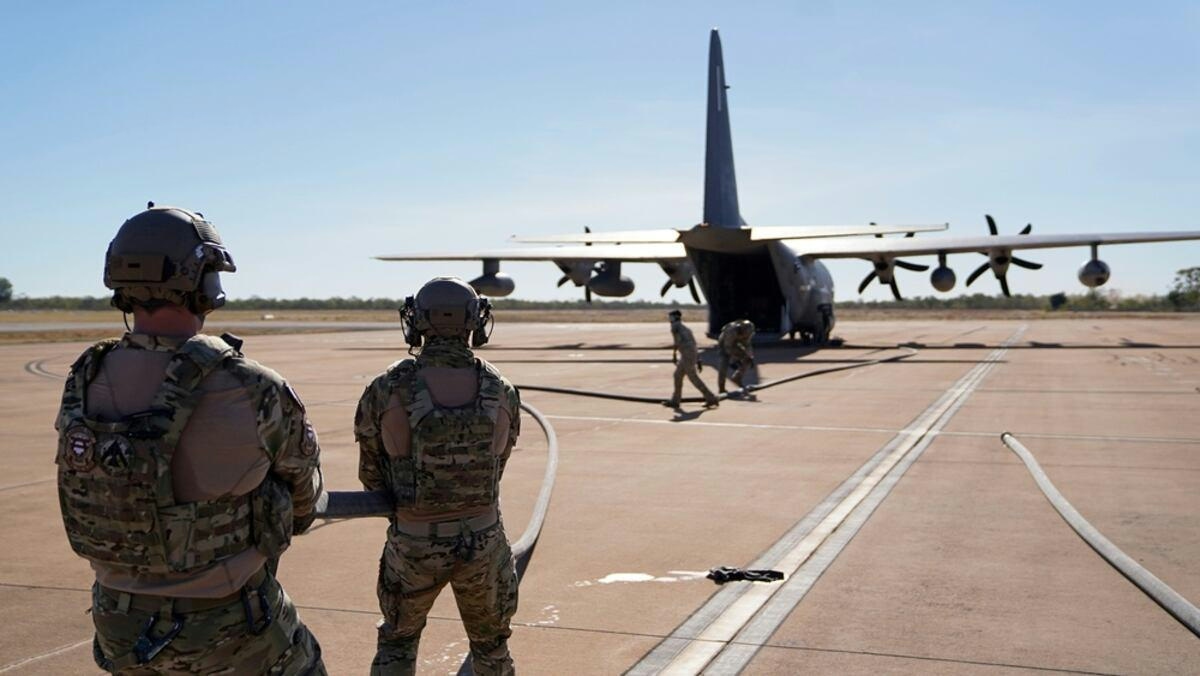
Australia, New Zealand, and U.S. Formalize C-130J Support Agreement
The air forces of Australia, New Zealand, and the United States have entered into a formal agreement to enhance cooperation in sustaining the Lockheed Martin C-130J tactical transport aircraft, a key platform operated by all three nations. The pact is designed to improve interoperability, cross-servicing, and logistics support, according to the U.S. Air Force (USAF).
Expanding Trilateral Collaboration
This new agreement builds upon a 2019 arrangement between the USAF and the Royal Australian Air Force (RAAF), which facilitated cross-maintenance for both the Boeing C-17 and the C-130J. The earlier pact yielded tangible results, including USAF personnel repairing a RAAF C-17 in Alaska and Australian teams servicing U.S. aircraft on home soil. The current trilateral framework broadens the scope of collaboration to include the Royal New Zealand Air Force (RNZAF), which recently joined the C-130J community with the delivery of five aircraft in late 2024.
The USAF remains the largest global operator of the C-130J, with 304 aircraft in service, according to aviation analytics firm Cirium. The RAAF currently operates 12 C-130Js but plans to modernize its fleet by acquiring 20 new aircraft. Meanwhile, New Zealand’s recent induction into the C-130J fleet marks a significant expansion of its tactical airlift capabilities.
Air Marshal Stephen Chappell, chief of the RAAF, highlighted the operational advantages of the agreement, stating, “We continue to work seamlessly with our closest allies and partners, and signing this [letter of understanding] further enhances our operational effectiveness and contributes to collective deterrence through readiness and integration across our platforms. This agreement boosts our C-130J cross-servicing interoperability and logistics support for all three of our nations.”
Challenges and Market Implications
While the pact promises to streamline maintenance processes and improve aircraft readiness, it also introduces challenges. Harmonizing logistics support and ensuring the interchangeability of parts across three distinct national systems may encounter bureaucratic and logistical obstacles. Overcoming these complexities will be essential to fully realize the benefits of the agreement.
The pact’s market impact could be substantial. Enhanced cooperation is likely to increase demand for C-130J maintenance services and spare parts, potentially benefiting companies engaged in aircraft support and logistics. In response, competitors may seek to strengthen their own sustainment capabilities or pursue alternative partnerships to maintain their tactical airlift capacity.
Australia’s broader plans to expand its C-130J fleet and replace its C-27J transports with commercial aircraft may further influence regional and global dynamics within the tactical airlift sector. As the three nations advance this partnership, their ability to navigate logistical challenges and optimize shared resources will be closely monitored by industry experts and allied air forces worldwide.

Etihad Airways Suspends Airbus A380 Flights on Key Route

Aditya Birla Group Seeks Approval for Aircraft Leasing in GIFT City

Qatar Airways Highlights Innovation and Connectivity at Arabian Travel Market 2026

Hong Kong's Five-Year Plan Includes Andrew Fan's Aircraft Parts Processing Hub Proposal

ACIA Aero Leasing Delivers ATR72-600 to Air Nostrum

RTX Appoints Jill Albertelli as Head of Pratt & Whitney

TAT Technologies Joins Beyond Aero Hydrogen Aircraft Program

AURAK Study Highlights Barriers to Air Taxi Adoption in Emerging Economies

Xiamen Air Selects Altitude for 787 Maintenance at Heathrow

Etihad and Swissport Extend Global Partnership
